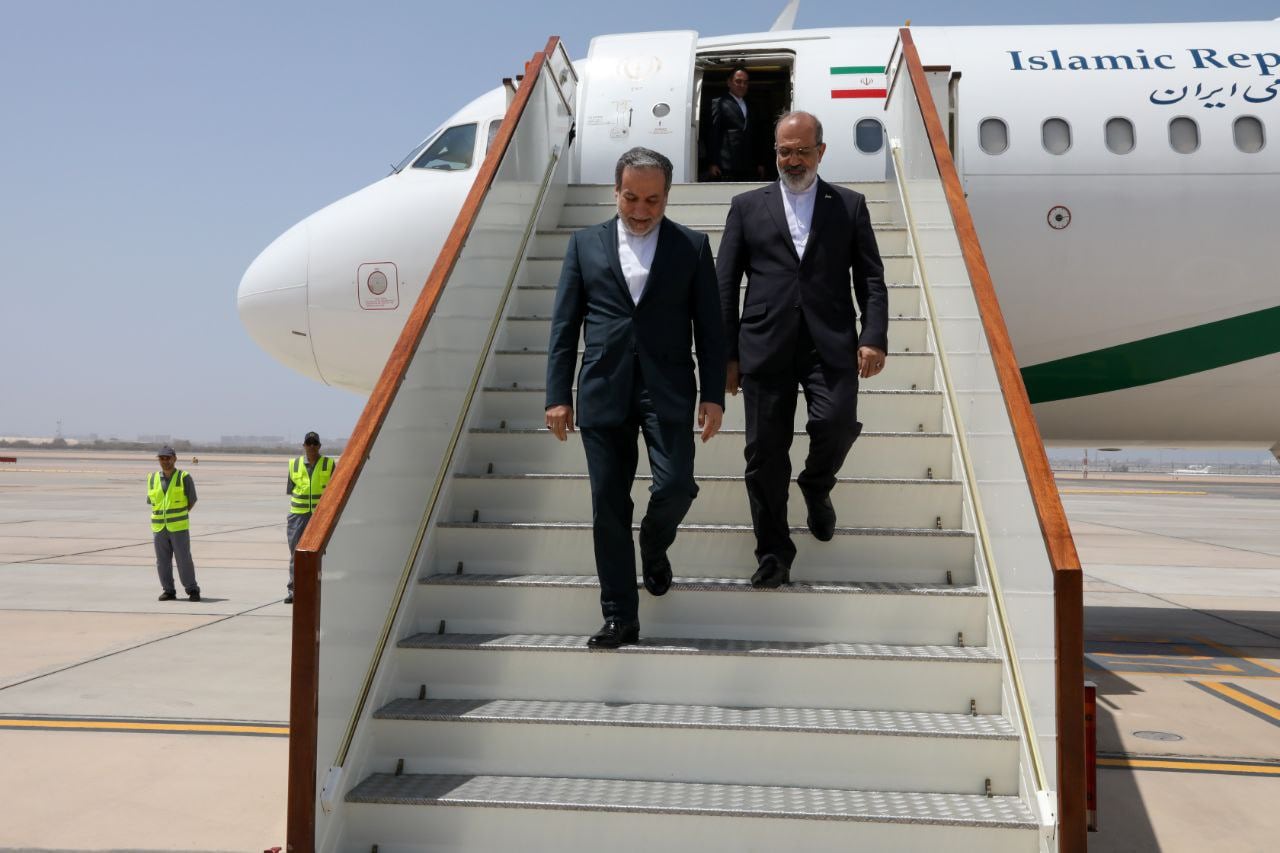
The conversations between Iranian and American negotiators to resolve disputes about Tehran’s nuclear program concluded this Sunday a new round in Oman. Both parties plan to continue the negotiations and expressed a moderate optimism after the fourth encounter, although Tehran has insisted that it refuses to abandon its nuclear program and uranium enrichment.
Although Tehran and Washington have said that they prefer diplomacy to resolve the nuclear dispute that lasts for decades, they remain deeply divided over several red lines that negotiators will have to overcome to reach a new pact, after the US president, Donald Trump, came out in his first mandate of the joint comprehensive action plan (JCPOA in his acronym in English) – European (France, the United Kingdom and Germany), in addition to Russia and China – that set limits to the Iranian nuclear program.
The Minister of Foreign Affairs, Abas Araqchi, and Trump’s envoy for the Middle East, Steve Witkoff, celebrated the fourth round of conversations in Mascate through Omani mediators.
The Iranian Foreign Minister, Abas Araqchi, said that Iran and the United States have approached positions, but insisted that the dismantling of his atomic program is not negotiable. “The issues are more complex, but the round was useful. Both parties better comprise the magnitude of the differences. The positions have approached,” the diplomat to Iranian state television after the indirect encounter of more than three hours with the US delegation in Mascate told.
Araqchi said that in this fourth meeting they moved away from the generalities and have gone to the “details”, which makes the “difficult” negotiations. “The question of enrichment is not negotiable in any way and must continue,” he insisted. Araqchi said, however, that it is possible that Tehran accepts “limitations in some aspects, such as its quantity, level or capacity.”
Shortly before, the spokesman for the Iranian Foreign Ministry, Ismail Baghaei, had said on the social network X that the conversations were “difficult, but useful to better understand the positions of each and find reasonable and realistic ways of addressing the differences.”
The United States, meanwhile, described as “encouraging” this round of negotiations and pointed out that “an agreement was reached to advance the conversations and continue working on the technical elements.” A source of the Donald Trump administration told the press that the dialogue was again both direct and indirect and lasted more than three hours. “We are encouraged by today’s result and we expect our next meeting, which will take place in the near future. We thank our Omani partners for their continuous facilitation,” he said.
The two parties maintain public differences around the Tehran Atomic Program, which defends the enrichment of uranium for peaceful purposes, while Washington asks for its total dismantling. Witkoff, said Friday in an interview with the American portal Breitbart News that Tehran must abandon Uranium enrichment completely. “An enrichment program can never exist in the state of Iran. And that is our red line. No enrichment. That means dismantling,” he said.
The American had spoken before limiting the Iranian nuclear program and not its dismantling. Iran and the United States began on April 12 the conversations and until now they had held three rounds in Oman and Rome, which both parties described as positive. The fourth round was scheduled on May 4 in Rome, but Washington ruled out participating the previous Thursday, and has now been held.
Trump has repeated the military threats against Iran in case of not closing an agreement and has reimposed the so -called “maximum pressure policy” against Tehran, after leaving the 2015 nuclear pact. After the US output of the Covenant in 2018 and the restoration of the sanctions, Tehran Enrich Uranium with a purity of 60%, very close to 90% necessary to manufacture nuclear weapons.
For more updates, visit our homepage: NewsTimesWire