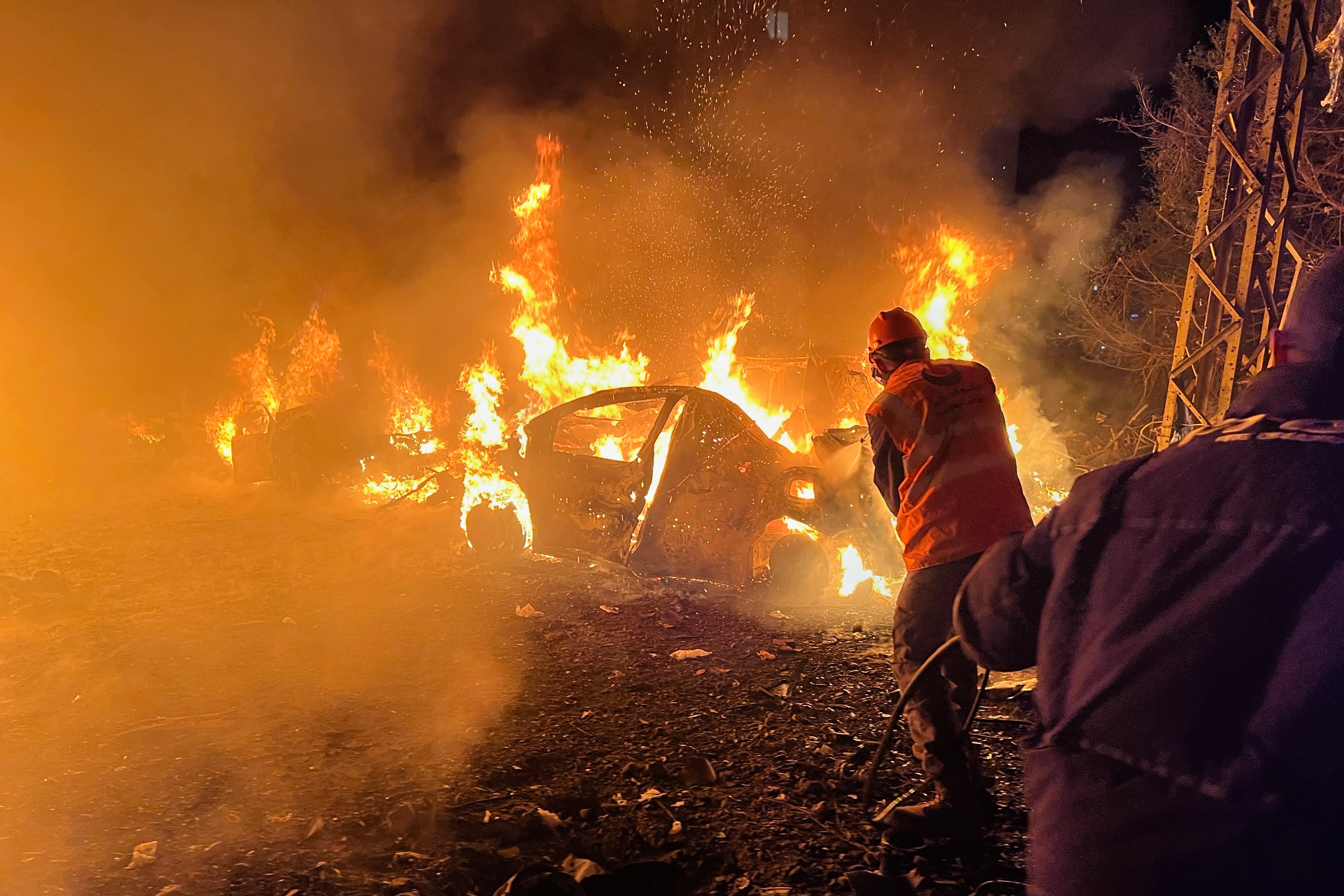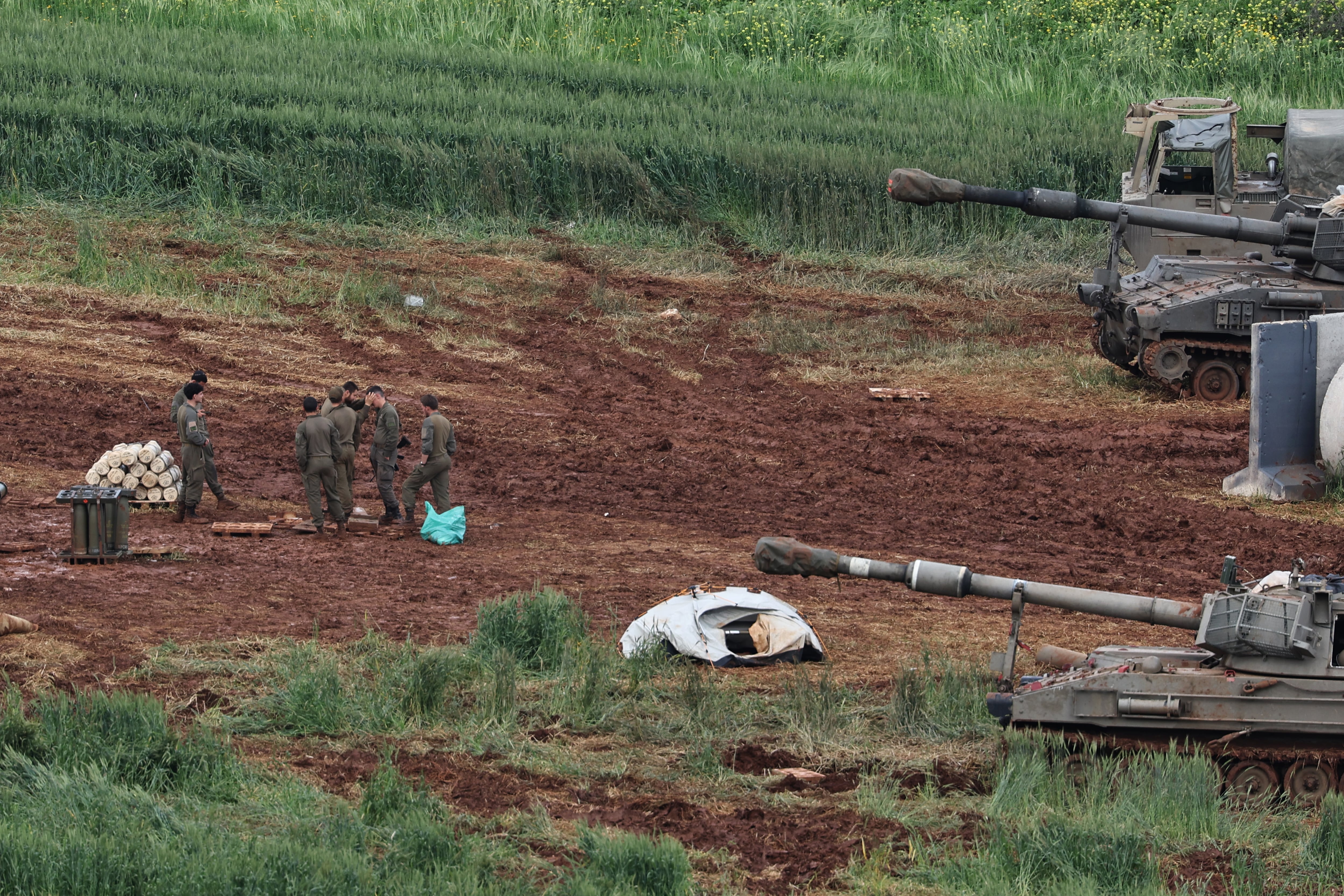
Israel’s army estimates that his offensive in Ciudad de Gaza has managed to expel about 200,000 Palestinian civilians during the last weeks, as the newspaper has published on Thursday The Times of Israel in information based on military estimates. While they maintain the attacks on Lebanon, Syria and Yemen, and after having trembled the soil of Doha, the capital of Qatar, in an uncertain resulting operation against the leaders of Hamas, the troops commanded by Eyal Zamir continue the massive bombing with which they intend to depopulate the largest municipality that exists in the occupied Palestinian territories.
They do it to Amnesty International’s amnesty, which sees “inconceivable” that the states of the world allow this “crime against humanity”, and the World Health Organization (WHO), which has warned that it will continue to provide services in Gaza City and have discredited the supposed humanitarian zone that Israel advertises in Al Mawasi. Many residents refuse to uproot their land. “While my house stands up, I will not leave!” Lara, a 29 -year -old Gaza City, in an exchange of messages with the country, says.
Israel launched an evacuation order on the city of Gaza on Tuesday in which it required the civilian population to abandon it “immediate”, before the arrival of a great offensive against Hamas. The United Nations estimates that one million people concentrated until a few days ago inside or around the city.
That order culminated a several -week campaign in which Israel implied through explosions and communications that the city’s residents had to leave south. Before the announcement, Israel had recognized that its soldiers already controlled 40% of the city, and had started a new tactic to empty it that consisted of the demolition of the largest buildings that remain standing. Benjamín Netanyahu, Israeli prime minister, claimed on Tuesday the destruction of what he described as “50 terrorist towers”, although neither he nor any Israeli authority have shown what his suspicions holds regarding the activity in those buildings.
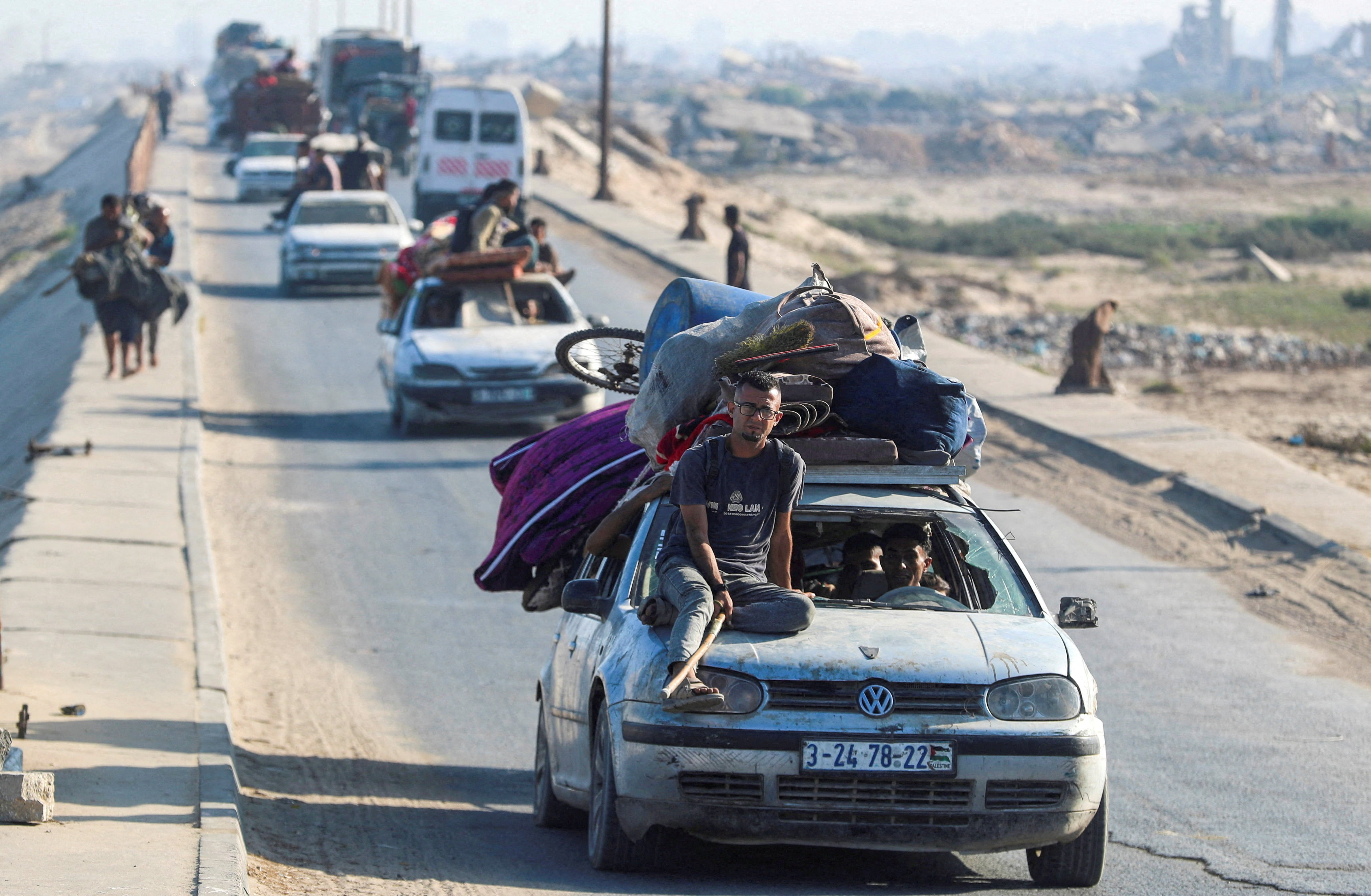
Israeli efforts for throwing the Palestinians from Ciudad de Gaza are leaving an avalanche, wounded and homeless. The Al Cashid road, where Israel directs the displaced population, registered on Thursday a continuous dripping of families fleeing south.
The Ministry of Health of Gaza, controlled by Hamas, informed Thursday that the Israeli shrapnel has killed 72 people and has hurt another 356 in the enclave for a single day. Medical sources in Gaza hospitals have affirmed media for days such as Catarí television to Jazeera that most deaths are taking place in Gaza City.
Humanitarian block
Since Israel broke a temporary truce last March that should lead to a definitive peace and the release of all hostages, Israeli uniformed have killed more than 12,000 Palestinians, according to the authorities of the enclave. They have also maintained the humanitarian block over the strip, either in a total or partial way, supervising the deterioration of the territory without altering their plans, despite the appearance of a famine and hundreds of deaths due to starvation (seven more in the last 24 hours, according to the health authorities).
The UN Agency for Palestinian refugees has claimed Thursday to be allowed to do its humanitarian work in the light of an investigation published Wednesday by the BBC. According to the British chain, the UG Solutions company – which custody the cast points with which the USA and Israel intend to monopolize the distribution of food in the enclave – has hired a dozen members of a American biker gang, formed by veterans of the Iraq war, with Islamophobic precedents.
UG Solutions has responded that it does not inspect “the hobbies or the affiliations” of its workers. More than 2,000 people have died in shots while looking for food, according to the UN, and most of them have done it in those cast areas.
A growing fraction of 2.2 million gazaties residing in the strip before the war, in 2023, have fled or died. The Palestinian Central Office of Statistics estimates that more than 100,000 people have abandoned the enclave, while Israeli weapons have killed more than 70,000 people, if the victims recorded by the Ministry of Health (64,718) and the thousands that are estimated to remain missing under the rubble are added.
“It is cruel, illegal, and further aggravates the genocidal conditions of life that Israel is inflicting the Palestinians.” This was denounced on Wednesday Heba Morayef, director in the Middle East of Amnesty International, the Israeli evacuation order to displace the residents of Ciudad de Gaza. In a report by the organization, Morayef points out that this operation is for hundreds of thousands of people a “devastating repetition” of the expulsion that Israel imposed especially the north of the enclave, where the city is located, on October 13, 2023, six days after the start of the offensive.
Choose between “Two Deaths”
The director of Amnesty considers that it is “obvious” that Israel “is determined to pursue her goal of physically destroying the Palestinians of Gaza”, and finds “inconceivable” that the states “with influence capacity” continue to provide weapons and diplomatic support to that human destruction.
The report cites a medical worker in Gaza City who refuses to flee from the area leaving behind the fragile and malnourished bodies of their smallest patients, who, he says, will not survive another displacement. “I have to choose between two deaths,” says the toilet. “Dying for bombing or displacement. I have been displaced 15 times. I have not sleep for days. We are broken,” he concludes.
The WHO has been “dismayed” by the Evacuation Order in Ciudad de Gaza and has anticipated that it will remain in the municipality. In a statement, the agency stressed on Wednesday the humanitarian importance of that municipality, which brings together “half of the functional hospitals in the strip” and concentrates “50% of the UCI beds” throughout the enclave.
The medical organization has also discredited the Israeli version, which announces an alleged humanitarian zone in Al Mawasi, south of the strip. That “does not have enough space” for those who are already in the area, says the WHO, making unthinkable the incorporation of “new arrivals.” Gazati journalists in Al Mawasi report that those who arrive in the territory fail in the attempt to find space, water or food, while the stench of accumulated garbage is mixed with the sound of the television planes, always present.
“I am still in my house,” says Lara from Gaza City and explains that she has decided, next to her family, not to leave her home, in a high building. Around him, Lara describes the apocalypse. “Israel is shooting everywhere,” he says. “We don’t care if Israel kills us right here,” he proclaims.
After two years of war, this Gazatí sees death as “an act of mercy.” “We cannot leave our house, our memories, so without further ado,” he laments, evidencing the fear that leaving means never returning. Lara continues to take care of her roof plants and has hung a photograph on her social networks showing them while she sees her, smiling. “Planting is clinging, loving our. These plants are memory and home.”
For more updates, visit our homepage: NewsTimesWire