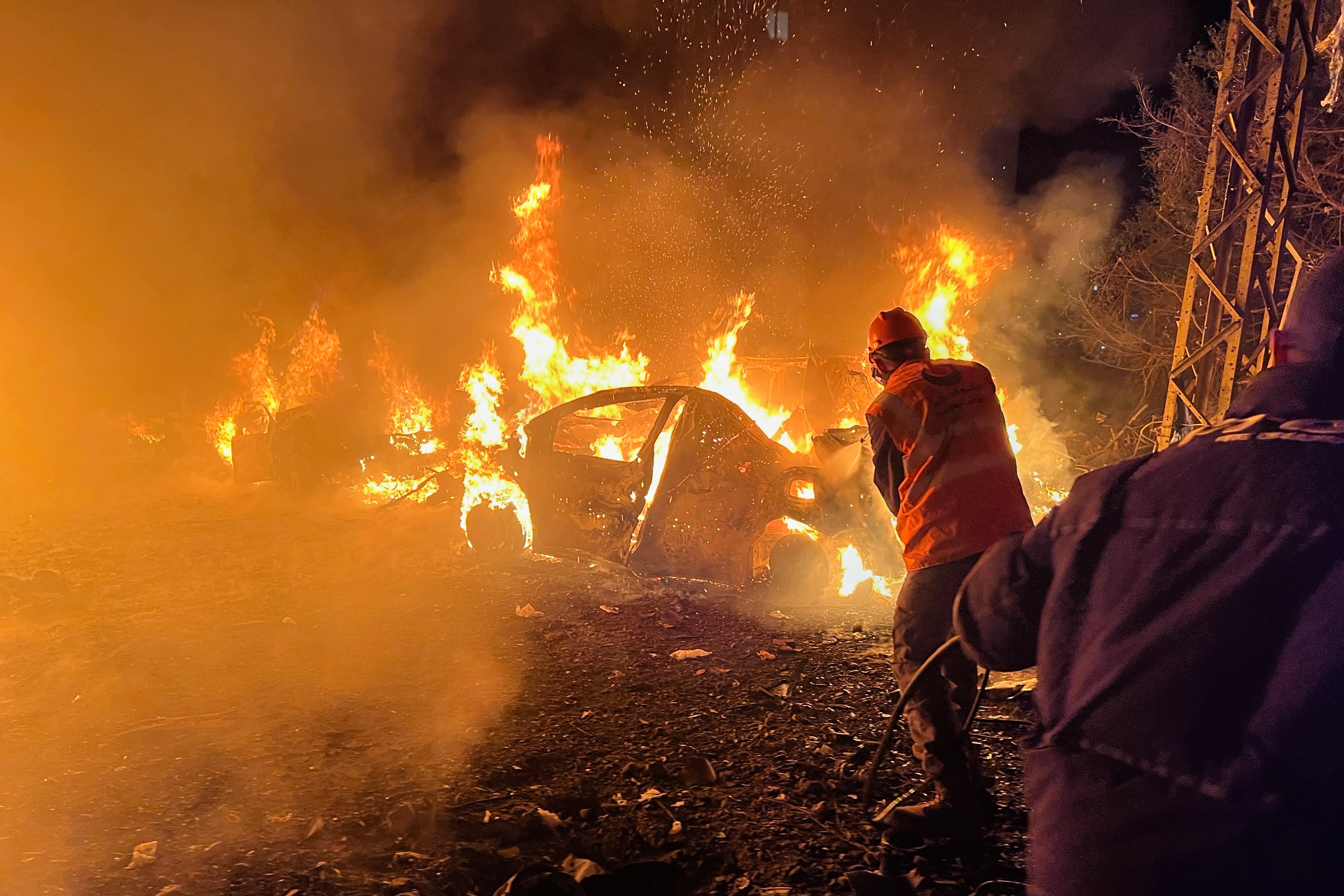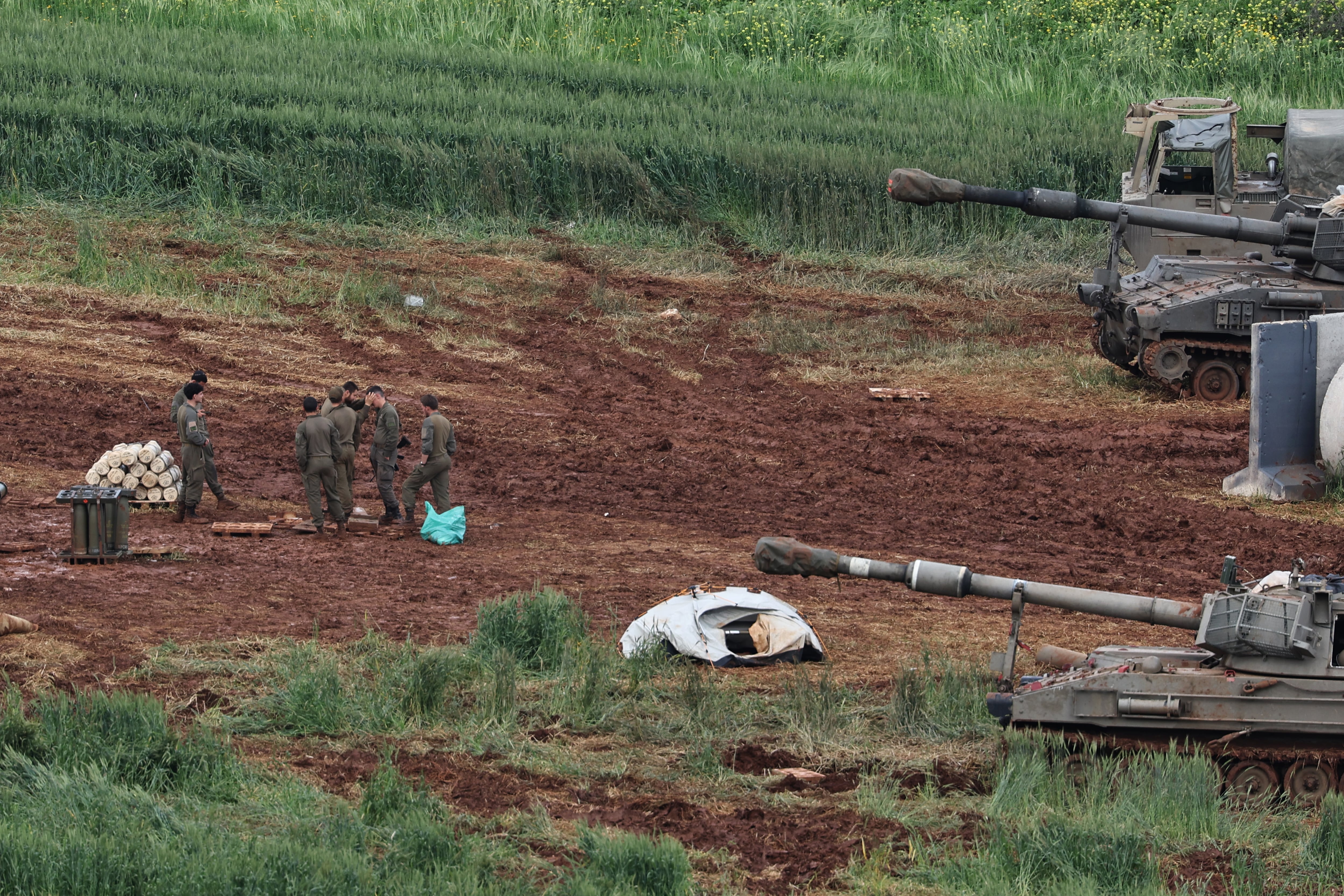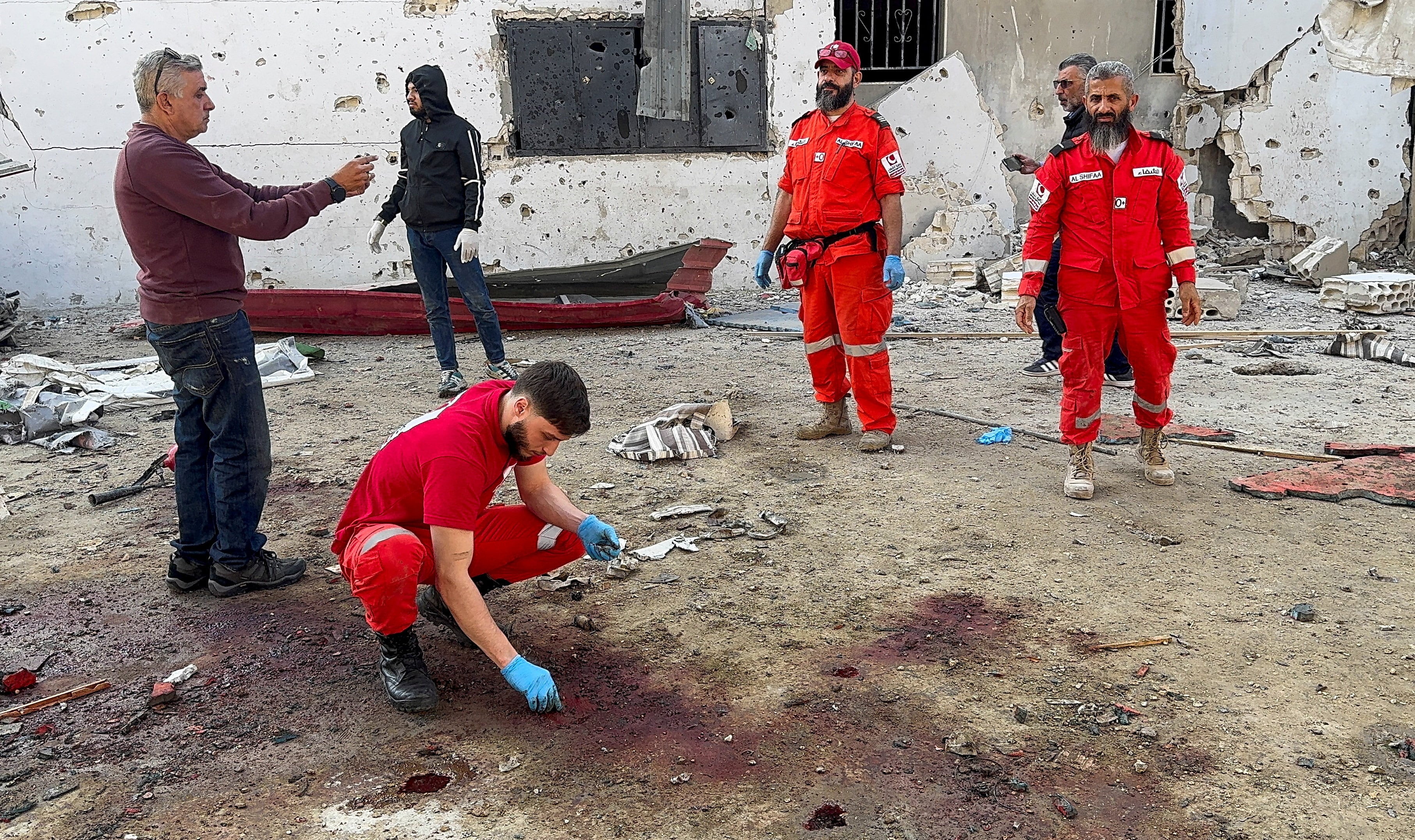
This Wednesday, the Israeli army bombed a handful of municipalities in southern Lebanon almost simultaneously, in several cases, announcing the attacks shortly before and demanding their residents flee. Just hours before, he had killed 14 people in a bombing in Ein el Helwe, the largest Palestinian refugee camp in the country, in the deadliest attack he has launched in Lebanon in a year of truce and after weeks of growing rumors in Israel of a second round of war against the weakened Hezbollah.
The Arabic spokesman for the Israeli Armed Forces, Avichay Adraee, published this Wednesday afternoon a succession of six statements that have kept the population in Lebanon in suspense, as they contain warnings of imminent bombings. Some were accompanied by maps with the objectives. The majority have been concentrated in municipalities less than 10 kilometers from Israel, such as Deir Kifa or Ainata.
Lebanese news agencies indicate that residents of some municipalities have received calls on their personal phones from people identifying themselves as Israeli agents, urging them to leave the buildings. A video spread on social networks and verified by regional media shows shortly after one of these warnings the arrival of a missile that turns a multi-story structure into rubble. Other bombings came without warning. Health authorities have reported one death.
Military statements link all of these attacks to the fight against Hezbollah’s combat capabilities. Israel’s political and military authorities have been raising their voices for weeks, accusing the Shiite militia of secretly trying to rearm and the Beirut government of dragging its feet on the issue, despite advancing at an unprecedented pace.
The bombings often target vehicles on roads or public infrastructure that Israel associates with Hezbollah’s interests. A double missile against a car that was circulating this Wednesday in the Lebanese municipality of Tiri, near Bint Ybeil and next to the border between the two countries, killed the driver – described by the town council as the municipal treasurer – and caused 11 injuries, including students on board a bus that was traveling on the same road.
Israel and Hezbollah signed a ceasefire at the end of 2024, but the United States – which mediated the agreement – effectively gave the green light to the Netanyahu Government to open fire in Lebanon, as it has done almost daily during the truce and is beginning to happen in Gaza. Israeli troops take advantage of this bilateral guarantee from Washington (not included in the agreement) to bomb assets and members of both Hezbollah and other non-state armed actors, such as Hamas.
This Wednesday, the Israeli army assured that its objective in the village of Beit Lif were Hezbollah’s “weapons storage facilities”, in an area where it transferred control to the Lebanese Army, the one in charge of compliance with the pact. And it speaks of a “serious violation” of the agreements with Lebanon and of “one of the numerous examples of Hezbollah’s attempts to reestablish itself through Lebanon, with emphasis on rural areas.” The Shiite militia, in a situation of unprecedented fragility in decades, has not responded to a single Israeli attack (it has only launched one, from which its leadership distanced itself), nor has it intervened in support of its patron, Iran, during the war it had with Israel this summer.
Commotion in Ein el Helwe
The crowded Palestinian refugee camp of Ein el Helwe, the largest of the 12 that exist in Lebanon, breathes a sad atmosphere this Wednesday, according to its residents. On Tuesday night, an Israeli bombardment in an area of the camp that Israel believes was a Hamas military training area left 14 dead – some minors – according to the Lebanese Ministry of Health. Neighbors describe it as a “massacre.”
The 80,000 residents who inhabit the square kilometer in which Ein el Helwe extends, located on the outskirts of Sidon, are observing a day of mourning and strike this Wednesday, with the blinds lowered in shops and schools. The United Nations agency for Palestinian refugees, which promotes services such as education in Palestinian camps, has kept classrooms closed in all Palestinian camps in the country.
The country’s president, Joseph Aoun, and Lebanon’s prime minister, Nawaf Salam, frequently tweet to condemn Israeli attacks that cause casualties or damage to Lebanon’s civilian population. In this case, neither of the two leaders has made any publications on the matter.
“The majority were young people who were playing soccer in the park,” explains Mahmoud Abu Hamda, 43, director of the Palestinian organization Beit Atfal Assumoud, which offers social and health services in that and other Palestinian camps. Abu Hamda, who grew up in the neighborhood, points out that there are no military bases inside Ein el Helwe, and explains to this newspaper from that field that the bombing occurred behind a mosque frequented by Hamas entourage, in a recreational area where young people play soccer or practice boxing.
This Wednesday, hours after the extent of the aggression became known, the Israeli military spokesman in Arabic insisted that the attack the previous day was directed against a Palestinian militia training center. In the note, he adds an element that he did not refer to on Tuesday when he claimed responsibility for the attack, by attributing to the place a function of recruiting young people.
He has also defined the refugee camp as a “crack” in Lebanon’s sovereignty – a 1969 agreement leaves them outside its jurisdiction, falling under the domination of Palestinian factions – and has invoked the memory of the beginning of the country’s civil war (1975-1990), by linking Palestinian armed activity in Lebanon with the beginning of “bloody conflicts.”
Ayman Shana, leader of Hamas’s political wing in Sidon, rejects the Israeli army’s accusations and denies the existence of a military base inside Ein el Helwe or any of the other 11 Palestinian camps. “Is it conceivable that a military installation exists in the middle of an area surrounded by so many houses?” he asks in a voice message sent to El País.
The Palestinian leader relates the Israeli shooting against Ein el Helwe with a supposed need of the Israeli authorities to “divert attention in the face of a difficult moment”, and with a hypothetical intention to “displace its residents and eliminate the Palestinian cause.” He assures, however, that Hamas and the Palestinian factions present in the camp will refrain from responding to the attack. “We are committed to the ceasefire. The one who breaks the truces is Israel. We leave the response in the hands of the State of Lebanon.”
For more updates, visit our homepage: NewsTimesWire