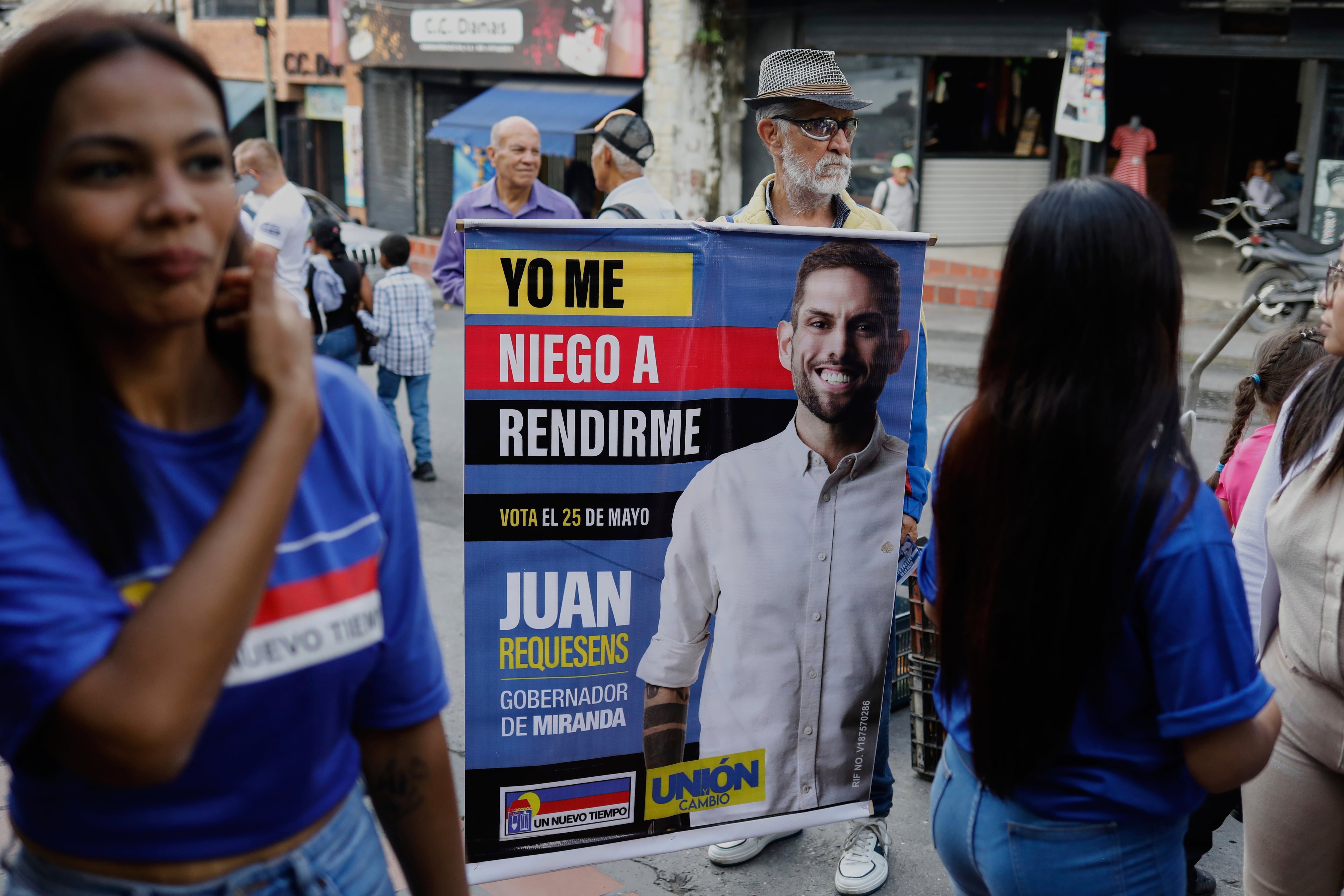
Elections without electoral environment. When a week is missing for parliamentary and governor elections, the campaign and expectations are almost non -existent in the streets of Venezuela. Opinion polls report that approximately 35% of the population states to be determined or considers the possibility of voting. Some political analysts who prefer not to identify calculate that perhaps half of them, or little else, could finally go to the polls next Sunday, May 26.
The economic crisis, aggravated by international sanctions to the country, has triggered prices again and affected consumption, further cooling the mood of the population. Many voters do not forget what happened in the last presidential elections of July 28 and the complaints of the candidacy of Edmundo González, which demonstrated his triumph showing 80% of the minutes.
Post -election repression, a little commented, rather evaded, in the conversations of politics and in everyday life, remains present in the memory of the whole world. The closing perspectives of the negotiated exits to a political change have made the interest in emigrating after years of mass exodus grow again. 22% of the population think about it again, according to what the most reputed pollsters disseminate.
The deadline for the electoral campaign has been very short, as Chavismo sought, with little space to discuss, advertise or mythines. Little is known about the conditions and candidates that are disputed the places to be elected. They are scarce Spots Electoral advertising on television and open media. “38% of the population consulted in our studies are intentioned to vote,” says Jesús Seguías, political analyst and president of Dataincorp. “There is a field of undecided 36% in relation to the issue of voting in our measurements. Abstentionism has an organic composition of 27% in the country.” You followed that the possibilities of Victoria del Chavismo are directly related to the call to abstention made by María Corina Machado. “The opposition is a robust majority in Venezuela since 2015, when it won those parliamentary elections, not now. That is known by the Government. The two currents will be very harmful elections, but in the opposition case it is because of the call to abstention. The lack of unity in the elections will weigh a lot.” You followed “definitive” the break between the two opposition trends.
“I am not going to vote, this time I have not involved in the issue of politics. I already voted last year. On Sunday we will be in family, resting, I do not even know who the candidates are where I live,” says Griselda Souto, administrator of a food business in the urbanization of La Campiña. Machado, the antichavist leader with greater projection, has called not to participate in the elections, unauthorizing the opponents who seek, however, encourage the population. The vast majority of opposition parties and currents remain aligned with her, claiming the victory of the last presidential elections. In parallel, the leaders of the democratic field that are determined to participate, such as Henrique Capriles, have less drag at this time.
“I didn’t even know that next week there are elections, I’m finding out,” says Wilmer Durán, a resident in Artigas, a popular area of western Caracas, and used in a bakery in the east of the city. “I have not heard about elections anywhere. Of course I am not going to vote, I don’t have to vote for.”
In the vote of next week, the Chavista ruling, which coincides de facto For years with the state framework, part as a favorite. Hard Chavismo, unconditionally grouped around Nicolás Maduro and the Bolivarian Revolution (approximately 1% or 20% of the population) is the only segment of the society in which the decision to vote is almost total.
Jorge Rodríguez, current president of the National Assembly and leader of the official United Socialist Party of Venezuela (PSUV), has been, again, optimistic with what Chavismo can achieve: “We are giving everything to achieve the 24 governorates and consolidate a clear parliamentary majority. What we are sure of is that we will win again”.
Meanwhile, the opposition faction that has decided to go to these elections (integrated by the party a new time and the trend that accompanied Henrique Capriles in the First Justice division) has set some goals that, although many look excessively optimal, are rather modest: about 40-60 deputies (of a total of 277), and perhaps four governments, including the most important electoral place After Caracas, and has Manuel Rosales as a candidate.
In addition to them, small very moderate line matches are participating in the opposition field that are outside the democratic platform, and that have partial agreements and areas of common interest with the ruling, such as advanced progressive, change, solutions and dissident groups of democratic action.
“I am not going to vote, I do not believe this government and I am not very interested in politics,” says José Luis Bohórquez, commercial administrator, resident in Maripérez, north of Caracas. “We were going to vote and what they did was make fun of us last year, go out to repress the whole world. The government knows what the surveys say. If they do not like to know what people think of them, because they do not ask, do not make elections, we do not vote and now.”
The latest parliamentary elections in Venezuela, organized in 2020, presented similar characteristics to the current ones: Chavismo organized the consultation in its terms, vetoed the participation of all important opposition parties and allowed minority formations to avoid unanimity in the hemicycle. The abstention of that process was 70%, and the PSUV, with 69% of the total valid votes, obtained 253 of 277 seats in Parliament. The non -Chavista bench of the current Parliament is about 20 deputies.
For more updates, visit our homepage: NewsTimesWire