Between 2006 and 2019, Bolivia lived the stage of greatest prosperity in its history: the size of its economy increased five times, a boom of such proportion that was called “the Bolivian miracle.” Then the pandemic hit her, then the debacle of her gas extraction industry came and now the country is on the verge of bankruptcy. All asset rating agencies have brought their debt to almost default levels, while the indicator of their “country risk” exceeds 2,000 points, only below Venezuela, which suffers international sanctions. This serious crisis will mark the electoral process that has just begun and will end on August 17 at the polls.
The first political symptom of the economic situation is the minimum probability that, according to the surveys, the president, Luis Arce, has of being reelected, although he has stayed with the acronym that until recently was the most powerful of Bolivian politics, that of the movement to socialism (more), thanks to a judicial maneuver during his “divorce” of former president Evo Morales.
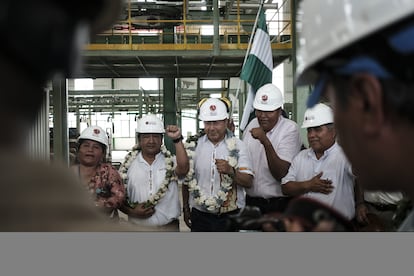
Today Morales has become one of the great critics of Arce’s economic management, who decided not to adjust national finances after the volatilization of dollars reserves in February 2023: he neither devalued, nor eliminated subsidies to fuels nor went to the International Monetary Fund for help, precisely so that they did not impose adjustment measures. Instead, it was launched to “industrialize to replace imports”, so that the country needed less dollars.
The creation of new state companies, such as a steel, food industries and a pharmaceutical, in a context of acute shortage of dollars, has been the target of criticism of other politicians.
Morales wrote in X that Arce “betrayed the people, was right, destroyed institutionality, democracy and economy.” The former president has proposed to “save the economy” of the country. He has also raised “plans and strategies that will reduce the fiscal deficit” and close state companies that “do not generate profits or benefit the people”, that is, those created by Arce. This last proposal has surprised the Bolivians, because Morales was the author of the renationalization of all privatized companies in the nineties and had always defended the expansion of the State.
The former president has a very good political smell and knows that liberal winds now blow. He is even trying to reinvent his image by presenting himself as an entrepreneur dedicated to fish farming. According to surveys, businessmen, rejected by the population in the previous period, are now seen as an antidote to the “failure” of statist politicians.
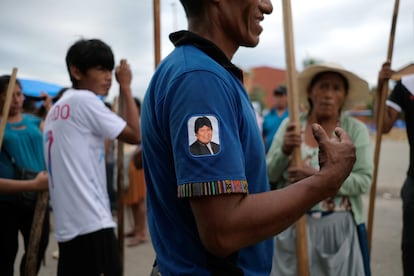
Morales has a minor support than he had in the past, but still important, concentrated in the field. At the same time, he is the most rejected politician by urban middle classes. And he cannot participate in the elections if a judgment of the Constitutional Court is fulfilled, promoted by the ruling party, which reinterprets the Constitution to limit re -elections. At the same time, Evo Morales is accused of Estupro and at this time he would surely be detained if he did not live protected by his unconditional cocaleros in his bastion of the Chapare, a jungle area in the foothills of the Eastern Cordillera of the Andes.
The moment is favorable for opposition politicians, who have criticized the so -called “community productive economic model” since their invention for Morales, Arce and other leaders of the MAS at the beginning of the century. The businessman Samuel Doria Medina, former president Jorge Quiroga and the mayor of Cochabamba, Manfred Reyes Villa, propose different ways to replace this strongly statist model and liberalize the country. According to economist Gonzalo Colque, who is monitoring his electoral approaches, they want to rebalance national finances using “stabilization funds” formed with foreign resources, cutting fiscal expense and giving more space to the market. Within this consensus, there are differences in the concrete measures they have designed and in the credibility of those who offer to execute them. The vote that each will depend on these nuances.
The other candidate on the left, the president of the Senate, Andrónico Rodríguez, has not yet made his intentions know, but his criticism. “The MAS model has failed,” he said. “The State should be focused on large strategic companies and not on toothpaste or french fried potatoes.” So Arce defends the old model that, according to him, during his management has suffered political “sabotage”, referring to the fact that the ruling has never had control of Parliament.
The international political consultants who arrive in the country to advise the different campaigns have defined that “the issue” of this election will be the crisis. The one who persecuted Bolivians will win that he is the most trained to solve it.
For more updates, visit our homepage: NewsTimesWire