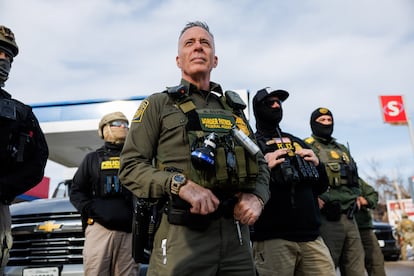
Gregory Bovino says goodbye to his dream. The man who held the custom-made position of commander in chief of the Border Patrol and led the largest operations against migrants in several cities in the United States is leaving with the frustration of not having fulfilled his objective. “I wish I had caught even more illegal immigrants,” he said in a recent interview with The New York Timesin which he mentions as his only regret having failed in his desire to capture 100 million migrants. A crazy number if you take into account that there are only about 14 million undocumented people in the country and the total population is just over 300 million. “We try our best, but there is always a creative and innovative solution to capture even more.”
The person who was the face of the Donald Trump Administration’s anti-immigration campaign has retired discreetly, barely making any noise. He was discarded by a Government that raised him to the top only to let him fall after leading the most infamous campaigns against migrants in the country’s history.
His creativity and innovation consisted of putting into practice the most aggressive and cruel tactics in the operations he led in several cities in the United States, where the tenant of the White House sent him to promote his arrest campaign. He harangued his hordes not to refrain from using force and he himself was recorded launching tear gas against citizens who were protesting the brutality of his methods.
The unprecedented violence and cruelty with which federal agents acted under his command, far from elevating him, pushed him off the cliff. With his tactics he managed to get even those who voted for Trump in the 2024 elections to criticize his immigration policy. The president, who is experiencing low levels of popularity and risks losing control of Congress in the midterm elections, has come to admit that the operations went too far.
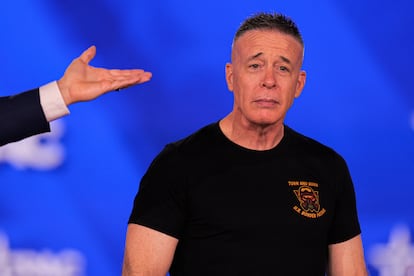
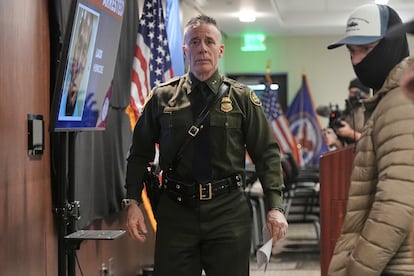
The final straw that led to his downfall was the shooting deaths of American citizens Renée Good and Alex Pretti by federal agents in January in Minneapolis, during Operation Metro Surge, which he directed. Bovino claimed that Pretti — who had been disarmed by officers before they shot him — intended to “massacre law enforcement,” without presenting any supporting evidence. Trump then relieved him of the position, which was assumed by Tom Homan, the border czar, and returned him to his middle position in the Border Patrol office in the Center, in California, from where he had left. The Republican president then declared that Bovino was “a pretty eccentric guy…and, in some cases, that’s a good thing. Maybe he wasn’t (in Minneapolis).”
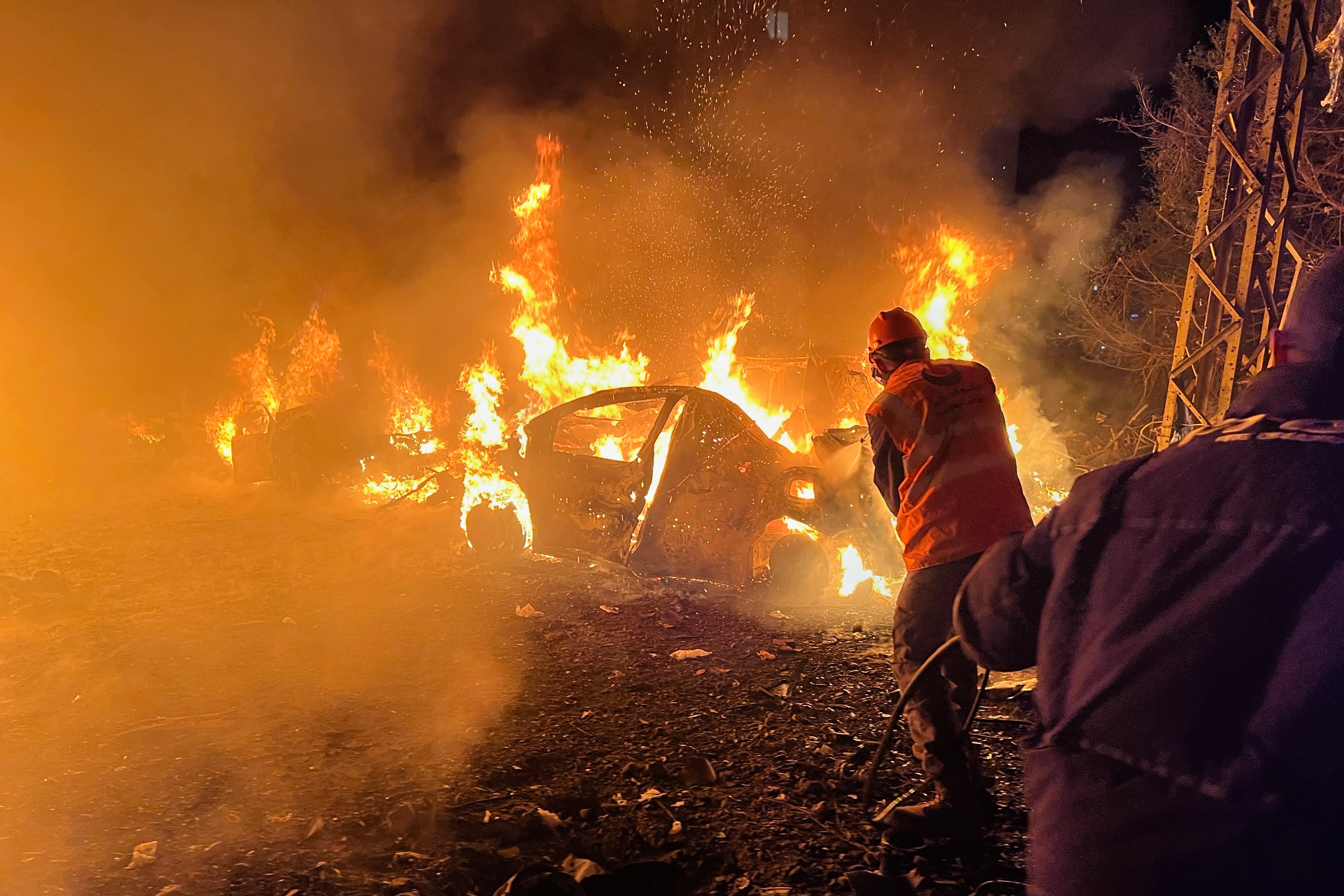
Until that moment, Bovino had been the most visible face of the Trump Administration’s mass deportation campaign. The president commissioned him in June to take charge of the offensive against migrants in the city of Los Angeles. Operations in Chicago, Charlotte, New Orleans and Minneapolis followed. Under his orders, the agents routinely fired pepper bullets and tear gas, used excessive force against the migrants and those defending them, and even used a helicopter to raid a home.
Bovino, who came from a middle position in the federal agency, rose meteorically in the Department of Homeland Security (DHS) to promote deportations, whose pace, lower than desired, had the president dissatisfied and, in particular, Stephen Miller, deputy chief of staff and key advisor to the White House, considered the ideologue of immigration policy. Former DHS spokesperson Tricia McLaughlin then stated that his promotion was because he was “a tough guy.” During his peak, the new commander-in-chief of the Border Patrol enjoyed privileges such as bypassing command hierarchies to respond directly to DHS Secretary Kristi Noem, who has also lost her job since April, involved in several scandals over her management of the department.
Bovino’s fall from grace was manifested when his social media account was removed, where he liked to publish videos in which federal agents appeared as heroes, with attitudes more typical of actors in Hollywood action movies. In his profile, Bovino showed off a photo in which he posed in uniform with a bulletproof vest, carrying an M4 assault rifle with a telescopic sight, which made him mock even previous senior officials of the federal agency, who considered such an outfit out of place.
Bovino’s taste for giving a tough guy image, relentless in the face of irregular immigration, and for propaganda dates back to his time at El Centro, where he created a social media team. His videos, in which he used resources such as slow motion and hard rock music as the background of the arrests, were not exempt from controversy. One of them, published in 2020, had to be withdrawn because it showed an alleged migrant sneaking into the United States and murdering the first person he encountered.
His contempt for undocumented migrants, whom he considers criminals without exception, led him to confront the Joe Biden Administration and he had to testify in Congress for several statements he made. He was threatened with dismissal, but continued in his position at El Centro.
When Trump won the 2024 election, Bovino did his best to earn the new president’s trust. Two weeks before the inauguration, the official sent dozens of agents to Kern County, in the Central Valley of California, to make arrests at gas stations and on the highway, terrorizing the migrant community in the agricultural heart of that State. In three days, they arrested 78 people, almost none with criminal records. The American Civil Liberties Union (ACLU) then filed a lawsuit, accusing the agency of racial discrimination and coercing at least 40 detained migrants to “accept voluntary deportation.”
On that occasion, as in the operations he led under Noem’s supervision, Bovino used racial profiling to select detainees, based on skin color and language. Also in 2022, while he was leading the New Orleans Border Patrol, a judge found that there was suspicion of “racial bias” in the hiring of a friend of his. Two finalists for the second highest ranking position in that sector filed the discrimination lawsuit, but they reached an out-of-court settlement with DHS and the case went no further.
When he just turned 56, Bovino has quietly left through the back door, ending his 30-year career in the Border Patrol, which he joined in 1996. He is retiring to the Blue Ridge Mountains, in the Appalachian mountain range, where he will continue his hobby of hunting “invaders,” as he sees migrants. Instead, his prey will be coyotes, he has declared.
For more updates, visit our homepage: NewsTimesWire