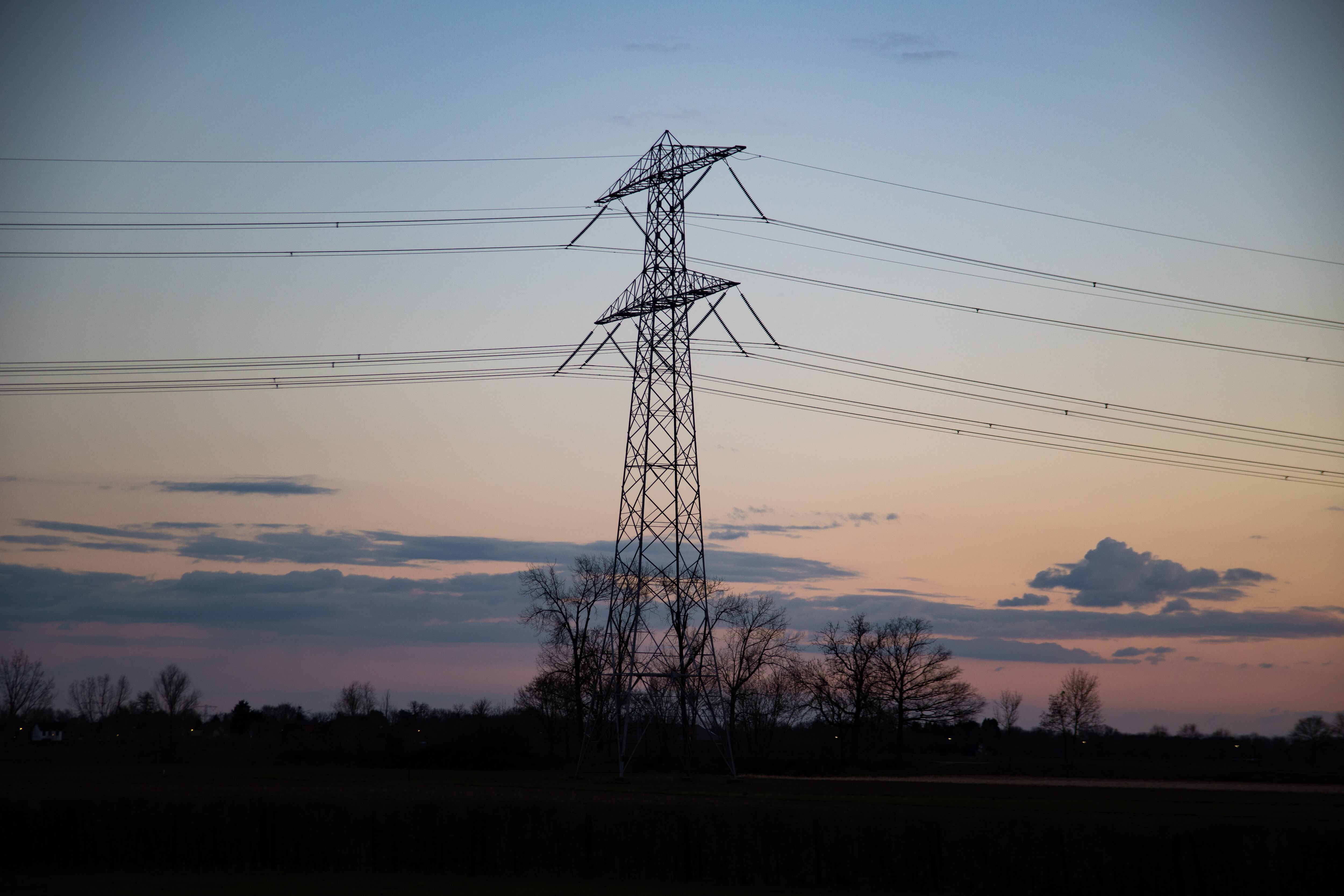
The electricity grid is on its way to becoming more than a China in the shoe of the fifth economy of the euro. In 2021 of the energy crisis, there were about 3,000 companies on the waiting list in the Netherlands to connect to the electricity grid because it ran the risk of saturation due to the rapid growth of renewable parks. Four years later, there are more than 20,000 companies and small consumers who wait for their turn.
A first -order problem that, however, has not been highlighted on a political agenda charged by immigration just three months from the October general elections. The figures are clear: the weakness of the network – years of lack of investment – and the brake to the new connection requests is already ballasting the economy, with an accumulated cost for the company of between 10,000 and 40,000 million euros, according to a recent government report sent to Congress.
The text, prepared by experts from several ministries and public agencies, called companies and citizens of one of the richest countries in the world for per capita income to prepare so that, in the future, “electricity is not always available everywhere.” And expand the network “so that you can meet all demand in peak hours” would be, they said, too expensive.
Last April, the Dutch Executive himself already recognized the evidence: that consumption is increasing and that “in several parts of the country there is insufficient network capacity.” On a row, he explained the two types of congestion of the network: the one caused by the demand that derives in waiting lists to be able to consume it, and the so -called generation, in which new solar or wind energy facilities have to wait to connect to the network and inject the electricity they generate. “When there is not enough capacity to transport electricity simultaneously, the network can congest,” he acknowledged.
“The congestion of the network has to do with the transport of electricity, either due to lack of wiring or because the transforming stations lack the necessary capacity,” explains Hanna Van Sambeek, senior consultant in energy systems in the organization for applied scientific research (TNO, for its acronym in Dutch). The network operators, exposes, calculate the necessary transport flow in the areas to which they serve “and, if they see that the network cannot assume it in the long term, they do not accept more customers”. The result: the current waiting lists, with which it is about avoiding overloads.
Both the Ministries of Climate and Interior and the local authorities of several municipalities in the country have long collaborated in a national action program against the congestion of the network, together with the managers of the same and companies in the sector. But, at the gates of the electoral appointment, the matter continues to occupy a low position in the list of political priorities.
Screen by importance
Due to the waiting list, since January 1, 2024, the companies and institutions that – at the trial of the Dutch Executive – carry out an important work for the company have priority in the waiting list to connect to the electricity supply. They are, in short, three: health, security and education services. All of them can connect without delay.
Van Sambeek points out that “more cables can be installed underground or build transformative stations and electricity lines on land, but that, apart from its cost, requires a lot of physical space, materials and specialists.” They are factors that “slow down the expansion of the electricity network, which would be a solution,” he says. “You can also try to have more flexibility with the current network, because the problem is not so much how much energy we use, but when we do it, which is what causes congestion peaks.”
The Netherlands suffer, in effect, a rampant shortage of qualified technical personnel, crucial because up to 2050 will have to install 50,000 transformers and tend 100,000 kilometers of additional cables. It is the equivalent of 2.5 times the circumference of the Earth, and the deficit of labor in this area will be around 30,000 workers in the remainder of decade, according to the figures of the association that brings together the network operators of the country, Netbeheer Nederland.
“The network is becoming the border of the energy transition,” said Jan Rosenow, a professor at the University of Oxford (United Kingdom), after the British newspaper Financial Times Speak directly about “rationing” of electricity in the sixth most populous nation of the European Union. A country, in addition, that is particularly rapid to that energy source to shake its historic gas dependence after the closing of the gigantic Groningen site in 2023.
The aforementioned congestion and the necessary improvements to prevent the problem from going to greater convert, in addition, the Dutch electricity grid into one of the most expensive in Europe for its users. Notably more than those of its neighbors France, Germany or Belgium, economies perfectly approved to that of the Netherlands. The annual cost, regulated, has tripled in just two years: 900 million euros in 2022 to 2,500 in 2024, according to the figures collected by Aurora Energy Research. This specialized consultant warns that this “acceleration” will continue in the next time, largely because of the investment effort that will have to be made to improve the networks: both the classics, inland, and those that allow the electricity to be reached from the wind farms in the sea.
Although especially pressing today, the narrows of the electricity grid are far from being a novelty in the Netherlands. Above all, from the advent of artificial intelligence and data centers, very intensive in energy and that for years found in this country – located in the very heart of Europe – the perfect place for its development. It is no longer like that: the Dutch authorities, such as Irish, have been applying restrictions for some time to prevent bottlenecks, still incipient but already serious, go more.
High demand
The network funnel is, with everything, a common element to most countries of the old continent, where the electrification process (in transport, in industry and in heating, especially), is called to shoot demand in the coming years. Although completely oblivious to the capacity of the highways through which electricity travels, the recent blackouts in the Czech Republic and – especially – in Spain and Portugal has brought to the front line an issue that was completely outside the informative menu. A touch of attention, one more, about the degree of preparation of Europe for the era of electricity and data centers.
Although, as Van Sambeek recalls, the current problem is not of generation, the geographical and demographic reality of the Netherlands is not the most favorable in that sphere. Although its coastal profile allows simple installation – and relatively cheap – of wind turbines in the bed of the North Sea, unlike what happens in Spain, space shortage is a clear limiting for large -scale photovoltaic solar energy facilities. Something that is possible in the Iberian Peninsula or in Germany, to name two cases.
Solar panels have proliferated in the roofs of cities such as Amsterdam, Utrecht or Maastricht: there are already more than two million self -consumption facilities in operation. But that pull is insufficient to completely cover the needs of one of the most densely populated countries in the continent.
For more updates, visit our homepage: NewsTimesWire
https://elpais.com/internacional/2025-07-26/la-fragilidad-de-la-red-electrica-pone-en-aprietos-a-paises-bajos.html