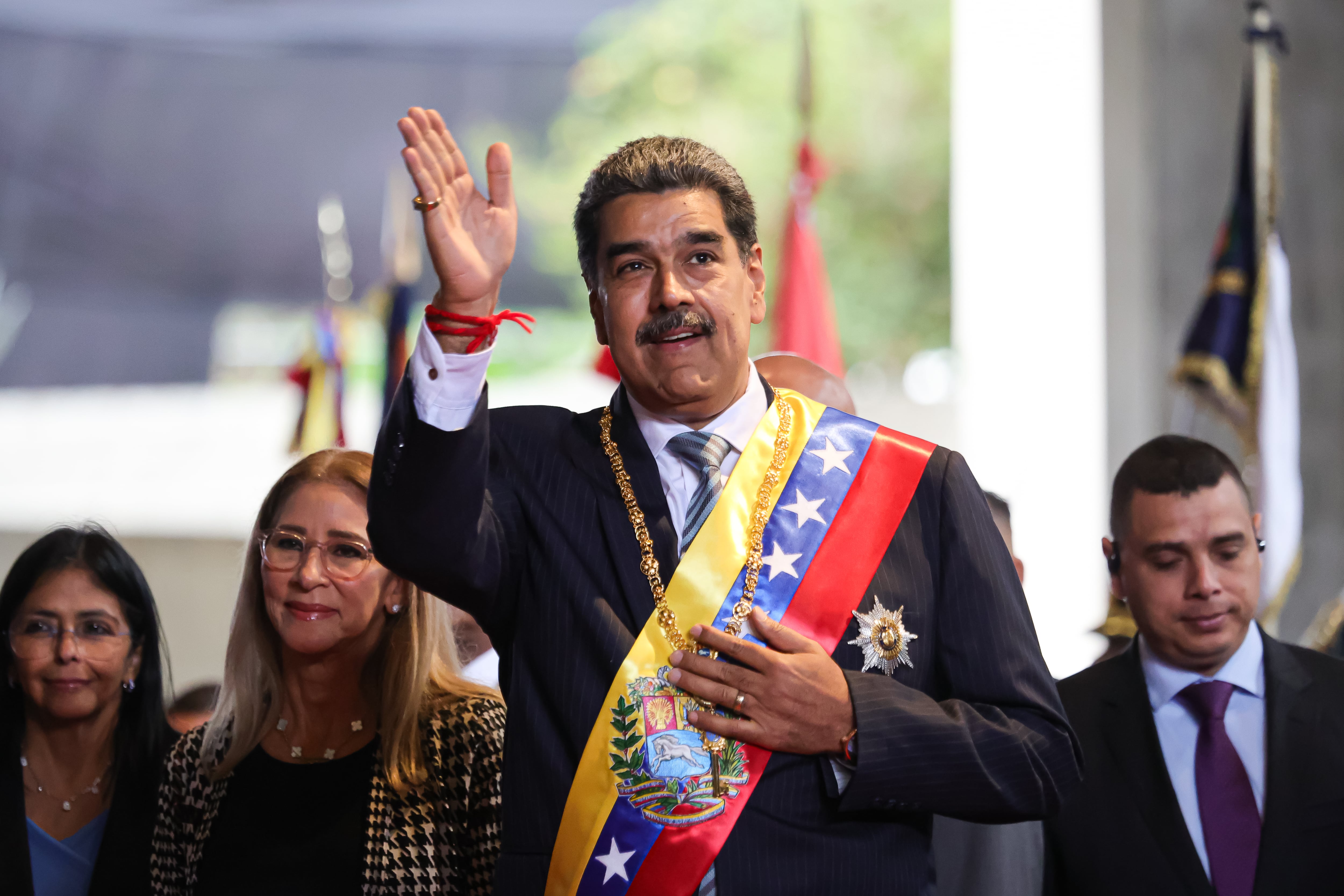
Federal judge Sebastián Ramos requested this Wednesday the extradition of Nicolás Maduro from the United States to Argentina, for a case that is being processed in the courts of the South American country and in which the president is accused of crimes against humanity committed in Venezuela. Under the principle of universal justice for cases of crimes against humanity, they seek to try him for “persecution, kidnapping, torture and murder.”
The case opened against Maduro in Argentina began in 2023 due to a complaint filed by the Argentine Forum for the Defense of Democracy (FADD) based on the principle of universal jurisdiction, which allows countries to prosecute serious crimes against human rights regardless of where they were committed and the nationality of those responsible or their victims.
In the resolution issued this Wednesday, the magistrate ordered an “international appeal to the United States of America, in order to request the extradition of Nicolás Maduro Moros, who was recently detained in Venezuela and transferred deprived of liberty to the United States of America.”
Judge Ramos, who based his request this Monday on the extradition treaty that Argentina maintains with the United States, already ordered the arrest of Maduro in September 2024, as well as the Venezuelan Minister of the Interior, Diosdado Cabello, and other members of that country’s Government. The Federal Chamber then considered that the leadership of the Venezuelan Government executed “a systematic plan, over time and in an organized manner” against the civilian population of the Caribbean country through practices of “persecution, kidnapping, torture and murder.”
Release of Argentine political prisoners
The judicial order coincided with the news of the second release of an Argentine political prisoner in Venezuela, of the four reported in total. Roberto Baldo had been detained since the end of 2024 and the ruling party senator and former Argentine Minister of National Security Patricia Bullrich reported his release this Wednesday, which in any case had taken place on January 20. Gustavo Gabriel Rivara was also released this week and the Argentine Government is now awaiting news regarding the situation of gendarme Nahuel Gallo and lawyer Germán Giuliani.
“Roberto returns home! While some denied the existence of political prisoners in the Venezuelan dictatorship, he was locked up without cause and without due process. Today he regains his freedom and returns to his family,” Bullrich wrote on his social network account
According to a report from the organization Foro Penal, Baldo is the owner of a pizzeria in a residential area of Caracas and was detained along with his wife by the General Directorate of Military Counterintelligence because someone left an envelope at the restaurant to be delivered to the Argentine embassy.
“The Argentine Government once again demands from the Venezuelan regime the immediate release of Nahuel Gallo and Germán Giuliani, who continue to be illegally detained, as well as all those deprived of their liberty,” published the Argentine Foreign Minister, Pablo Quirno.
Gallo is a 33-year-old Argentine non-commissioned officer who entered Venezuelan territory from Colombia on December 8. His wife, María Alexandra Gómez, has stated that he traveled to join her and their son, but never arrived at his destination. He was arrested that same day by Chavista security forces, accused of espionage and terrorism, and has remained incommunicado since then.
Giuliani, for his part, is a lawyer specialized in criminal and labor law and owner of his own law firm, who would have traveled to Venezuela to advise a client. The Chavista regime captured him and accused him of “terrorism, drug trafficking and mercenarism.”
According to the NGO Foro Penal, at least 350 political prisoners have been released in recent weeks in Venezuela. The beginning of a release process was announced five days after the United States captured Nicolás Maduro and his wife, Cilia Flores. This organization counts a total of 687 political prisoners in Venezuela, of which 600 are men and 87 are women, according to a count up to February 2. Of this group, 505 are civilians and 182 are military.
For more updates, visit our homepage: NewsTimesWire