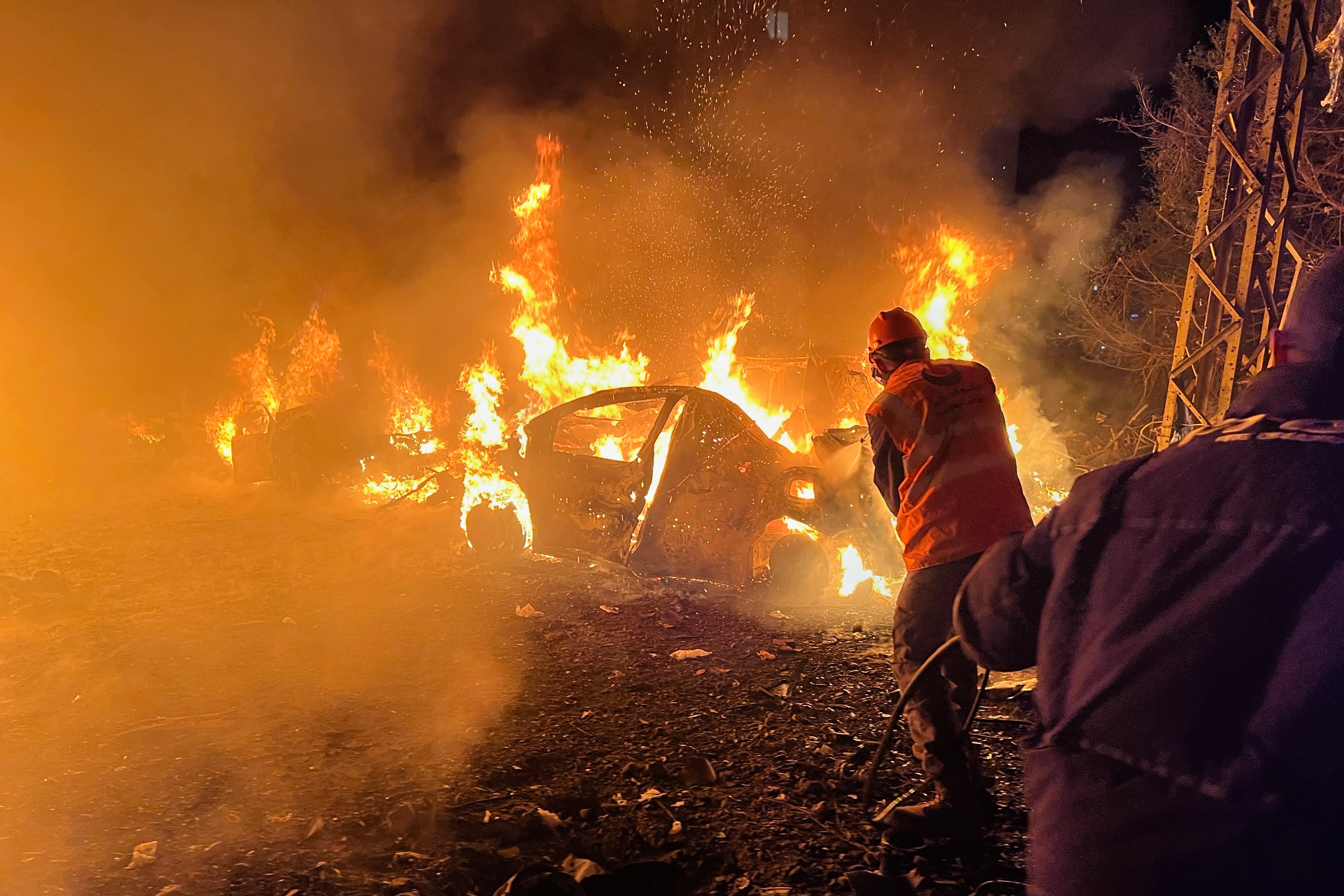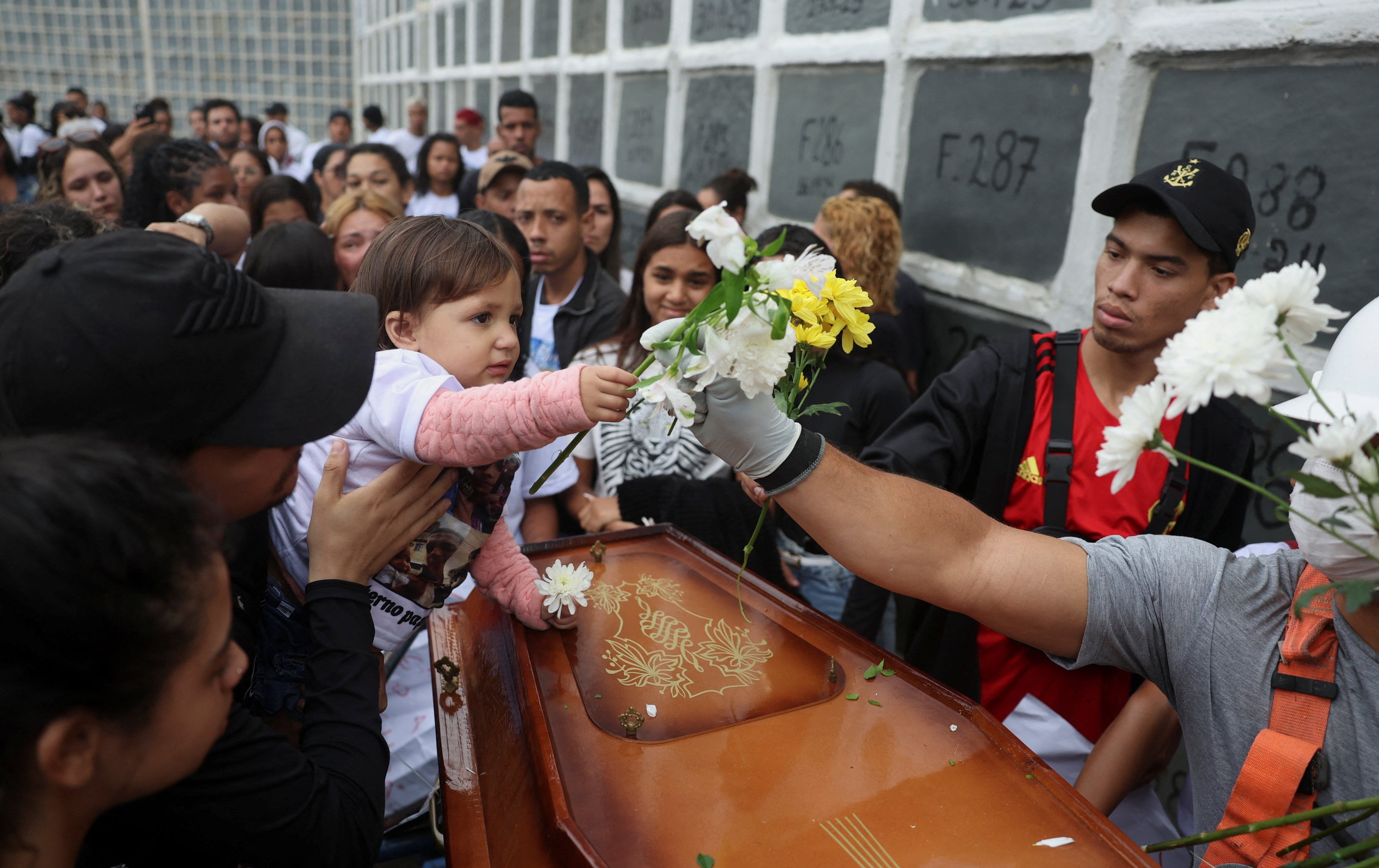
The deadliest police operation in Brazilian history left 121 dead on Tuesday in Rio de Janeiro, 117 suspects and four police officers. There are many questions left to answer, starting with the identity of those more than one hundred alleged drug traffickers killed. The Civil Police began to give some answers this Friday, releasing a list with the first 99 names identified. The corporation maintains that 78 had a history of serious crimes, including accusations of murder, drug trafficking and membership in a criminal organization; 42 were outlaws and 39 were from other states, especially from Pará (north of the country). Despite the background, none of them appear in the Prosecutor’s Office complaint that served as the basis for the mega-operation.
The Secretary of the Civil Police, Felipe Curi, explained at a press conference that the groups of favelas in Alemão and Penha, where the massacre took place, had become in recent years the headquarters of the Red Command (CV) at the national level, attracting criminals from all regions of Brazil and accumulating an arsenal of war. “The investigation and intelligence information show that that is where the shooting training is done, so that the marginalized are trained here (in Rio de Janeiro) and return to their States of origin to disseminate the culture of the criminal group,” he stated.
Among those killed in the operation, there are nine of those drug trafficking leaders in other regions of the country who came to Rio to hide, train or both. The objective of the operation, with a huge device that deployed more than 2,500 agents, was to deal a mortal blow to the CV and above all to arrest or end the life of Edgar Alves de Andrade, Docaconsidered the greatest leader of the CV in freedom. He would only be below Marcinho VP and Fernandinho-Beira Mar, both in maximum security prisons.
The Secretary of Public Security of Rio, Víctor Santos, assured that Doca managed to escape narrowly, because he used drug trafficking “soldiers” to make a barrier and manage to escape from his operations center. Rio authorities are now offering 100,000 reais (almost $20,000) for anyone who provides information on his whereabouts. He is investigated for more than one hundred homicides, including the execution of children and the disappearance of neighbors.
Regarding the 113 men arrested during the operation (among them a dozen teenagers), the police explained that 54 have criminal records. Nearly a third came from other states.
Shortly after the authorities revealed some information about the operation, the residents of Penha and Alemão demonstrated this Friday near the square where two days ago dozens of bodies were spread on the ground. Hundreds of protesters in white T-shirts shouted, above all, against the governor of Rio, Claudio Castro, and his “policy of slaughter” for the favelas.
Meanwhile, the embers of the operation are still alive, especially in two parts of the city. Ten Military Police officers are still admitted to the Getúlio Vargas hospital, two of them in serious condition. The center’s security perimeter has been reinforced and the atmosphere remains tense, especially due to its proximity to the place where everything happened. A little further away, at the headquarters of the Medical Legal Institute, there are relatives waiting to recover the 18 bodies that have not yet been identified.
For more updates, visit our homepage: NewsTimesWire