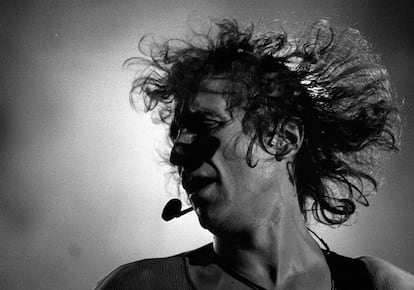
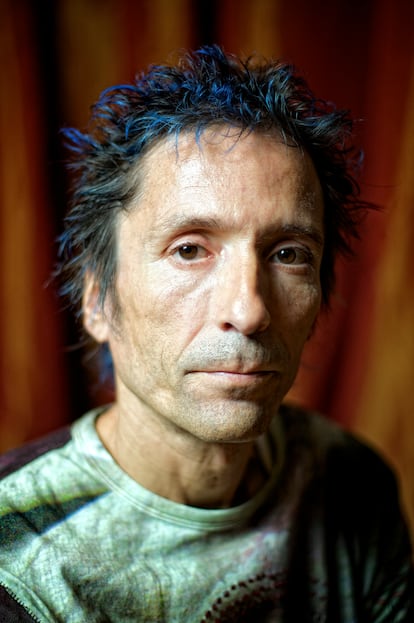
Robe Iniesta has died. And he has done it in such an unexpected way that it is difficult to confront any text about him today. Shortly before four in the morning, the manager of the Extremaduran musician sent a text to this journalist: “Our Robe has passed away. We are broken.” Iniesta had been suffering from “an illness” for a few months. His inner circle did not want the seriousness of his condition to be known. He was 63 years old. A year ago the singer indefinitely suspended his last concerts in Madrid after being diagnosed with “pulmonary thromboembolism.”
The last time Iniesta was interviewed in EL PAÍS, in May 2024, when he was presenting his impressive latest album, The air takes us away, The talk ended like this:
Q. Tell me if these are the calculations you are using: after this 2024 tour you will be missing for two years and then 12 months to compose. On the next tour, then, he will be 66 or 67 years old.
R. Phew. I don’t know if it will be that age, but I’m going to be very old on the next tour, so yes. And, on top of that, some years when I was young count to me as dog years (laughs). So in 2027 I will be a hundred and something years old.
Iniesta’s significance in Spanish music is gigantic. An unusual case: someone who, coming from rough rock, conquered ground until he became a classic respected by the whole world. His lyrics, first of marginal exaltation in the incipient stage with Extremoduro and then of a deep philosophical and romantic charge, are among the best of Spanish rock of all time. Many of his texts are about romantic love. Beneath that sulky shell beat a hyper-sensitive heart, which wrote about loves, passions and painful absences.
“Today we say goodbye to the last great philosopher, the last great humanist and contemporary writer of the Spanish language, and the singer whose melodies have managed to shake generations and generations,” states the letter from his representative. Since early this morning, hundreds of messages are saying goodbye to the Extremaduran musician.
A few months ago Robe was still in a “bad mood” due to the suspension of the Madrid concerts due to the pulmonary thrombosis. In his mind he had to resume the recitals to close what he described as “the best tour of my life.”
“Everyone who has been lucky enough to work with Robe, after doing so, recognizes that they are a much better professional, and a much better person. Very sad for this early farewell, but equally grateful, as much as possible, to have received a treasure in the form of a legacy to follow the path we have left in life,” says the statement from Dromedario Records that announced his death.
The success of Extremoduro caught the music industry off guard. It was a phenomenon that was forged in the streets, based on concerts and with the push of people, who saw Iniesta as the singer of marginality. There was no promotional support here. It was a conquest street by street, joint by joint. “Transgressive rock” was defined by the group itself. Robe got the money to record his first album with a street version of the crowdfunding: He sold tickets in bars to colleagues for 1,000 pesetas in exchange for the album… when it was made. He recorded it, gave the album to his believers and, from there, everything went up.
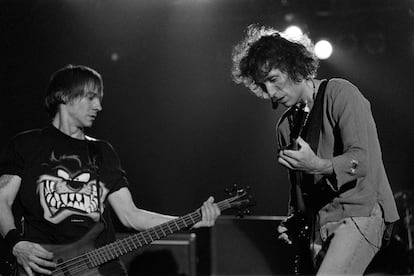
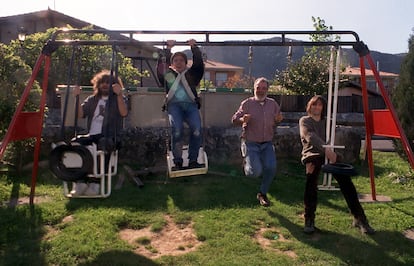
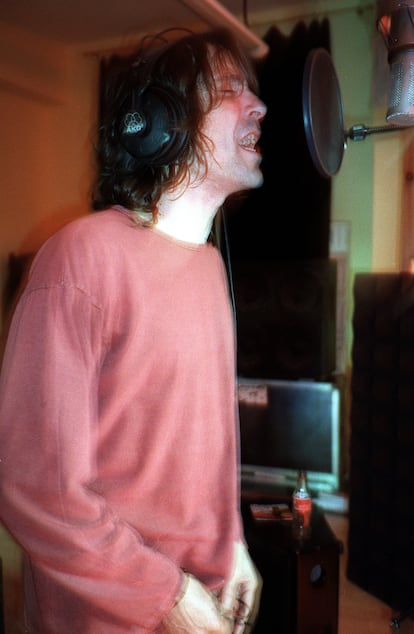
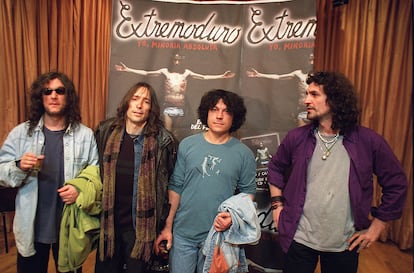
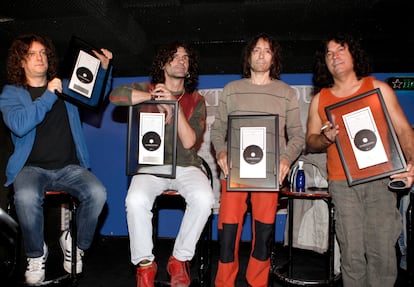
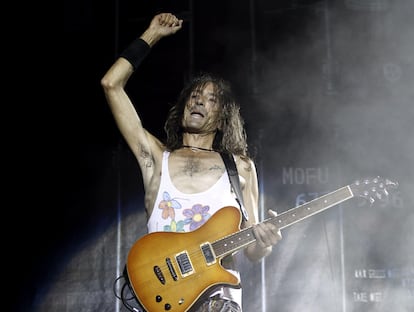
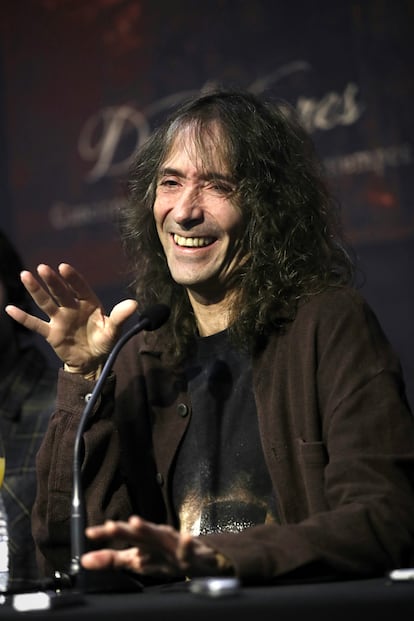
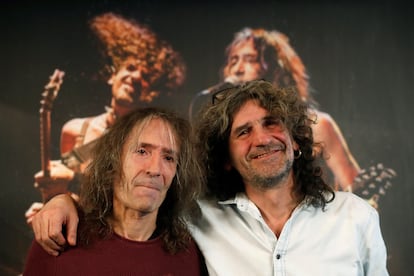
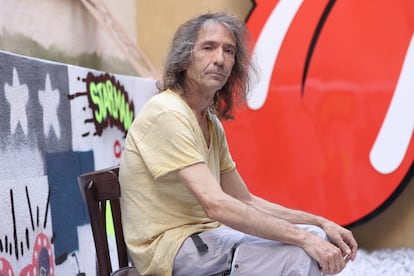
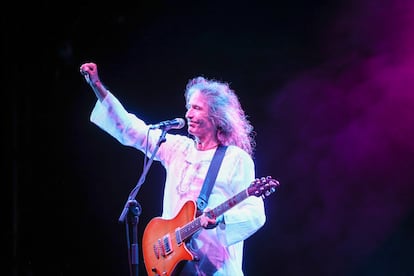
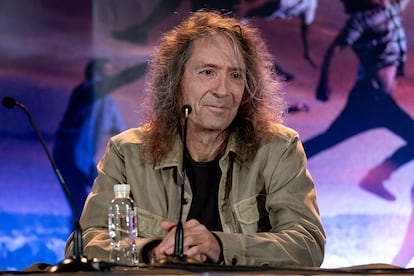
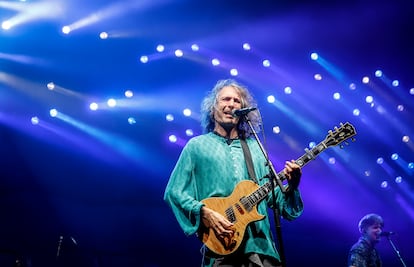
songs like Jesus Christ García, The Bonfire either Extremaydura, contained in the first album of Extremoduro (1989), They showed a lyricist who drew portraits of guys on whom the system had turned its back and accompanied them with a harsh voice and combative music related to the Spanish street rock of the Leño school. “I was stumbling around for four years. But real stumbling. I was with my bulldog.” little angel from city to city. Sometimes I slept in colleagues’ houses and other times we made a living.” This is how the musician defined his early years.
Soon the call began chaos stage, in the early nineties. Uncontrolled concerts, forgotten song lyrics, dogs on stage, too much alcohol and substances. The group even traveled with a camel. His musical legacy expanded, with albums recorded on a low budget, but the songs began to be tattooed on the skin of fans: Your heart, Deltoya, Love, love, love and expand the soul (with lyrics by bar poet Manolo Chinato), Without God or love… Robe cultivated his indomitable profile and at the same time began to read poetry. His writing gains depth.
Photo: Victor Lerena (EFE)
Then Iñaki crosses his path. Uoho Antón, member of Platero y Tú. Both groups recognize each other and see that together they can command a movement, the resurgence of urban rock. They star in several tours together where they already fill pavilions. Uoho becomes part of Extremoduro and with its arrival the group becomes professional, its sound improves, its albums are recorded under conditions. Agila (1996) represents a total change in Extremoduro: an album of superb songs, with Iniesta’s best lyrics to date and the careful production of Uoho. One of his singles, I’m a clown, lives at the top of the Los40 list, clear proof that Extremoduro had already conquered everyone.
Robe had suffered a couple of scares with substances and at the end of the nineties he decided to slow down. He returns to his partner, from whom he had separated and with whom he shares two children, and doses the drugs. “I gave up heroin long before I started with Extremoduro… I got into it and left it alone. Many people are determined to say that I’m a junkie, but it’s not true. I just do… the normal thing. The drug is not bad. The bad guys are the men and their actions. It’s like if you shoot someone and blame it on the bullet,” he told this newspaper.
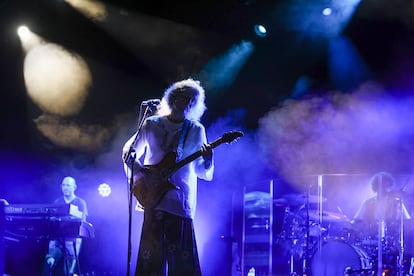
At this time, Robe devoted himself to poetry and literature in a disorderly and compulsive way. His palette ranged from the authors he found in bars (Sor Kampana, Chinato…) to classical references (Machado, Neruda, Miguel Hernández…). After Agila Extremoduro published five albums, all relevant, especially The innate law (2008), where he begins to turn his writing into philosophical treatises.
The end of Extremoduro comes with the distancing between Robe and Iñaki. What started as a creative party has become a company. Big tours, big budgets, a lot to organize, meetings with lawyers… These logistics overwhelm the two friends and their relationship breaks down. The last Extremoduro tour was taken away by the pandemic. Robe preferred to focus on his solo career, which he had started in 2015 with What flutters in our heads, and the Extremoduro tour was permanently put on hold.
His last two solo albums, Maieutics (2021) and The air takes us away (2023), present a major writer, a wise poet in a state of grace reflecting on the transcendence and inconsequentiality of the human being, offering solutions to live happily in this ephemeral world. The verses of that masterpiece that is The power of art They sound today like a wonderful memory of a man who transformed the lives of many people: “I know that tomorrow we may have nothing left and nothing matters anymore. / I look up and I hardly know anything, nothing that matters. / Maybe, if I could talk to you, if it were true, that the power of art could very well save us. / From an inert life, from a sad life, from a bad death.”
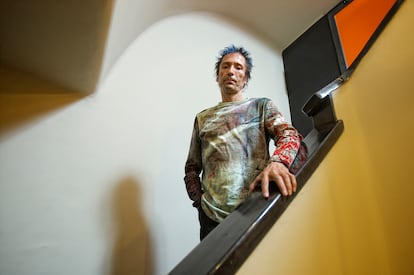
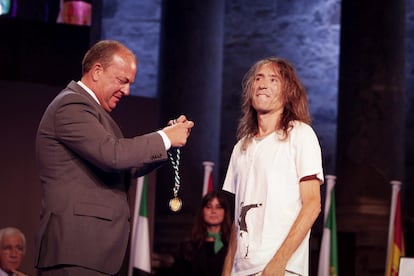
The Robe of recent times was a guy who had softened his sharp character. He was still a distrustful guy, but he was opening up over the years. He offered interviews regularly, yes, almost always by phone and when he released an album or went on tour. He laughed a lot in these meetings with the press. He lived between Extremadura and the Basque Country with his wife, Bibi, always willing to lend a hand when the administration of a day of performance had to be organized. The couple has two children, now in their thirties, one of them a musician. The Extremaduran musician has also let himself be loved in recent times, receiving the occasional tribute. The meeting he had in Piornal (Valle del Jerte, Cáceres) when receiving the Golden Cherry was touching. There, some children from a school sang him the Extremoduro classic. Love, love, love and expand the soul. Robe was moved.
“I think that in the end what rules is the music. And although people are very morbid about my past, what counts are the songs. When you have been around for so long and making different music, it is normal that many people who are interested in the songs like you,” he told this newspaper after that tribute.
And that is what we will always have about Robe, his songs and the enormous capacity he had to move us with them.
For more updates, visit our homepage: NewsTimesWire