The increase in tariffs on Asian cars announced Wednesday by the government of Claudia Sheinbaum has not sat well in China. Beijing has expressed its opposition “to all forms of unilateralism (and) protectionism” and has assured that “will decide decidedly” the “rights and interests” of the country, in the words of the spokesman of the Foreign Ministry, Lin Jian.
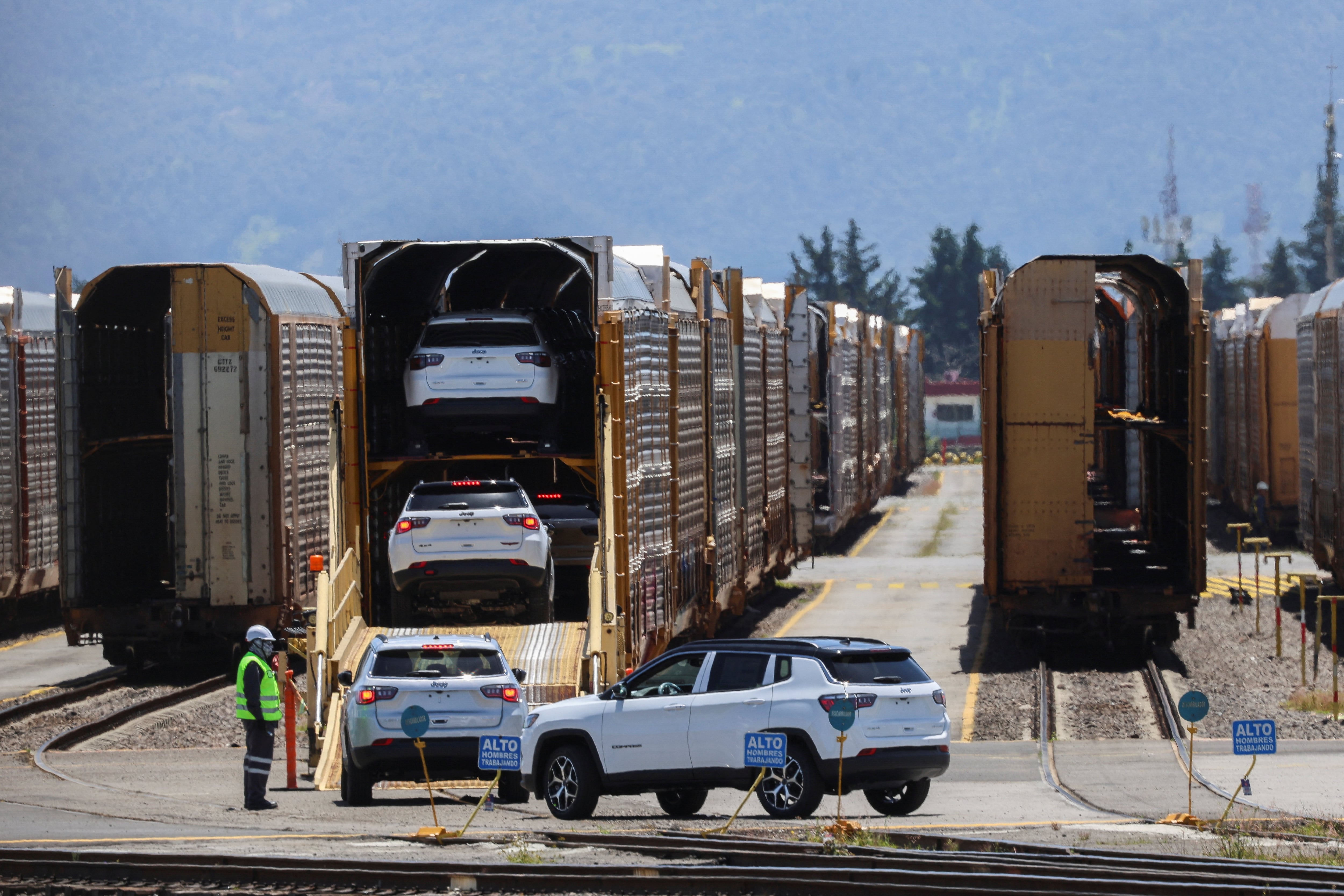
The initiative of the Mexican president, which is still pending to obtain the approval of the legislative to enter into force, includes increases of up to 50% in the case of imported cars from the Asian country, currently with a 20% rate. Among the list of sectors impacted by the decree are also the textile and steel industry, as also included in other countries without commercial agreement with Mexico such as South Korea, India, Indonesia, Russia and Thailand.
In Beijing, the measure has been seen as an response to the “coercion” of the United States, in full tariff war throughout the globe, and in search of a greater influence in Latin America. The Mexican cabinet, on the other hand, rules out that it is the “geopolitical logic” that Donald Trump is applying.
The Chinese spokesman has affirmed that his country “firmly opposes any coercion by third parties to impose restrictions on China under various pretexts”, an accusation that the Mexican Secretary of Economy, Marcelo Ebrard, has cleared. “It is not a pretext, it is the commercial system,” he responded during an interview with Radio Formula this Thursday morning, in reference to the framework set by the World Trade Organization (WTO), of which both countries are part, and that allows you to climb the tariffs until that percentage.
“It does not have a geopolitical logic but of protection of our industry,” he also argued, unchecking the policy with which Trump seeks to obtain results in other matters outside the one in which he squeezes, such as security, in the case of Mexico. This is, Ebrard has detailed, to protect the nearly 320,000 national jobs at risk as a result of the importation of products at a price lower than the reference in the country.
The initiative adds to that of other countries and regions of the world, such as the European Union or Brazil, which have lifted recent commercial walls to the entrance of Chinese cars, remote control of their measures against electricity. Meanwhile, Mexico has become the main export destination of cars made in China, surpassing Russia, after Moscow imposed protectionist measures this year.
The Asian giant – main manufacturer and exporter of cars in the world – sent around 280,100 vehicles to Mexico in the first semester of 2025, an interannual increase of 24%, according to Bloomberg.
For China, whose internal consumption follows, exports are key to maintaining the rhythm of the economic locomotive. But the White House tariff barrage is making a dent, and in August he saw how his trade with the rest of the world slowed down.
Mexico is an important piece of the scheme. China is the second commercial partner of the country, behind the United States, and imports of the Asian giant have almost doubled in the last decade, at the expense of a growing commercial balance deficit for Mexico. The US president, Donald Trump, has accused his American neighbor to act as a back door for the entrance of Chinese products to the United States.
“At a time when the abuse of tariffs by the United States has caused a generalized opposition worldwide, all countries must reinforce communication and coordination to safeguard free trade,” said a Chinese trade spokesman in a statement published on Thursday. Beijing, he has influenced, will consider the measure “a concession to unilateral intimidation” of Washington. And has warned that “it will reduce the confidence of companies to invest in Mexico.”
The measure of the Sheinbaum government is part of the so -called Plan Mexico, which aims to give a boost to the national industry, among other things, by reducing the tax advantages with which foreign producers matter to the country. The proposal outlined by the president points to an increase in tariffs of 16.1% to 33.8% on average. In addition to cars and auto parts, some of the products that would reach rates of up to 50% set by the WTO include textiles, steel, paper and cardboard, glass, motorcycles, soaps, perfumes and cosmetics. The economic impact would be about 52,000 million dollars, the equivalent of 8.6% of purchases abroad.
Along the same lines as the measure presented on Wednesday, the Government announced two weeks ago that the importation of finished footwear, that is, the one to which no element or value in Mexico is added, it will cease to be included in the temporary import regime. This system exempts the VAT from the products that cross the border several times to facilitate its assembly. In the case of finished footwear, this fiscal advantage is unjustified and supposes, according to the Executive, an unfair competition for the Mexican industry, which employs more than 130,000 direct workers.
Given the risk of the matter climbing to a political and not only commercial issue, Sheinbaum has clarified this Thursday, during his Mañanera conference, which does not want “any conflict with any country” and that is talking to the representatives of the countries that would be potentially affected. “You are talking to the Chinese ambassador to Mexico, with South Korea … we are explaining that it is a measure that has to do with the strengthening of our economy. What we want is to talk without the need to generate any conflict,” he said. The president has also ruled out the possible inflationary effect of the measure. “A very detailed study was made. There are many products that do not have these tariffs,” he said.
For more updates, visit our homepage: NewsTimesWire