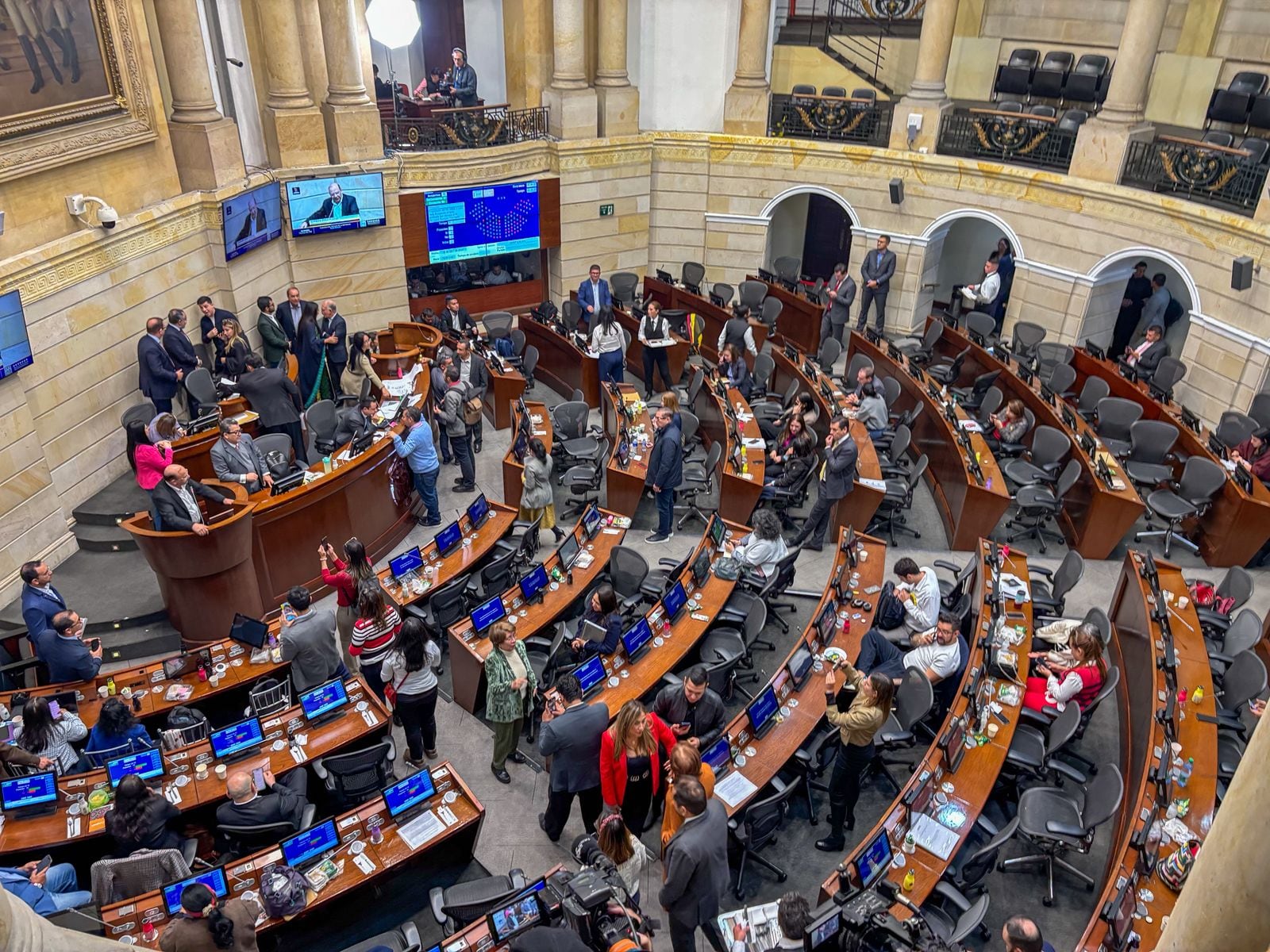
President Gustavo Petro has achieved an unexpected but resounding victory this Thursday afternoon in the Congress of the Republic. The majority of senators voted in favor of approving the 2026 general budget of the Nation, as it had been approved the previous day in the House of Representatives. With this decision, the State has authorization to spend $546.9 billion pesos, about 150,000 million dollars. Although they are 10 billion pesos less than what the Government initially requested, they are 16 billion more than the income that the Executive itself plans to achieve. For this reason, the approval gives strength to the criticized tax reform project that seeks to fill that gap and that until this Thursday was virtually sunk despite not even having reached Congress.
The vote of 50 yes votes and 27 no votes was surprising. In 2024, Congress rejected the budget, which the Government had to issue by decree. And several weeks ago, the Senate had denied the global amount, so defeat was predicted. But, along the way, the Executive reduced its ambition and, in addition, eliminated the articles that gave extraordinary powers to the president, and which had been especially criticized by the opposition and independent congressmen.
Those changes worked. For this reason, the Minister of Finance, Germán Ávila, celebrated the victory with joy: “The fundamental thing about the exercise that we have closed today is to show the country that both the Executive and the Legislative have a scenario of agreements, of conversations to reach consensus,” he said in dialogue with the media. The minister concluded with a reflection that seems unlikely in these days of polarization and a few months before the national elections: “The Government of President Gustavo Petro has shown Congress and the country that it is open and willing to dialogue.” The Minister of the Interior, Armando Benedett, especially thanked the president of the Senate, the liberal Lidio García, for having given the necessary guarantees for the vote: “We have quite a few friends in Congress, it seems that there is a strong coalition,” he said when leaving the vote.
The spirit of conciliation, which allowed the approval of the project in a few hours, came not only from the Executive and its ministers, but from the senators and representatives of the Chamber who supported the agreement. Liberal senator John Jairo Roldán proposed, at the beginning of the debate this Thursday, that the plenary session of the Senate, which traditionally avoids the Government, accept the text approved a day ago by the Chamber, which has pro-government majorities. Minister Benedetti and the Historical Pact bench supported the idea, which allowed the senators to avoid the debate article by article, in addition to avoiding the usual conciliation process that occurs when the texts of the Chamber and Senate are different.
This strategy was the same one proposed more than a year ago by Congressman David Racero for the House to approve the pension reform with the same text from the Senate. Despite its legislative effectiveness, the Constitutional Court continues to study whether in that case the legal requirements were met and the greatest social reform achieved by the Petro Government can come into force. Many opposition senators, who this Thursday sought to sink the budget, have denounced that the legal problem could be repeated. Senator Angélica Lozano, of the Green Party and opponent of the Government, recalled: “I refuse to accept the Chamber’s budget text. It is exposed to nullity, just as it has happened with the Pension reform for more than a year in debate in the Constitutional Court.”
Beyond these legal debates, the Government’s political tactics worked, and prevailed over the opposition’s attempt to break the quorum and thus prevent the discussion. Had it been achieved, it would have ended up taking away the oxygen from a tax reform with which they do not agree and which seems unviable just a few months before citizens are called to the polls. However, the Government added votes from pivotal parties, such as the Liberal, The U and the Conservative. To this end, the Treasury proposed in the legislative debate to increase the budget of entities that manage allies of these communities. For example, the approved budget adds 200,000 million to the Ministry of Information and Communications Technologies, headed by Carina Murcia Yela, close to La U. It also increases the resources of the Ministry of Sports, which for two years has been headed by people close to conservative senators, and the Ministry of Industry and Commerce, headed by Diana Marcela Morales, an ally of the Liberal Party. He also increased the budget by 600,000 million for the Attorney General’s Office, led by the former secretary of the Senate, Gregorio Eljach, who retains a lot of power in the Legislature.
The next step is for the Government to officially present the tax reform. Two weeks ago, when the economic commissions approved the budget in the first debate, the president proposed reducing the size of that financing law and making it more politically viable: “As the new request for financial resources decreases by 10 billion pesos, I think the most fair thing is not to request tax increases on gasoline and beer. I hope that beer producers buy all the wheat and barley raw materials from Colombia. It will taste better,” he wrote in his account of
For more updates, visit our homepage: NewsTimesWire