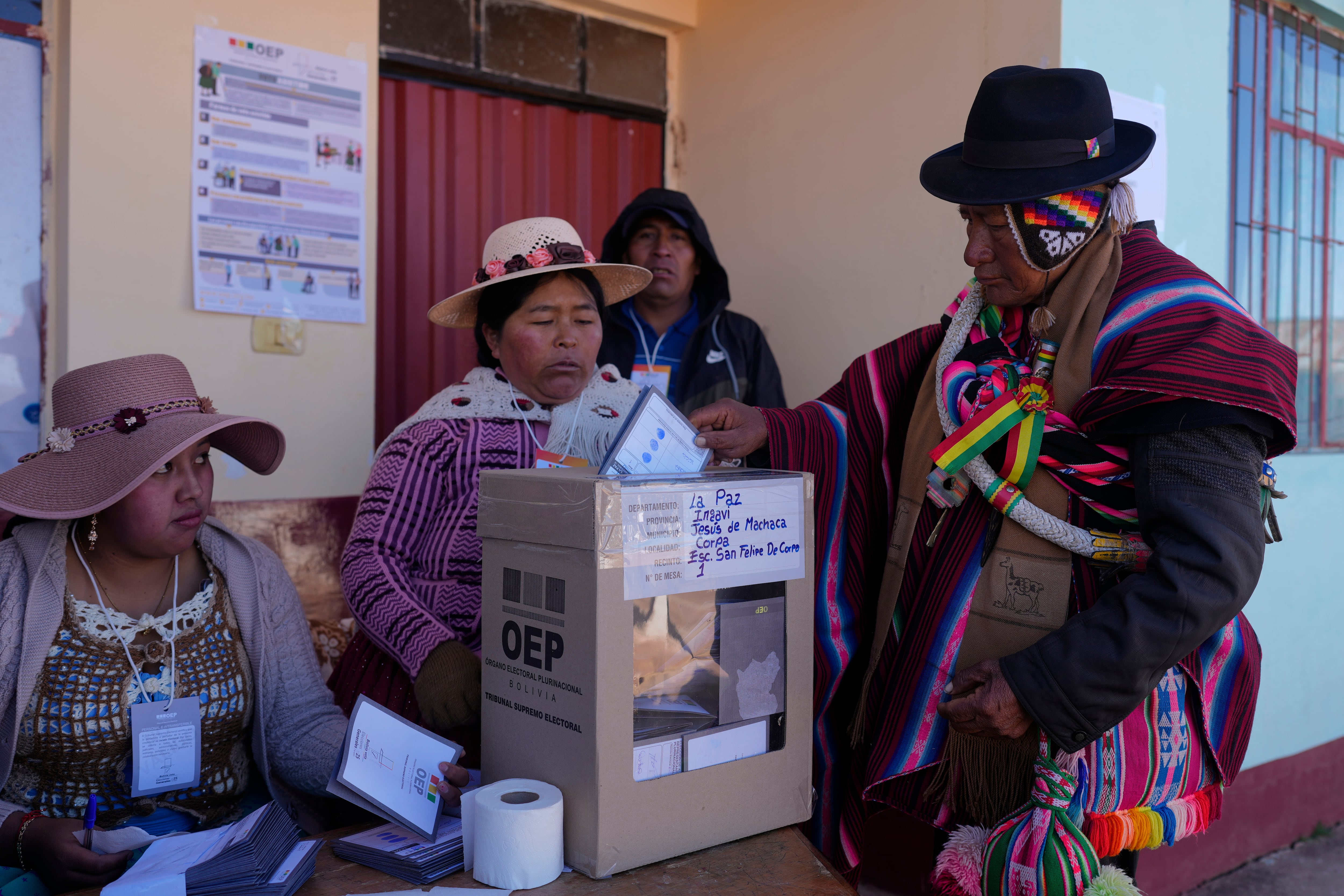
A couple of weeks ago there were presidential elections in Bolivia. It is not yet known who will be the new president, since a second round will be necessary, which will take place in October. The two finalist candidates are Rodrigo Paz, son of former president Jaime Paz Zamora, and Jorge “Tuto” Quiroga, former president. Both are located in a political spectrum that goes from the right to the center -right. Therefore, what we are sure is, is the end of the regime of socialism movement (MAS), the left -wing political party that headed for a long time Evo Morales, former cocalero cocalero of origin Aimara and who was three times president of the country (from 2006 to 2019).
Due to Evo Morales’s resignation to the presidency of Bolivia in 2019, his government was unfinished and Jeanine Añez was appointed interim president. The Añez government summoned new presidential elections for 2020, in which Luis Arce, candidate of the MAS official. In total, it would have been practically 20 years of Government of the MAS in Bolivia (2006-2025), which will come to an end at the end of the period of Luis Arce.
How did a regime come to an end that obtained four consecutive occasions the presidency of Bolivia with very broad margins? For many people, the answer is political: this result attributes to internal partisan disputes between President Arce and former President Morales and the lack of coordination to appoint a unit candidate who will represent the interests of his movement. However, this response is possibly incomplete, since it was not really a division of the vote of the left that allowed the triumph of opposition candidates. In fact, the two ideologically more related candidates, Andrónico Rodríguez (Cocalero leader) and Eduardo del Castillo (candidate of the MAS), were, respectively, in the fourth and sixth place in the first round of the presidential elections. Together they did not even reach 12% of the votes in the first round. Far from the levels greater than 50% with which the four previous governments of the MAS were elected, none of which needed to go to a second round of features.
An alternative explanation of these results has to do with the exhaustion of an economic model that did not give the expected results and that already showed clear signals of deterioration. This could explain why the Bolivians decided to give their support to candidates who offered a readjustment in the economic model and who raised the return to stability as part of their campaign offers. In that sense, it is important to understand the magnitude of the imbalance of macroeconomic conditions in Bolivia that has occurred in recent years. Let’s look at some figures.
With July 2025, annual inflation in Bolivia is already 25%. Only accumulated inflation in the first seven months of the year was 17%. The fiscal deficit of the last two years has become exceeding 10% of GDP and is expected that in 2025 and 2026 exceed 12% of GDP. The public debt as a whole is already greater than 90% of GDP and is expected to continue increasing. The fixed exchange rate no longer works in reality and has given way to a strong black currency market. While the official exchange rate is 7 Bolivians per dollar, in the black market the currency is quoted at least twice. International reserves, which some years ago exceeded 13 billion dollars, have already fallen to less than 2 billion dollars. In addition, most of these reserves are in gold, since in liquid terms it is estimated that the Central Bank has just more than 50 million dollars. Economic growth in recent years, although positive, has slowed down significantly and is expected to remain at low levels in this and next year. A recent report of the International Monetary Fund has clearly expressed it: “Macroeconomic perspectives under current policies are unsustainable and the risks of a paying and fiscal balance crisis are increasing.”
Why did the macroeconomic environment deteriorate so significantly in Bolivia? This is not something that has happened overnight. They have been years of bad public policies that have gradually contribute to this deterioration. Gasoline and diesel subsidies consume about four percentage points of GDP. The lack of investment in the gas sector has led to a stagnation in the production of a very important source of foreign exchange. The fall in the availability of dollars, rigged with a fixed exchange regime, has generated wide distortion in the exchange market, which is only resolved through the black market. Lithium, once the hope of Bolivia, has not been exploited due to the lack of technology and investment.
The solution to this complex situation is not simple. It is clear that the same cannot be done and expect different results. That is why Bolivians opted for alternatives that at least recognize the problem and that they care about trying to solve the background problems. Achieving the return to macroeconomic stability will not be easy or free. But this is this problems when they are not addressed promptly.
In short, economic stability is crucial to maintaining the support of the population. It is no longer enough with charismatic leaderships or politically attractive, but economically unfeasible proposals. We must offer and guarantee stability and economic prosperity. People also vote with their pocket in mind. That is perhaps the most important message and lesson of the presidential election in Bolivia. Hopefully other governments of the region take note.
For more updates, visit our homepage: NewsTimesWire