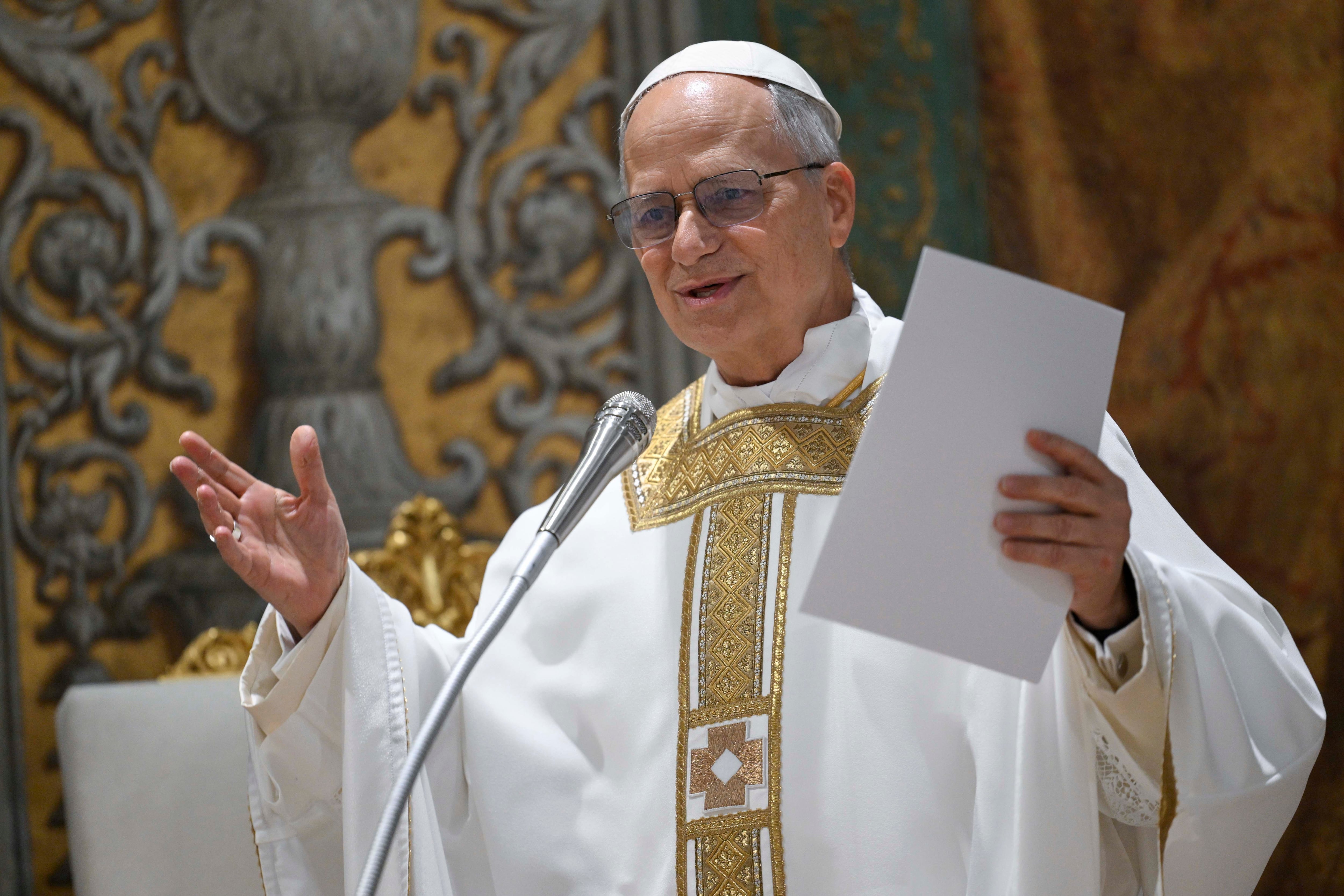
The new Pope, Leo XIV, had a brief exchange of messages with the country in the days before the conclave, in which, beyond the mere response to an interview request, he showed kindness and appreciation for the work of journalists. It is a small anecdote that helping to have some more light on an important angle, and even to discover, of the new Pontiff: how will its relationship with the media be after a Pope as media as Francisco, who came to give hundreds of interviews.
This newspaper, which mentioned Robert Francis Prevost among the main favorites of Francisco’s succession, asked him for an email interview on April 25, four days after the death of the Argentine Pope. As there was no response and since the cardinal was not granting interviews with any media, this newspaper sent a second message on April 27, apologizing in advance by the insistence. “The insistence is not a problem,” Premost replied shortly after, that same day.
He then explained that the work commitments did not leave much free time. They were the frantic days when the general congregations started, the Cardinal Assemblies to prepare the conclave.
In his message, the future Pope excused himself by saying that cardinals had already been asked not to grant interviews and, therefore, he preferred not to do so. But he kept adding, before saying goodbye, a reflection of support for journalism: “Thank you for work, which I consider very important.”
The first audience, with journalists
The truth is that the first public hearing of Leo XIV will be precisely to journalists, this Monday, as Francisco has done after his choice. The Pope will meet the media professionals accredited in the Vatican, who during the last days have become 6,000, in an act that will probably be held in the Classroom Pablo VI, a large auditorium located within the small state.
It will be the first time to check your way of communicating in contact with the press and your words will give clues about how you plan to develop it. Francisco has been the Pope who has led the relationship with the media, speaking of everything without a clipper and huge frequently. For his critics, too much, because in the most traditional sectors it was considered that the Pope must demonstrate almost exclusively through his teaching, his homilies, his documents and his encyclicals, but Jorge Mario Bergoglio continuously launched messages informally in conversations with journalists.
Francisco premiered his intense relationship with journalists with the famous press conference on the return flight of his first trip, to Brazil, saying the phrase “who I am to judge a gay.” These meetings with the plane, on each trip, were a head of headlines and the Argentine Pope did not fear getting into puddles, sometimes speaking very colloquially.
Then they followed a dozen book-including books with journalists of their trust and numerous interviews, something unpublished in a pontiff. The first to a Spanish media went to El País, in January 2017. One of the unknowns that must clear Leo XIV, shy and very different from Francisco, is whether the example of its predecessor will follow or, on the contrary, it will reduce that public exposure and reduce or eliminate interviews.
The first time to clearly check how Leo XIV behaves with the media will emerge on the first trip you make. Francisco already had one planned to Turkey at the end of May, on the occasion of the anniversary of the 1700 council of Nicea, but in view of the new Pope’s agenda for the next few days, released this Friday and that it foresees commitments until May 25, it does not seem to be possible.