The European Law of Competition is vitamin in cases such as the BBVA OPA to Sabadell. It is federalization lever. The Costa/Enel Judgment of the Court of Justice of the European Union, the TJUE, consecrated in 1964 the transcendental principle of primacy of common law over the national. Without it, the union would be dispersion, due to lack of common rules.
The growing and expansive rhythm of that right counteracts the exponential increase in market obstacles. Abusive practices, price concertations, dominant position abuses and anti -competitive concentrations proliferate. It is an endogenous trend of capitalism sterilizing competitors. Without those rules that sanitize it, the plurality of companies ends in oligopoly or monopoly. As democracy becomes dictatorship if it leads to a unique party.
Since at least 1993, to the compass of the imminent Scandinavian extension, that right, which had removed multiple inter -companies distortions, emphasizes consumer protection, its frequent victim. Directive 93/13 on abusive clauses inherits the concept of protection “of the acquirers of goods and services” against “the abuse of power” and to “stimulate competition”. Expands it.
Its application to the banking sector was legendary in Spain. The TJUE disarmed the supreme in the case of soil clauses. His sentence of 12/21/2016 enhanced the rights of the mortgages. He saved them, being consumers in “inferiority situation”, reverse evocation of the “dominant position.”
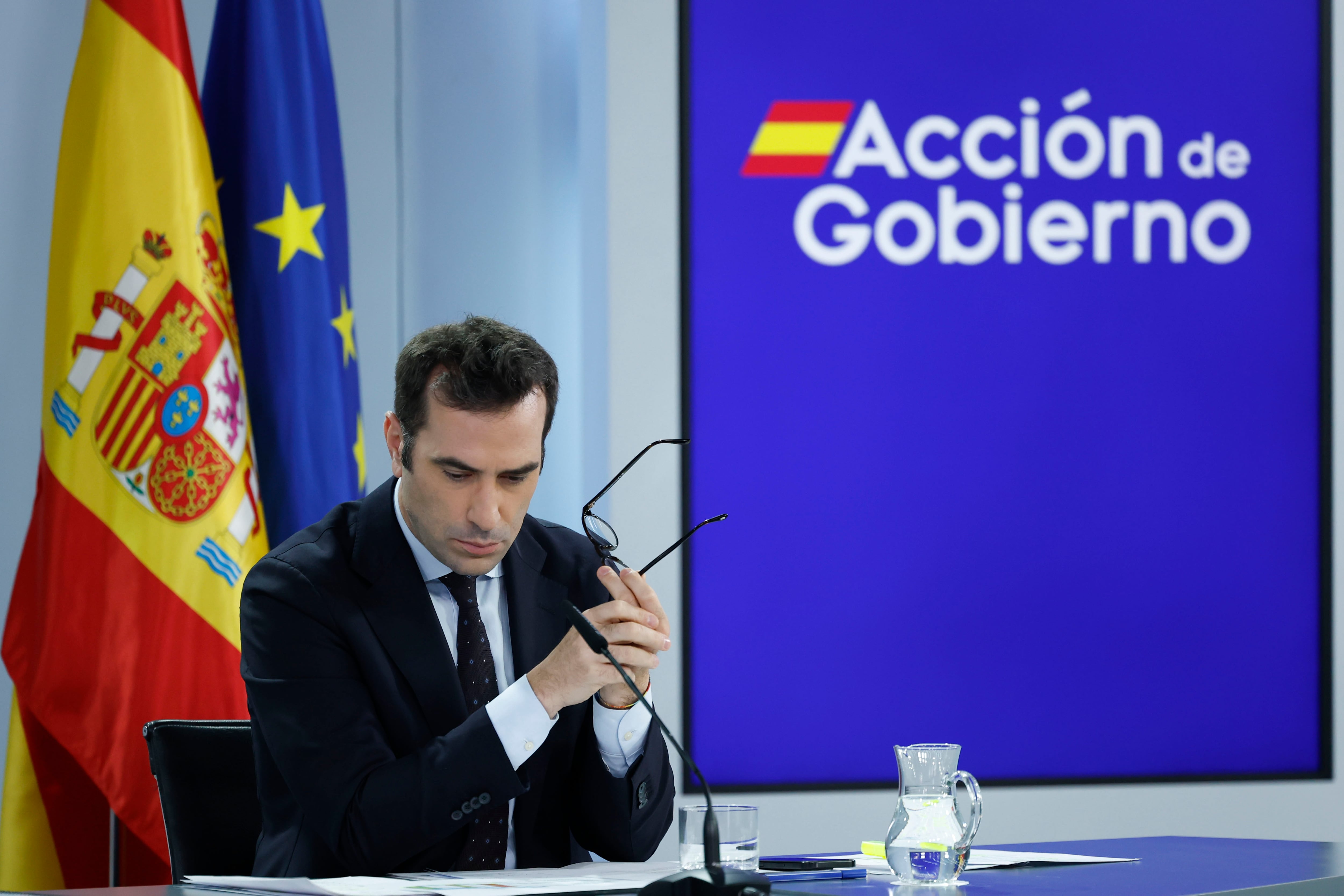
Now another innovation occurs in Spain, not normative, but practice: the open “consultation” of the Ministry of Economy to the “affected” people by the OPA. Only precipitation can describe it as a populist: they are not even the municipal participatory budgets already differentiates them, it is not binding.
Only ignorance or oblivion of the legal can call it arbitrator or illegal. It is the other way around: active – in the expansive European path – a phase (of infrequent use) of a competence procedure, which corresponds to the government, which has its own legal powers such as the other converge organisms (CNMV, CNMC, ECB …).
Or perhaps because this government does not like to be denied? Or because he wants to hear those affected – the CNMC has made it late and bad, restrictively, and forced by an appeal to the National Court – must be considered the promoter of a referendum little less than self -determination?
The power of the Executive to assume or modify the decisions of the CNMC and, therefore, to previously ask those who affect them, about whether there are public goods or reasons of “general interest different from the competition” that must be protected additionally, appears in the Law of Defense of the Competition of 2007 (articles 10 and 60). They can emerge, it seems evident.
Thus, a restriction of credit sources (such as those caused by a merger) usually induce lower business investment in R&D, a chapter that is cut in every crisis. Or harm financial inclusion (social cohesion). Or evaporate social, cultural and educational work, direct or indirect, as happened with the absorption of the boxes (territorial cohesion) … that in this case it is so, or not, it remains to be seen. Or better, to listen.