Toothbrush Market
The Toothbrush Market plays a critical role within the global oral care industry, serving as a fundamental tool for maintaining dental hygiene and preventing oral diseases. Toothbrushes are used daily by billions of people worldwide, making them one of the most essential personal care products. Over the years, the market has evolved significantly, transitioning from simple manual designs to advanced electric and smart toothbrushes equipped with digital features.
Rising awareness about oral health, increasing disposable incomes, urbanization, and the influence of dental professionals have contributed to steady growth in the toothbrush market. Consumers today are more informed about the link between oral hygiene and overall health, leading to higher demand for effective and specialized toothbrushes. As a result, manufacturers are focusing on innovation, design improvements, and sustainability to differentiate their products in a highly competitive market.
Market Drivers
One of the primary drivers of the toothbrush market is the growing emphasis on preventive healthcare. Dental issues such as cavities, gum disease, and plaque buildup are increasingly common due to changing dietary habits and high sugar consumption. Governments, healthcare organizations, and dental associations continue to promote regular brushing as a basic preventive measure, directly supporting toothbrush demand.
Another major growth driver is technological advancement. Electric and battery-powered toothbrushes have gained widespread acceptance, especially in developed and urban markets. These products offer features such as pressure sensors, multiple brushing modes, timers, and app connectivity, which enhance brushing efficiency and user experience. Consumers are increasingly willing to pay a premium for products that promise superior cleaning and convenience.
Additionally, the expansion of e-commerce and organized retail channels has improved product accessibility. Online platforms allow consumers to compare brands, prices, and features, while subscription-based toothbrush replacement models are gaining popularity. This ease of availability has positively influenced market growth across both developed and emerging economies.
Product Segmentation and Innovation
The toothbrush market can be broadly segmented into manual toothbrushes and electric toothbrushes. Manual toothbrushes continue to account for a significant share of the market due to their affordability, simplicity, and widespread availability. They are particularly popular in price-sensitive regions and rural areas. Innovations in this segment focus on ergonomic handles, multi-level bristles, charcoal-infused fibers, and specialized designs for sensitive teeth or gum care.
Electric toothbrushes represent the fastest-growing segment of the market. These products appeal to consumers seeking advanced oral care solutions and are often recommended by dentists for improved plaque removal. Rechargeable electric toothbrushes dominate this segment, supported by rising consumer trust in technology-driven personal care devices. Smart toothbrushes that connect to mobile applications and provide real-time feedback are further pushing the boundaries of innovation.
Children’s toothbrushes form another important category. Bright colors, cartoon characters, and soft bristles are designed to encourage good brushing habits from an early age. Parents increasingly prioritize child-specific oral care products, contributing to consistent demand in this segment.
Sustainability and Eco-Friendly Trends
Sustainability has emerged as a key trend shaping the toothbrush market. Traditional plastic toothbrushes contribute significantly to environmental waste, prompting growing concern among environmentally conscious consumers. In response, manufacturers are introducing eco-friendly alternatives made from bamboo, biodegradable plastics, and recyclable materials.
Bamboo toothbrushes, in particular, have gained traction as a sustainable alternative to plastic. While their market share is still relatively small, demand is increasing rapidly in regions with high environmental awareness. Brands are also adopting minimal and recyclable packaging to reduce their environmental footprint.
These sustainability initiatives are not only addressing environmental concerns but also serving as powerful marketing tools. Consumers increasingly prefer brands that align with their values, and eco-friendly toothbrushes are becoming an important differentiator in the market.
Regional Market Insights
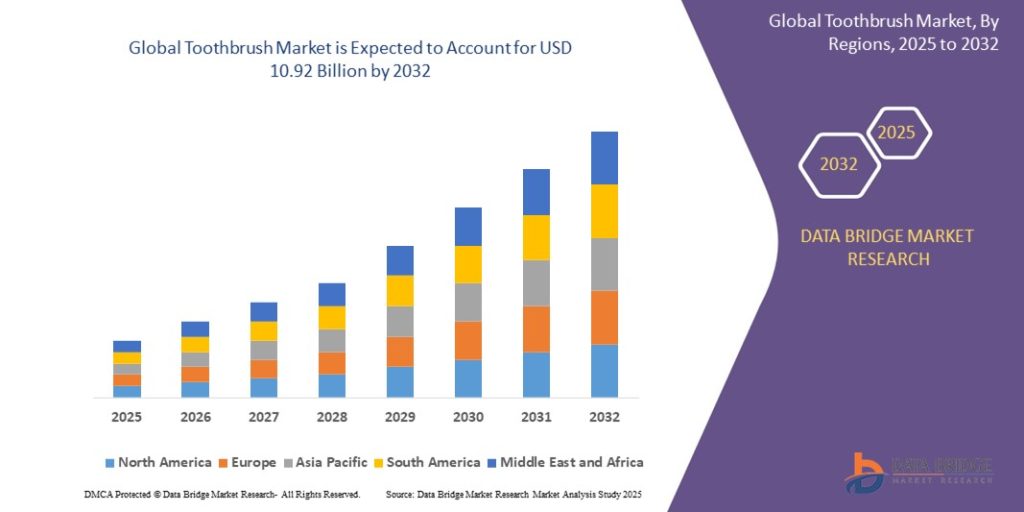
From a regional perspective, North America and Europe represent mature markets for toothbrushes, characterized by high penetration of electric and premium products. Strong consumer awareness, established dental care routines, and higher spending power support market stability in these regions. Innovation and replacement demand drive growth rather than first-time usage.
The Asia-Pacific region is expected to witness the fastest growth in the toothbrush market. Rapid urbanization, a growing middle-class population, improving healthcare infrastructure, and rising awareness about oral hygiene are key factors fueling demand. Countries such as China and India offer significant opportunities due to their large populations and increasing adoption of branded oral care products.
Latin America, the Middle East, and Africa represent emerging markets with considerable growth potential. While manual toothbrushes dominate these regions, gradual improvements in income levels and healthcare education are expected to boost demand for advanced toothbrush products over the long term.
Competitive Landscape
The toothbrush market is highly competitive, with the presence of both global and regional players. Leading companies focus on brand recognition, product innovation, and extensive distribution networks to maintain their market positions. Marketing strategies often emphasize dentist recommendations, clinical benefits, and technological superiority.
Private-label and local brands also play an important role, particularly in developing regions where affordability is a key purchasing factor. The competition encourages continuous innovation and pricing strategies that benefit consumers.
Future Outlook
The future of the toothbrush market looks promising, supported by consistent demand and ongoing innovation. Smart oral care solutions, personalized brushing experiences, and integration with digital health platforms are expected to gain momentum. As consumers continue to prioritize health and wellness, toothbrushes will remain an essential component of daily routines.
Sustainability will play an increasingly important role in shaping purchasing decisions, pushing manufacturers to invest further in eco-friendly materials and circular economy practices. Additionally, expanding awareness campaigns and improved access to oral care products in emerging markets will create new growth opportunities.
Get More Details:
https://www.databridgemarketresearch.com/reports/global-toothbrush-market
Conclusion
The toothbrush market is evolving beyond basic oral hygiene tools into a dynamic and innovation-driven industry. Factors such as rising health awareness, technological advancements, sustainability initiatives, and expanding global access are collectively shaping its growth trajectory. With strong fundamentals and continuous product development, the toothbrush market is well-positioned to maintain steady growth and adapt to changing consumer expectations in the years ahead.
Tags: #ToothbrushMarket #OralCareMarket #DentalCare #OralHygiene #PersonalCareIndustry #ElectricToothbrush #SmartToothbrush #SustainableOralCare #EcoFriendlyProducts #HealthcareMarket #PreventiveHealthcare #ConsumerHealth #DentalTechnology #HealthAndWellness #GlobalMarketTrends #MarketResearch #IndustryInsights #HealthcareInnovation