Essential Eye Surgery
Eye surgeries require exceptional precision, skill, and specialized tools to ensure successful outcomes. The right set of eye surgery instruments plays a vital role in delivering accurate results while minimizing risk. Each instrument is designed for specific functions, allowing surgeons to perform delicate procedures with the utmost care. This article explores the top 10 eye surgery instruments, their unique uses, and how they contribute to patient safety and surgical efficiency.
1. Scalpel
A scalpel is a sharp, fine blade used to make incisions in delicate eye tissues. In ophthalmic surgeries, these incisions must be incredibly precise to avoid damaging surrounding structures. The lightweight design and ergonomic grip provide the control needed for critical surgical steps.
2. Forceps
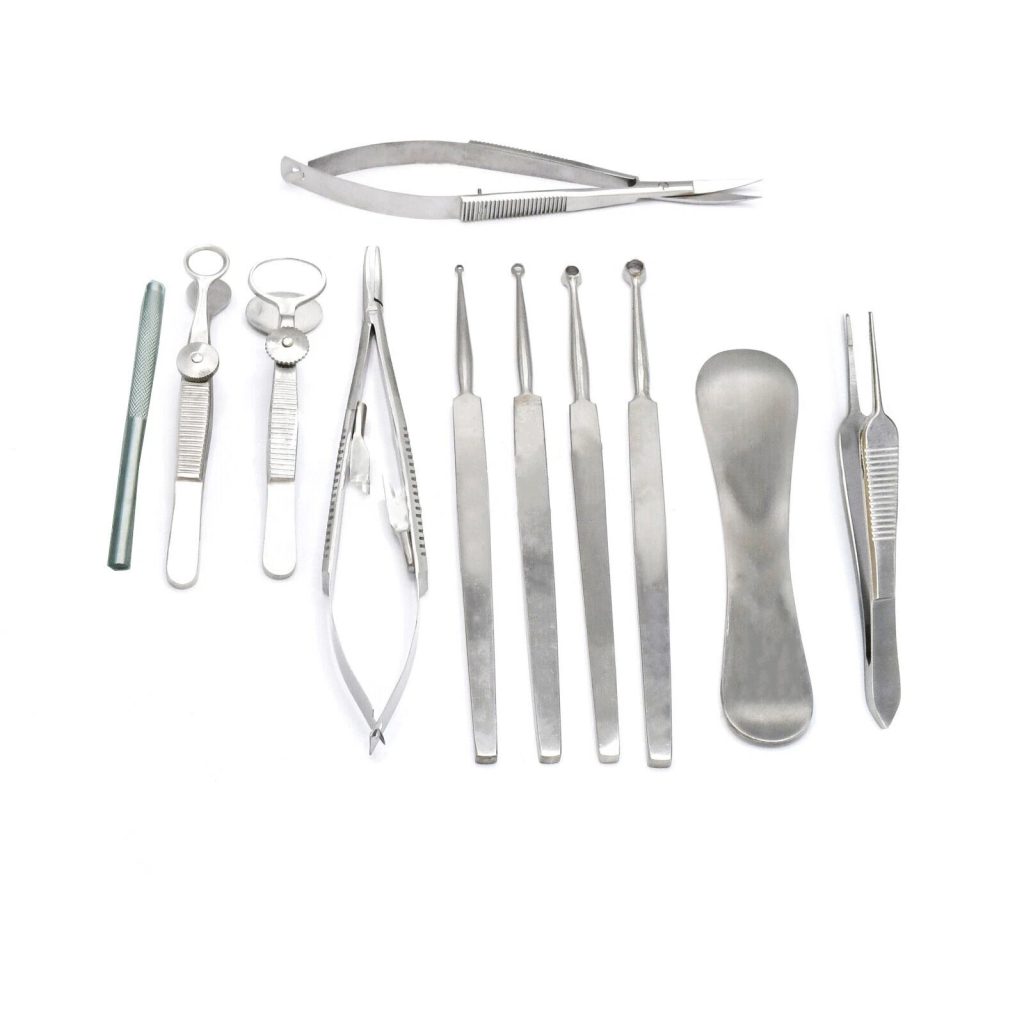
Ophthalmic forceps are used to hold or manipulate tiny tissues during surgery. They are available in different tip designs, such as smooth or serrated, to accommodate various procedures. Their precision ensures minimal trauma to fragile eye structures.
3. Scissors
Micro scissors are vital for cutting tissues, sutures, or membranes during surgery. They are designed with ultra-sharp blades to provide clean cuts without tearing, which is essential in eye surgeries where accuracy is crucial.
4. Speculum
The speculum is used to keep the eyelids open during surgery. This instrument provides the surgeon with unobstructed access to the surgical site, ensuring a steady working environment.
5. Needle Holder
A needle holder is essential for suturing during and after eye surgery. Its fine tips allow for precise needle control, which is important for working with delicate sutures and tissues.
6. Irrigation Cannula
The irrigation cannula delivers a steady flow of sterile fluid to keep the eye moist and clear during surgery. This helps maintain visibility for the surgeon and prevents tissue dehydration.
7. Lens Loop
A lens loop is used to handle the natural lens during cataract removal or other lens-related surgeries. Its smooth edges prevent tissue damage while ensuring secure lens manipulation.
8. Keratome
The keratome is a specialized blade used to make corneal incisions. Its ultra-fine, sharp design allows for smooth, precise entry into the corneal layers.
9. Phaco Handpiece
This advanced instrument uses ultrasonic energy to break up the eye’s lens during cataract surgery. It allows for efficient removal of lens fragments with minimal incision size.
10. Surgical Microscope
Although not handheld, the surgical microscope is indispensable for any eye surgery. It provides high magnification and illumination, enabling surgeons to see fine details during complex procedures.
The Importance of Cross-Specialty Surgical Knowledge
Interestingly, knowledge of dental instruments can enhance understanding of precision tools in eye surgery. For example, dental elevators and luxating tooth instruments require similar ergonomic designs and delicate handling techniques. Likewise, sinus lift procedures in dentistry involve meticulous precision—skills that translate well to microsurgical fields.
In oral healthcare, tools like a dental surgical kit or surgery kit are just as critical for achieving successful results as eye surgery instruments are for ophthalmology. Even concepts like dental implants cheap involve strategic planning and tool selection, paralleling the way surgeons choose the right set of ophthalmic tools for each case.
Final Thoughts
The top 10 eye surgery instruments outlined above are essential for modern ophthalmic procedures. Each tool serves a unique role in ensuring accuracy, safety, and optimal patient outcomes. Whether in eye care, dentistry, or other surgical fields, the choice and handling of instruments directly influence the success of any procedure. From sinus lift instruments to microsurgical forceps, precision is the universal language of surgery.