A Venezuelan opposition sector prepares to try to contain the progress of Chavismo in the May 25 elections with remarkably worse conditions that occurred in the presidential elections of July 28. The purpose of the forces that decided to present themselves to the legislative and regional elections is to gain weight in Parliament and in the governorates against government machinery. However, the device under Nicolás Maduro has already resorted to the usual maneuvers to hinder the path of their adversaries, discourage vote and promote divisions between the opposition ranks.
Nor has it cost him much. May 25 do not seem an election. They are held in the middle of the mourning that has left the outcome in suspense of the presidential presidential ones, when the triumph of the opposition – according to the data of more than 80% of the official records of the scrutiny – collided with the absolute domain of the Chavism of all the powers of the State. Thus, Maduro was sworn for a third term. The crisis left 28 dead in protests and more than 2,000 detainees, including protesters, political leaders, activists and journalists, of which more than half have already been released.
The hardening of repressive policy has produced a replication of much of Venezuelans who aspired to a political transition. To this is added that, in this campaign, there is no greater propaganda of the candidates and the opacity on the process by the National Electoral Council (CNE) is increasingly evident. Its website is still inactive since last July, when they assured – without showing evidence – that the opposition had planned an alleged computer attack of the electoral system from Macedonia del Norte.
There are technical issues regarding the past choice that also make the guarantees of participation more uphill. It was not opened, for example, the registration of new voters and neither were audits of the electoral registry or the automated voting system. In addition, the CNE eliminated the QR code of the minutes, according to complaints presented in recent days, a characteristic of the document that on July 28 allowed the opposition to easily obtain the data to demonstrate its victory.
Opposition division
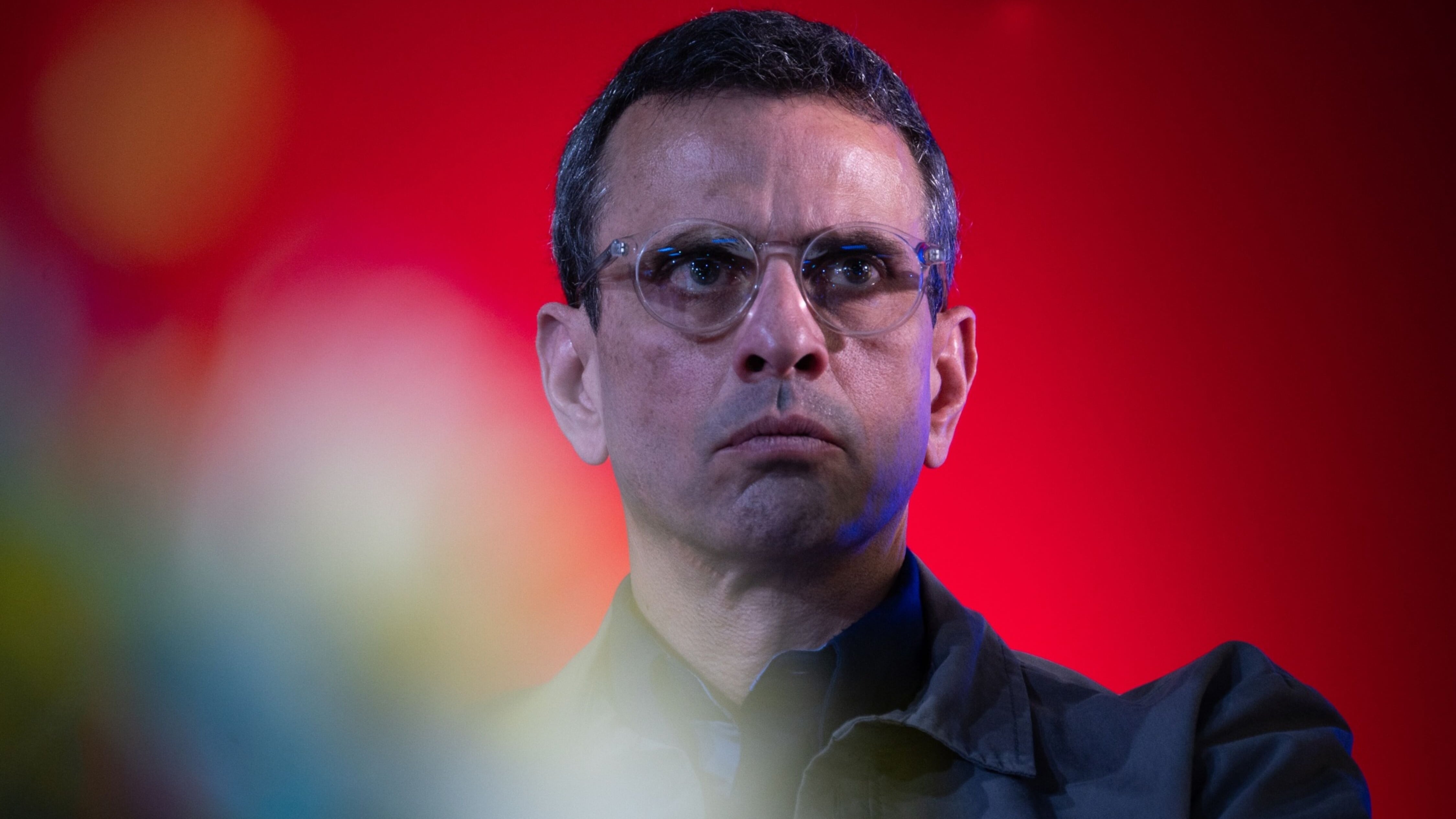
The electoral appointment has once again divided the opposition forces. The unitary platform and the forces that María Corina Machado brings together, the leader who still concentrates the greatest support and is currently in hiding, they call abstention because the July 28 election “has not been closed.” They have charged those who participate, accusing them of collaborating with “La Farsa” of Chavismo. On the other hand, the sector that vertebran the Zulian leader Manuel Rosales, of a new time, a party that has emerged from the unit block in this regional and parliamentary trance, and Henrique Capriles Radonski, which competes as a parliamentarian after an unexpected qualification from the government, ensure that the vote can still be a protest tool against Maduro.
UNT and unity lists and change (only) group these candidates. The strongest and most visible leaderships, such as Capriles, Tomás Guanipa, Luis Emilio Rondón and Stalin González are on the national lists to Parliament, where it seems that the greatest effort is being put with the view of obtaining at least one third of the 285 seats. Rosales competes to maintain the governorship of the Petroleum State of Zulia, to the West of Venezuela. The political express Juan Requesens has been nominated for the state of Miranda. Without clear numbers on the ground, without resources to mobilize a campaign and with plates of candidates and witnesses prepared with difficulty, the elections will occur in the middle of a great apathy that probably produces enormous abstention. According to some analysts, it will be difficult to attribute it only to the call of Machado, as the elections are held in an environment of despair and general distrust in the voting system.
The majority number of seats and governorates that Chavismo will obtain cannot be understood as a triumph. In Venezuela nothing is as it seems. A good part of the most important pollsters in the country have saved the numbers. But participation could be one of the lowest. The power and strategy consultant is processing this week a survey in which only 22% of the population says it is willing to vote; of that group the half will vote for the candidates of Chavismo. “Between 20% and 25% we see the maximum participation window. The panorama is desolate,” says political scientist Ricardo Ríos, director of the pollster. “That abstention is around 80% talk that people do not believe in the Mayo process. This can be the highest in the last two decades and that speaks a lot about the little credibility of the process.” For Ríos, there are also strategy differences between the group that is participating. “A sector raises a challenge to the government, validation of the demands of July 28 and to participate as a form of mobilization,” he says. “There is another that is participating with the idea of conquering certain spaces, but they are clear that they cannot become an alternative power and accept it.”
Obstacles and spaces
The elections were scheduled for April 27, but were reprogrammed for May 25 to “promote participation.” Without a clear schedule of the steps, the CNE announced last month through a message in Telegram the registration of 54 games and 6,687 candidates without publishing lists. Chavismo has said they have broken record in inscriptions. The candidacies in competition, however, met just May 6.
The Comptroller General of the Republic, the entity that disables for the exercise of public office, removed from its website the list of people who could not participate. Which hindered the assembly of the lists of candidates who would pass that filter. Thus they have been on the outside in these elections, according to some complaints, leaders who gave their support to Machado, and Antonio Ecarri Angola, father of Antonio Ecarri, former presidential candidate in July, could not register either.
The progressive movement card of Venezuela has also been excluded, which on Julio 28 added votes to Edmundo González, and for these elections he demarcated the abstentionist position. On May 25, 569 officials will be elected, including 285 deputies to Parliament, 24 regional governors and deputies to the State Legislative Councils.
In addition, for the first time, authorities for the Esequibo will be chosen, a territory that Venezuela claims its neighbor Guyana, despite the exhorts of the International Court of Justice, where part of the territorial controversy is settled. Chavismo has created a federal entity in this territory and has indicated that the administrative capital is the people of Tumeremo, where the opposition dominates. For these elections, however, less fingers, the electoral roll for this circuit is still unknown. “Beyond that we can have a debate about the efficiency of the abstentionist call, all have arguments to participate and not to participate. Both have weight reasons and a history despair and disappointment about the ability of the vote,” says analyst Luis Vicente León, director of Datanalisis. “The reasons for those who call vote are extremely solid and sophisticated. They are not saying that it is a comfortable and transparent choice, because regardless of adverse conditions and that a triumph of opposition majorities is not expected, they say that the battlefield cannot be abandoned.”
Leaders such as Capriles have said that they aspire from the National Assembly to oppose the government and stop reforms, including the threat of a constitutional change that Maduro advances and that could even be realized before the new Parliament assumes in January 2026. “It is not the same to have a bench than to have nothing. In Cuba there is no opposition bench. term, ”adds León. In 2015 the opposition conquered the majority in Parliament and the government stripped her of her powers. In the current assembly – elect in 2020 with 30% participation -, the Communist Party of Venezuela opposed with a deputy, Oscar Figuera and another group of less than 20 deputies of intervened parties or instrumentalized by the Government also acts as the opposition. For more than two years Figuera was prevented from participating in the debates. In this scenario, Chavismo in block, with its popular support in the minimums, will surely show a red electoral map on May 25. What the opposition can do after the elections is not clear.
For more updates, visit our homepage: NewsTimesWire