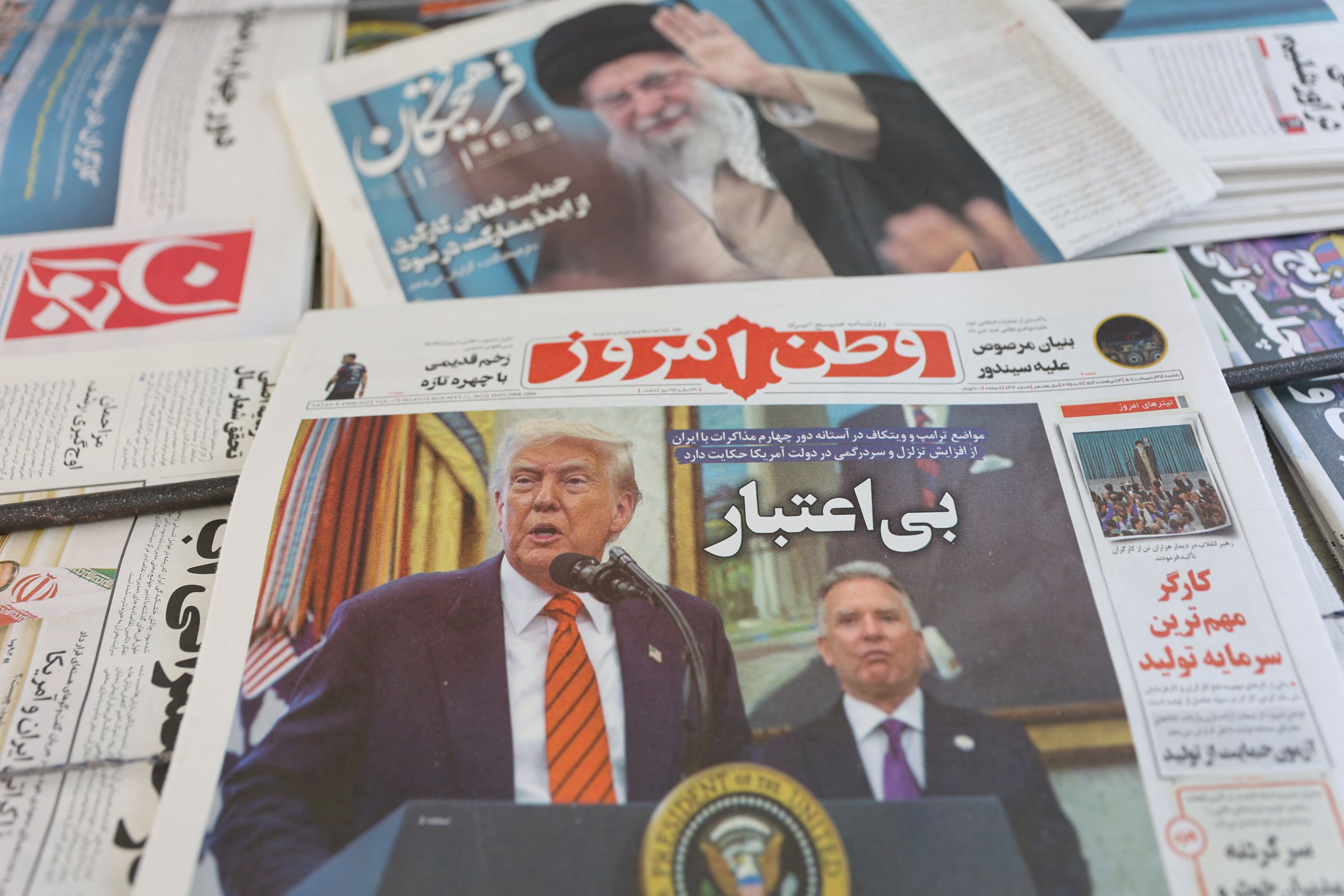
Last weekend, the negotiators of the United States and Iran gathered in Oman, in the fourth round of conversations about the nuclear program. Between both sides there are still great discrepancies in fundamental issues and different expectations; And there is less time left to get an agreement. Even so, for the first time in years, there are reasons for optimism. The difference, on this occasion, is not a sudden approach of positions, but the recognition by both parties that diplomacy to confrontation is preferable.
Although Iran insists that its nuclear program has strictly civil purposes (and US intelligence services consider that it is not manufacturing a nuclear weapon), Tehran has expanded uranium enrichment activities since, in 2018, Donald Trump ordered that the United States withdraw from the Joint Comprehensive Action Plan (PAIC) of 2015. 60% to manufacture six nuclear weapons (if 90% enriches itself) and the ability to “get the pump” within an approximate period of six months (although to have a fully prepared weapon they would surely need between one and two years). For much of the West, that situation and that direction are unacceptable.
If there are no diplomatic advances before the end of June, the United States will be forced to reactivate UN sanctions, a measure that would destroy what remains of the diplomatic pathway, would push Iran to abandon the non -proliferation treaty and increase the risk of war. Trump, in his second term, wants an integral agreement that exceeds the scope of the PAIC and includes limiting enrichment, limiting missile development and reducing Iran’s actions in the region. But that desire is a mirage. Iran will not accept the total replication of its nuclear program or, of course, dismantle its regional alliances, especially in the few weeks that remain in the deadline to reimplant the sanctions. Tehran will not give up the enrichment work or its ability to manufacture ballistic missiles, two elements that it considers fundamental for deterrence.
However, even with all these limitations, the diplomatic pathway is still open. The two parties are interested in accepting a more restricted agreement in order to avoid a military confrontation.
Despite the fury and anger he shows, Trump has been reluctant to start new wars. The recent dismissal of the National Security Minister Mike Waltz, whose warmongering position regarding Iran was in contradiction with the president’s preferences, has been revealing. So was the announcement Trump made on May 6 on a high fire with the hutis rebels of Yemen. He prefers a negotiated solution, just like his Gulf allies. And he believes that, now that Iran is weaker than ever, it is the best possible time to get it. Since the attempts of his government to negotiate the fire between Russia and Ukraine are failing, Iran now offers him the best – and perhaps unique – opportunity to achieve a diplomatic victory before the end of the year.
At first, Iran rejected direct dialogue, but the “hawks” ended up approving indirect conversations through Oman, with the possibility of turning them into direct negotiations if there were advances. This change in the regime’s position indicates that Tehran is aware that prolonged economic and diplomatic isolation has increasing costs. The Iranian government believes that the sanctions are necessary to try to reverse the slow sinking of the economy and contain the risk of social agitation.
Although in Tehran Trump is considered to be a hostile agent, some members of the ruling class believe that his desire to get diplomatic “victories” and his rejection of undertaking new wars constitute an opportunity to have a break without being forced to make important concessions. Tehran does not control the hutis, but has pressed to accept the Fire Alto Agreement with the United States, with the purpose of parting in part one of the main US concerns – Iran’s support for its protected in the region – and facing in a more conducive environment nuclear negotiations.
The main stumbling block is still the enrichment capacity of Iran. Tehran has rejected the suggestion of the Secretary of State, Marco Rubio, that they will stop enriching the uranium of its civil nuclear program and, instead, it matters. The Islamic Republic considers that enrichment is an unnegotiable sovereign right. However, it is willing to accept a smaller agreement, which limits it, guarantees the verification by the international organism for atomic energy (OIEA) and give credible guarantees that Iran is not manufacturing a nuclear weapon.
The latest White House statements have also shown more flexibility. On May 4, Trump declared that his main objective is to prevent Iran to acquire nuclear weapons, not eliminate their nuclear capacity with civil uses. And vice president JD Vance reiterated on May 7 that they will “may have civil nuclear energy”, but not an enrichment program that places the ability to manufacture weapons closer. This distinction – among civil use with strict limits and the possibility of manufacturing the weapon – could support a very specific agreement, which serves to keep the diplomatic route beyond summer.
This is not what Washington prefers. The impatient character of Trump is known, which will be skeptical of an apparently thought pact to give him long. But in two and a half months it is not possible to negotiate an integral agreement between two parts that deeply distrust each other. After threatening to bombardear Iran if negotiations fail, the only possible alternative to military confrontation is a more modest agreement. Trump has always been willing to leave maximalist positions if, in return, a political victory can be pointed out.
If there are advances, the United States would postpone the recovery of sanctions, either informally, through pressures to its European allies, or trying to get a new resolution of the United Nations Security Council to extend the deadline. The United States allies in Europe, and even Russia and China, could support this measure if it occurs as a way to avoid the crisis. Thus, the option of reactivation of sanctions could be preserved as a pressure measure, keep the diplomatic route open and postpone the need for an immediate escalation.
On the other hand, the military option would continue to be on the table. The United States has increased the deployment of assets in the region and has emphasized that it does not rule out the use of force. In the area there are B-2 bombers capable of transporting ammunition designed to cross armored objectives, such as Iran enrichment facilities in Fordow and Natanz. This exhibition is a negotiating asset and, at the same time, a way of preparing for possible air attacks in case the negotiations fail.
Success is not guaranteed. Iran can reject the conditions of the United States or go from ready and, hoping to obtain more concessions, take too long. Trump can decide that concessions are insufficient, change strategy and recover sanctions or something worse. If the negotiations fail and the United States or Israel attack Iran’s nuclear facilities, Tehran will exercise reprisals against US military objectives in the region and will develop the military uses of its nuclear program.
However, despite these risks, the new diplomatic round is the most serious opportunity of nuclear unworthy since the PAIC failed almost a decade ago.
For more updates, visit our homepage: NewsTimesWire