Introduction
In any industrial piping system, fittings play a crucial role in connecting pipes, changing flow directions, and ensuring leak-free operations. Among the different types of fittings available, SS Buttweld Fittings are widely used because of their durability, strength, and corrosion resistance. These fittings are designed to connect pipes by welding them together, creating a seamless and strong joint that can handle high pressure and temperature conditions.
This blog will walk you through what SS Buttweld Fittings are, the different types available, and the industries where they are commonly used.
What are SS Buttweld Fittings?
SS Buttweld Fittings are stainless steel fittings used in pipelines to connect, extend, or change the direction of pipes. Unlike threaded or socket weld fittings, buttweld fittings are directly welded onto the pipe, which makes the connection stronger and more reliable.
They are preferred in industries such as oil & gas, chemical processing, power generation, and food & beverage because they can withstand extreme operating conditions while maintaining hygienic and safe flow systems.
Key Features of SS Buttweld Fittings
- High Strength – The welded connection provides durability and structural strength.
- Leak-Proof Joints – Welding eliminates weak points, reducing the chances of leaks.
- Corrosion Resistance – Made from stainless steel, these fittings can resist rust and chemical attacks.
- Smooth Flow – The internal surface of the fittings allows smooth fluid flow with minimal friction.
- Longevity – Designed for long-term use, reducing replacement and maintenance needs.
Types of SS Buttweld Fittings
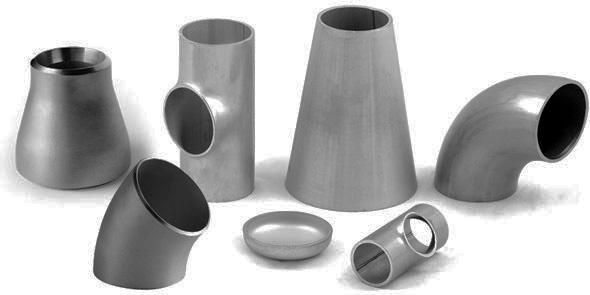
Different types of fittings are used in pipelines depending on the system design and requirements. The most common ones include:
1. Elbows
Elbows are used to change the direction of flow in a pipeline, usually at 45° or 90°.
2. Reducers
Reducers connect pipes of different diameters. They can be concentric (symmetrical) or eccentric (offset).
3. Tees
Tees allow the flow to be divided into two directions or combined from two into one.
4. Crosses
Cross fittings connect four pipes together and are used in complex piping networks.
5. Caps
Caps are used to close the end of a pipe, providing a secure seal.
6. Stub Ends
Stub ends are used with lap joint flanges for easy dismantling of pipelines.
7. Bends
Bends are similar to elbows but provide a smoother change in direction, often used for larger radii.
Applications of SS Buttweld Fittings
These fittings are widely applied in industries where strong, leak-proof, and durable connections are essential. Some key applications include:
-
Oil and Gas Industry
- Used in pipelines transporting crude oil, natural gas, and refined products.
- Handles high pressure and temperature environments effectively.
-
Chemical and Petrochemical Plants
- Resistant to corrosive chemicals, acids, and solvents.
- Provides safe transfer of hazardous materials.
-
Power Generation
- Used in thermal, nuclear, and hydroelectric power plants.
- Ensures reliable performance under high heat and pressure conditions.
-
Food and Beverage Industry
- Provides hygienic and rust-free connections.
- Suitable for pipelines carrying liquids, juices, and dairy products.
-
Water Treatment Plants
- Ensures long-lasting pipelines for water distribution and treatment facilities.
-
Pharmaceutical Industry
- Used in clean and sterile environments for transporting chemicals and fluids.
Benefits of Choosing SS Buttweld Fittings
-
Cost-Effective in the Long Run – Although the initial investment may be higher, their durability reduces maintenance costs.
-
Versatility – Available in multiple shapes, sizes, and grades to meet diverse industrial needs.
-
Safety – Welded joints provide a more secure and reliable pipeline system.
-
Efficiency – Smooth inner surfaces minimize friction, enhancing flow efficiency.
How to Select the Right SS Buttweld Fittings
When choosing fittings, consider the following factors:
- The pipe size and thickness.
- The pressure and temperature conditions of your application.
- The grade of stainless steel required (304, 316, etc.) for corrosion resistance.
- The industrial standards (ASME, ASTM, ANSI) to ensure quality compliance.
Conclusion
SS Buttweld Fittings are an essential part of modern piping systems, offering strength, durability, and corrosion resistance. From oil and gas pipelines to food-grade applications, these fittings ensure safe and efficient fluid transfer across industries.
By selecting the right type and grade of SS Buttweld Fittings, industries can build reliable piping systems that last for years while minimizing maintenance needs.