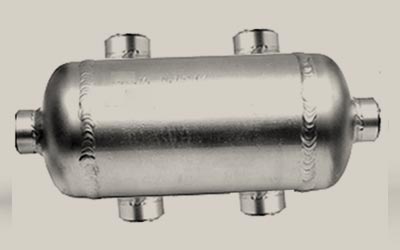
In industrial piping systems, particularly those involving steam and high-pressure applications, devices like seal pots and condensate pots play a critical role in maintaining safety, efficiency, and accuracy of operation. While the two terms are often confused or even used interchangeably, they serve slightly different purposes depending on the process requirement. This blog will explain the difference between a seal pot and a condensate pot, their functions, design, and importance in process industries.
Introduction to Seal Pot and Condensate Pot
Both seal pots and condensate pots are auxiliary devices used in fluid systems where pressure measurement, protection, or fluid separation is required. They are most commonly found in industries such as:
-
Power generation (steam plants, turbines)
-
Petrochemical plants
-
Oil & gas industries
-
Chemical processing industries
At first glance, they look similar because both are cylindrical vessels installed between pipelines and instrumentation. However, their purpose and operating principle differ.
What is a Seal Pot?
A seal pot is a small vessel designed to maintain a constant liquid level in the impulse lines of instruments like differential pressure transmitters. Its main purpose is to act as a seal between the process fluid and the measuring instrument, preventing direct contact.
Key Functions of a Seal Pot:
-
Isolation of Process Fluid – Seal pots prevent corrosive or contaminated process fluids (like dirty steam or chemicals) from entering the instrument.
-
Pressure Balance – They help balance the pressure in impulse lines to ensure accurate differential pressure measurement.
-
Protection of Instruments – By isolating harmful fluids, they extend the lifespan of instruments.
-
Consistent Liquid Column – Seal pots ensure a constant head of sealing fluid, which stabilizes measurement readings.
Seal pots are usually filled with a sealing liquid (often water or another compatible liquid), and are installed at a level above the instrument connections to maintain a constant column of liquid.
What is a Condensate Pot?
A Condensate Pot, on the other hand, is used in steam systems and is designed to collect and retain condensate from steam lines. The primary function is to provide a barrier between live steam and the instrument by holding the condensate fluid in place.
Key Functions of a Condensate Pot:
-
Condensate Collection – It traps condensate from steam lines and prevents it from entering instrumentation directly.
-
Protection of Instruments – Prevents damage to pressure transmitters, gauges, and impulse lines by shielding them from high-temperature steam.
-
Stable Pressure Measurement – A condensate pot ensures a constant liquid head (water column) in both impulse lines for accurate pressure readings.
-
Temperature Control – By providing a condensate barrier, it helps keep instruments safe from direct exposure to high-temperature steam.
Condensate pots are commonly installed in steam systems at a lower point where condensate naturally collects.
Structural and Functional Differences
Although seal pots and condensate pots may look similar, their differences can be summarized as follows:
| Aspect | Seal Pot | Condensate Pot |
|---|---|---|
| Primary Purpose | To create a seal between process fluid and instrument | To collect condensate from steam lines and protect instruments |
| Application | Used in differential pressure measurement with corrosive or contaminated fluids | Used in steam systems to maintain a water seal and prevent steam damage |
| Working Fluid | Sealing liquid (water, glycol, or chemical liquid) | Condensate from steam (water) |
| Installation Position | Generally above the transmitter to maintain a liquid head | At low points in steam lines where condensate accumulates |
| Protection Offered | Protects against contamination and corrosive fluids | Protects against high-temperature steam |
Importance of Using Seal Pots and Condensate Pots
For Seal Pots:
-
Prevents process fluid contamination of impulse lines
-
Improves accuracy in differential pressure readings
-
Ensures longer lifespan of sensitive instruments
For Condensate Pots:
-
Prevents high-temperature steam from entering instruments
-
Maintains stable pressure measurement
-
Reduces wear and tear on gauges, transmitters, and impulse piping
Both are vital for process reliability and instrument protection in industrial systems.
Materials and Design
Both seal pots and condensate pots are manufactured from materials compatible with the process environment, such as:
-
Stainless Steel (SS 304, SS 316)
-
Carbon Steel
-
Alloy Steel
They are designed as cylindrical chambers with connections (flanged or threaded) to pipelines and instruments.
Applications in Industry
Seal Pot Applications:
-
Chemical plants (where corrosive fluids are measured)
-
Refineries (to prevent dirty hydrocarbons from damaging instruments)
-
Power plants (in differential pressure measurement across filters or strainers)
Condensate Pot Applications:
-
Steam power plants (to protect instruments in steam lines)
-
Boilers and turbines (ensuring stable pressure measurement)
-
Petrochemical plants (steam-based processes)
Conclusion
While both seal pots and condensate pots are used in fluid and steam systems, their core purpose differs:
-
A seal pot is used for isolation and maintaining a sealing liquid to protect instruments from contamination and corrosive fluids.
-
A Condensate Pot is used in steam systems to collect condensate and protect instruments from high-temperature steam.
Understanding the distinction between the two helps industries design safer and more reliable process systems. Whether it’s preventing contamination or protecting instruments from thermal stress, these small but vital accessories play a huge role in ensuring operational safety and efficiency.
If your application involves steam-based systems, a Condensate Pot is the right choice. For corrosive or contaminated process fluids, a seal pot offers the best protection.