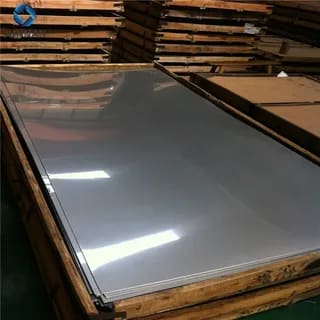
Heat exchangers are essential components in critical industries like oil & gas, chemical processing, marine engineering, and power generation. These systems must operate continuously under high temperatures, strong pressure, and corrosive chemicals. Any failure can result in serious downtime or even safety hazards. Because of these demanding conditions, engineers prefer using Inconel 825 sheets for building heat exchangers.
This alloy offers unmatched durability, resistance, and long-term performance far superior to regular stainless steel in many corrosive environments.
What Are Inconel 825 Sheets?
Inconel 825 is a high-performance nickel-iron-chromium alloy enriched with:
- Titanium
- Molybdenum
- Copper
This chemical composition makes Inconel 825 sheets extremely robust against corrosion, cracking, and high-temperature degradation. They perform reliably even when exposed to seawater, oxidizing environments, and aggressive acids.
In industries where equipment must keep running without failure, this alloy is one of the most trusted choices.
Key Features of Inconel 825 Sheets
Exceptional Corrosion Resistance
Heat exchangers frequently handle acidic, salty, and chemically active fluids. Inconel 825 sheets are resistant to:
- Sulfuric and phosphoric acids
- Chloride attacks from seawater
- Crevice and pitting corrosion
- Stress corrosion cracking
This makes them ideal for offshore platforms and chemical processing plants.
High-Temperature Strength
Heat exchangers often operate at constant high temperatures. Inconel 825 sheets maintain structural strength and stability up to around 540°C. They do not soften, deform, or crack — even under high pressure.
Engineers value them for uninterrupted, long-term performance.
Excellent Mechanical Durability
These sheets offer high tensile strength and maintain dimensional accuracy under stress. Even in heavy vibration and rapid thermal cycling, Inconel 825 remains strong and reliable.
Better Chemical Resistance Than Stainless Steel
While stainless steel works well in mild conditions, it struggles in extreme industrial environments. Inconel 825 sheets are specifically designed to survive where stainless steel simply cannot — especially involving strong acids and seawater.
That is why engineering teams prioritize safety and choose Inconel for long-lasting projects.
Lower Lifetime Maintenance Cost
It’s true that Inconel 825 sheets cost more initially than stainless steel. But because they last longer and need significantly fewer repairs, the total lifecycle cost ends up lower. No unexpected shutdowns. No frequent replacements.
Industries save money in the long run.
Where Are Inconel 825 Sheets Used in Heat Exchangers?
You will most commonly find these sheets in:
- Offshore and marine cooling systems
- Petrochemical heat recovery units
- Acid processing plants
- Desalination and water treatment plants
- Nuclear and thermal power facilities
- Pharmaceutical manufacturing systems
Basically, wherever heat meets corrosion, Inconel 825 sheets are a leading material choice.
Why Engineers Choose Inconel 825 Over Stainless Steel
Many heat exchangers are still produced with stainless steel grades like 304 or 316. They are good enough for basic environments — but not for the toughest ones.
The major differences engineers consider:
- Stainless steel can corrode quickly in chloride-rich conditions like seawater
- It cannot handle strong acids without damage
- Its strength drops at higher temperatures
- It requires more frequent maintenance
On the other hand, Inconel 825 sheets offer:
- High heat tolerance
- Strong resistance to acids and chlorides
- Stable performance over longer operational cycles
- Superior safety margin
In life-critical industries, material failure is unacceptable. Inconel becomes the obvious choice.
How Engineers Select the Right Inconel 825 Sheets
The selection process depends on:
- Operating temperature and pressure
- Type of chemicals and fluids used
- Required thickness for load conditions
- Fabrication needs such as welding and forming
- International standards and certification needs
Reputable suppliers provide sheets that comply with ASTM B424 and ASME SB424 standards. Engineers always insist on quality documentation to avoid low-grade or counterfeit material.
The Future of Heat Exchanger Construction
With industries moving toward more complex and corrosive processing environments, the demand for corrosion-resistant alloys is increasing. Cleaner energy sectors such as green hydrogen and carbon capture technology are also adopting Inconel 825 sheets because of their reliability and safety features.
As engineering technologies advance, Inconel alloys are only becoming more relevant.
Conclusion
Engineers prefer Inconel 825 sheets for heat exchanger manufacturing because they deliver advantages that standard materials cannot match: Strong corrosion resistance, High-temperature durability, Long operational life, Lower maintenance requirements. If you need stable performance and safety in the world’s harshest operating conditions, Inconel 825 is the right choice and investing in quality sheets makes all the difference.