
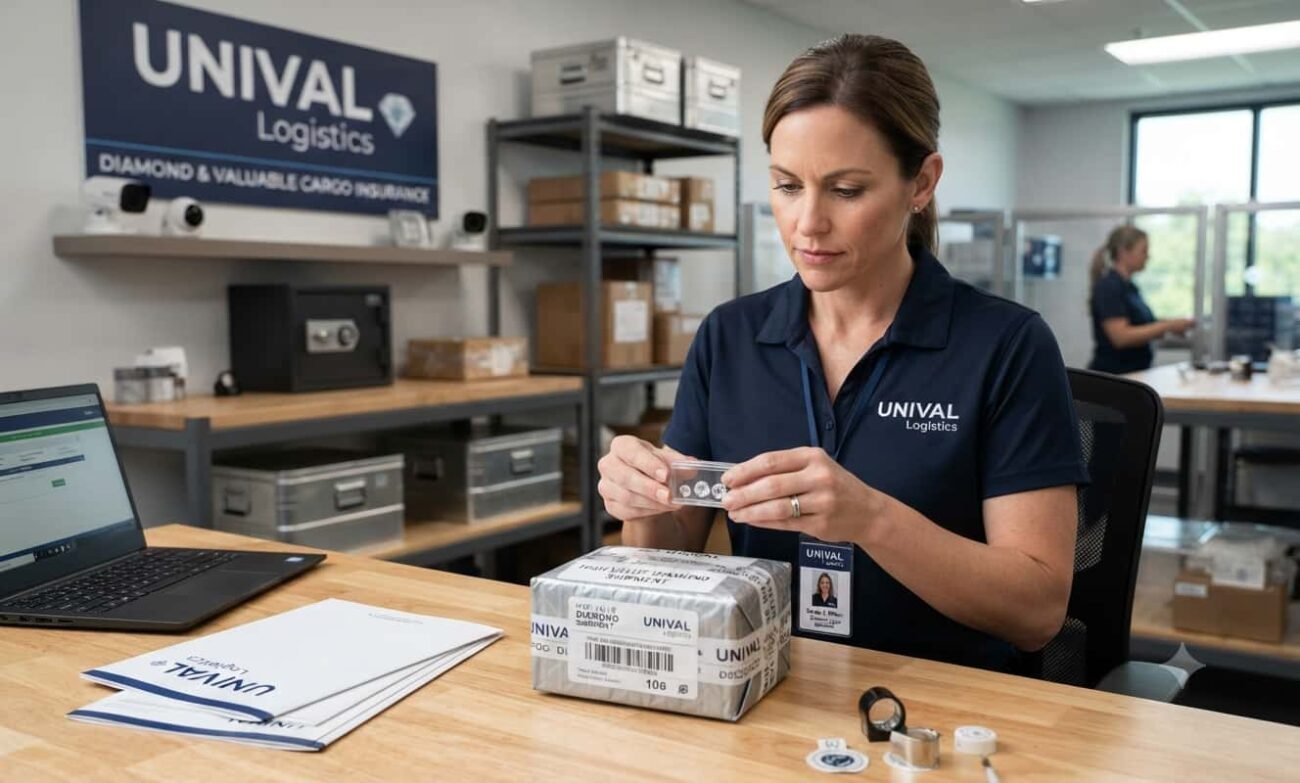
Summary
Diamonds are small, valuable and often difficult to replace. Their size and high value make careful shipping preparation especially important. A suitable shipping plan should address packaging, item identification, valuation, insurance eligibility, collection records and delivery confirmation.
Diamond shipping insurance does not automatically guarantee payment after every loss or damage incident. Coverage depends on the policy wording, the type of diamond, the declared value, the shipping method and compliance with the insurer’s requirements. Some providers restrict or exclude loose diamonds, precious stones or jewelry. Customers should confirm acceptance and coverage in writing before booking.
This guide explains six practical packing and proof rules that can help senders reduce avoidable risks and prepare stronger claim documentation. UNIVAL Logistics helps customers consider shipment requirements and suitable arrangements for valuable goods.
Overview
Diamonds may be shipped for retail sales, wholesale transactions, grading, repair, exhibitions, returns and business transfers. Each purpose can involve different documentation and handling needs. A loose diamond sent to a grading facility, for example, may require different records from a finished diamond ring being delivered to a customer.
Across the United States, diamond businesses and individuals may arrange shipments involving Los Angeles, New York, Miami, Chicago, Dallas, Houston, Philadelphia, Atlanta, Las Vegas, San Francisco, Boston, Newark and Northern New Jersey. The shipping route, service provider and destination can affect available transportation and insurance options.
Before sending a diamond, the shipper should confirm that the carrier accepts the item and that the selected insurance arrangement covers it. The sender should also understand the required packaging standards, valuation evidence and claim notification deadlines. UNIVAL Logistics recommends treating these steps as part of one complete shipping process.
Key Takeaways
- Confirm that the carrier and insurer accept the specific diamond shipment.
- Use secure packaging that prevents movement and protects the contents.
- Photograph the diamond and its packaging before dispatch.
- Keep a reliable invoice, grading report or professional valuation.
- Record the parcel’s weight, description and identifying details.
- Retain collection confirmation, tracking information and delivery records.
- Review exclusions, coverage limits and claim deadlines before booking.
- Contact UNIVAL Logistics to discuss suitable arrangements for valuable shipments.
Quick Answer
To protect a diamond shipment, confirm insurance eligibility, use secure packaging, photograph the item and parcel, keep proof of value, document the handover and follow the policy’s claim requirements.
Why Diamond Shipments Need Careful Insurance Planning
Diamonds can have a high financial value despite their small size. This creates specific challenges during transportation. A parcel may be easy to handle, but its contents may require strict security, accurate identification and clear documentation.
A standard parcel service may not accept every diamond shipment. Some carriers limit or exclude loose stones, precious stones or jewelry from certain services. Other services may accept them only under specific conditions. Insurance policies can also apply different limits to loose diamonds, mounted stones and finished jewelry.
The sender should never assume that a general parcel insurance option covers diamonds. Before dispatch, confirm the exact item category, maximum eligible value, packaging rules and required documents.
What Can Affect a Diamond Insurance Claim?
A claim may be affected by several factors. These include whether the item was eligible for coverage, whether the declared value was accurate, whether packaging met the required standard and whether the sender followed the correct shipping process.
Missing invoices or unclear photographs can make it harder to establish the item’s identity and value. Poor packaging may also create problems if the insurer requires specific protective materials or packing procedures.
A strong preparation process cannot guarantee claim approval. However, it can help provide clear evidence and reduce avoidable disputes.
Rule 1: Confirm Coverage Before Sending the Diamond
The first step is to check whether the carrier and insurer accept the diamond being shipped. This should happen before the parcel is packed and collected.
Ask whether coverage applies to loose diamonds, mounted stones, finished jewelry or parcels containing multiple stones. Confirm whether the shipment’s value falls within the provider’s limits. Some policies may require prior approval for high-value items or specific shipping arrangements.
Check the Policy’s Important Conditions
Review the following details before booking:
- Item eligibility: Confirm that the exact diamond category is accepted.
- Coverage limit: Check the maximum amount payable per shipment or item.
- Covered events: Understand whether the policy covers loss, theft and physical damage.
- Exclusions: Review restrictions involving unattended deliveries, inadequate packaging or prohibited shipping methods.
- Deductible: Check whether an excess applies to a claim.
- Claim deadline: Find out how quickly loss or damage must be reported.
- Required evidence: Confirm which invoices, photographs, valuations and shipping records must be provided.
Ask for confirmation of important coverage terms in writing. A general statement that a shipment is insured may not explain whether the specific diamond is covered.
Rule 2: Use Secure, Suitable Packaging
Packaging protects the diamond and helps prevent avoidable movement or loss. A small stone should never be placed loose inside an ordinary shipping carton. It needs secure internal containment and suitable outer protection.
Use a secure primary container designed to hold the stone. Depending on the item and service requirements, this may include a properly fitted gem container or other approved protective packaging. The container should prevent the diamond from moving freely.
Place the primary container inside suitable secondary packaging. Use cushioning that protects against impact and movement. Select a strong outer package that can withstand normal handling during transportation.
Protect the Contents Without Compromising Security
Do not place a diamond directly against the outer walls of a parcel. Use suitable cushioning and secure the internal container. Seal the package carefully with appropriate packing materials.
Avoid putting unnecessary descriptions of valuable contents on the outside. However, do not hide or omit information required by the carrier, insurer or customs authorities. All declarations and labels must remain accurate.
Some insurers and specialist carriers have specific packing instructions. Follow those requirements exactly. If professional packing is required, use an approved provider and retain any packing documentation.
UNIVAL Logistics recommends confirming packaging requirements before dispatch, particularly when the shipment contains loose stones or several high-value items.
Rule 3: Photograph the Diamond and Its Condition
Photographs can help establish what was shipped and its condition before collection. They are useful supporting evidence, especially when the item is small and difficult to identify from a written description alone.
Take clear photographs before placing the diamond inside its protective container. Capture enough detail to show the stone’s visible characteristics. Where possible, photograph any identifying marks, report references or other features that connect the item to its valuation documents.
Create a Clear Packing Record
Photograph the packing process in stages. Capture the diamond before packing, the secured internal container, the protective materials and the sealed outer parcel.
Make sure the photographs are clear and stored safely. Keep the original files where possible, along with their dates and related shipment records.
Photographs do not replace a professional grading report or proof of value. They support the record by showing the item’s condition and how it was prepared.
Rule 4: Keep Reliable Proof of Value and Identity
Accurate valuation documents are essential when shipping expensive diamonds. The amount requested in a claim may need to be supported by evidence accepted under the policy.
A purchase invoice may show the transaction price. A professional valuation or grading report may provide additional information about the stone. The appropriate evidence depends on the diamond, its ownership history and the insurer’s requirements.
Which Documents Should You Retain?
Useful records may include:
- Purchase invoice: Shows the purchase details and transaction value.
- Grading report: Identifies relevant characteristics and grading information.
- Professional valuation: Provides an assessed value where appropriate.
- Item description: Records the stone’s weight, shape, identifying details and other available characteristics.
- Ownership or sales record: Helps establish the sender’s relationship to the item.
- Photographs: Show the diamond and its condition before packing.
Make sure the documents refer to the same item. Check that descriptions, weights and report numbers are consistent. If the shipment contains multiple diamonds, create a separate record for each stone rather than relying on a single general description.
Do not inflate the declared value. The amount should be accurate and supported by suitable evidence. The insurer may assess a claim according to the policy’s valuation method, which may differ from the sender’s expected resale price.
Rule 5: Record the Handover and Shipment Details
The sender should be able to show when the parcel entered the shipping process and who accepted it. A collection receipt or carrier acceptance scan can help establish that the package was handed over.
Record the tracking number, collection date, service selected, parcel weight and recipient details. Keep the booking confirmation and any documents signed during collection.
Maintain a Clear Chain of Custody
For high-value diamond shipments, the movement of the parcel should be documented as clearly as possible. Depending on the service, records may include collection confirmation, transfer details, tracking events and proof of delivery.
Use a delivery option that provides appropriate confirmation. A signature or other recipient verification may help establish that the parcel reached the intended person. Confirm the recipient’s details before dispatch and avoid leaving valuable shipments unattended where possible.
If the parcel is collected by a specialist courier, retain the collection record and confirm the identity of the authorized recipient at the destination. These steps support a more accountable handover process.
Rule 6: Inspect Delivery and Report Problems Promptly
The recipient should inspect the parcel as soon as practical after delivery. Check the outer packaging for signs of damage, tampering or unexpected opening. If the parcel appears damaged, photograph it before removing the contents.
Open the package carefully and compare the contents with the shipment records. Confirm that the diamond matches the description and documents provided by the sender.
What to Do if a Diamond Shipment Is Lost or Damaged
If the parcel is missing, damaged or appears to have been tampered with, contact the carrier and insurer promptly. Follow their reporting instructions and do not wait until the final claim deadline is close.
Keep the outer packaging, internal containers, cushioning and labels. Take photographs of any visible damage. Provide the invoice, grading report, valuation documents, shipment confirmation and tracking information requested by the provider.
Write down the relevant dates and details of communications. Keep copies of submitted forms and claim references. The insurer or carrier will assess the claim under its applicable terms, and complete documentation does not guarantee approval.
How Diamond Shipping Insurance Works
Diamond shipping insurance may be arranged through a carrier’s eligible protection option or a separate insurance policy. These arrangements can have different coverage terms and claim requirements.
Carrier declared value is not necessarily the same as an independent insurance policy. Declared value may establish a limit on the carrier’s liability under its service conditions. Separate insurance may cover specified loss or damage events under its own policy wording.
Understand Coverage Limits and Exclusions
Before buying protection, confirm the maximum amount payable and whether it applies per parcel, per item or per claim. Check whether the policy covers the full value of the diamond or only a portion.
Read exclusions carefully. Some policies may restrict loose diamonds, precious stones, jewelry or shipments sent through certain carriers. Others may require approved packaging, a specific delivery method or advance approval.
Ask how the insurer calculates the settlement amount. It may use the documented purchase price, replacement cost, agreed value or another method set out in the policy. Do not assume that the amount declared by the sender will automatically be paid.
Why Documentation Matters
The quality of a claim often depends on the quality of the records created before dispatch. A clear description, matching valuation documents, photographs and proof of handover help establish the shipment details.
For businesses that send diamonds regularly, a consistent recordkeeping process can make shipping administration easier. It can also help staff check that every parcel has the required documentation before collection.
How UNIVAL Logistics Helps with Valuable Diamond Shipments
Diamond shipments require careful planning because item value, packaging and insurance conditions can vary. UNIVAL Logistics helps customers review these considerations before arranging transportation.
The process should begin with the shipment details. Customers should identify whether the parcel contains loose stones, mounted diamonds or finished jewelry. They should also provide the approximate value, destination, dimensions and any special handling requirements.
The next step is to review service availability, carrier acceptance rules, packaging instructions and insurance conditions. Customers should confirm whether the chosen arrangement covers the specific goods and what documentation is needed if a claim occurs.
UNIVAL Logistics emphasizes practical planning, clear shipment records and suitable logistics arrangements. Customers should confirm the exact service, coverage, pricing and delivery conditions before booking. This helps establish realistic expectations and supports a more organized shipping process.
Common Diamond Shipping and Insurance Mistakes
One frequent mistake is assuming that all shipping insurance covers loose diamonds. Some providers exclude them or require prior approval. Always confirm item eligibility before dispatch.
Another mistake is relying only on a purchase receipt. A receipt can support the declared value, but a grading report, professional valuation and clear item description may also be important.
Poor packaging can create avoidable risks. A diamond should not move freely inside its container, and the outer parcel should provide suitable protection. Follow any specific packing instructions from the carrier or insurer.
Some senders also forget to photograph the item before packing. Without clear images, it may be harder to establish its condition before shipment. Take photographs and keep them with the valuation records.
Finally, do not delay reporting a problem. Claims often have strict notification deadlines. Contact the relevant provider promptly and retain all packaging and shipment records.
How Much Does Diamond Shipping Insurance Cost?
The cost depends on the diamond’s value, item category, shipping route, selected carrier, insurance provider and required delivery controls. Loose diamonds may have different acceptance rules and premiums from finished jewelry. Some providers may decline coverage or require individual approval.
There is no single reliable price for every diamond shipment. Ask for a quote based on the exact item and shipping details. Consider these cost categories:
- Insurance premium: May be calculated as a percentage of the insured value, a fixed fee or a provider-specific rate. The amount depends on eligibility, coverage limits and policy conditions.
- Carrier declared-value charge: May be priced using value brackets or additional increments. Confirm whether the service accepts diamonds and whether declared value is available for the item.
- Transportation charge: Depends on parcel weight, dimensions, origin, destination and delivery speed.
- Specialist packaging: May include approved gem containers, tamper-evident materials, reinforced outer packaging or professional packing.
- Delivery confirmation and handling: Additional charges may apply for signature confirmation, restricted delivery, scheduled collection or specialist handling.
- Valuation and documentation: A professional valuation or grading report may involve a separate fee if updated or newly obtained.
Before booking, request a complete quotation that separates transportation, insurance and additional service charges. Confirm the coverage limit and whether the policy applies to the diamond itself. UNIVAL Logistics can help customers discuss shipment requirements and the cost factors involved.
Important Disclaimer
All cost prices and pricing information should be treated as baseline estimates only, not guaranteed quotations. Actual charges are subject to market fluctuations, supplier changes, carrier pricing, insurance conditions and variable logistics fees. Diamond eligibility, coverage limits, exclusions and additional handling requirements may affect the final amount. Contact UNIVAL Logistics for the latest and most accurate prices, service availability and shipment-specific guidance before booking.
Final Thoughts
A diamond shipment needs careful preparation before it enters the shipping network. The sender should confirm coverage, use suitable packaging, photograph the item, retain proof of value, document the handover and inspect delivery promptly.
These six rules can help create a stronger record of the shipment and reduce avoidable problems. They cannot guarantee that an insurance claim will be approved, but they can help the sender provide relevant evidence when a loss or damage incident occurs.
Before sending valuable stones, review the carrier’s acceptance rules and the insurer’s policy conditions. Keep every important document together and make sure the recipient knows how to inspect the parcel. UNIVAL Logistics can help customers consider the shipping requirements and plan suitable arrangements for valuable goods.
Frequently Asked Questions
1. Does diamond shipping insurance cover loose diamonds?
Some providers offer coverage for loose diamonds, while others restrict or exclude them. Confirm item eligibility, value limits, packaging requirements and any prior approval conditions before booking.
2. What documents are needed to insure a diamond shipment?
Requirements vary by provider. Common documents include a purchase invoice, grading report, professional valuation, item description, photographs and shipping confirmation. Ask the insurer for its exact evidence requirements.
3. Should I photograph a diamond before shipping it?
Yes. Clear photographs can help establish the diamond’s appearance and condition before dispatch. Photograph the stone, its identifying details where available, the internal container and the sealed outer parcel.
4. What is the safest way to pack a loose diamond?
Use a secure container designed to hold the stone and prevent movement. Place it inside suitable protective packaging and a strong outer parcel. Follow the carrier’s and insurer’s specific packing instructions.
5. Does declared value guarantee full reimbursement?
No. Declared value may establish a carrier liability limit, but it does not automatically guarantee payment. The carrier’s terms, proof of value, cause of loss and applicable exclusions may affect the outcome.
6. What should I do if a diamond shipment goes missing?
Contact the carrier and insurer promptly. Keep the tracking information, collection confirmation, invoice, valuation documents and photographs. Follow the claim instructions and submit the required evidence within the stated deadline.
7. Can I insure a diamond for its resale value?
The accepted valuation method depends on the policy. Some providers may use purchase value, replacement cost, agreed value or another defined method. Confirm how the insurer calculates a settlement before purchasing coverage.
8. Does insurance cover damage caused by poor packaging?
Coverage may be restricted or denied if the shipment does not meet required packaging standards. Follow the carrier’s and insurer’s instructions and retain photographs of the packing process.
9. How much does diamond shipping insurance cost?
The price depends on the diamond’s value, eligibility, route, carrier, policy terms and required handling. Request a shipment-specific quote that separates the insurance premium from transportation and packaging charges.
10. Can UNIVAL Logistics help plan a valuable diamond shipment?
UNIVAL Logistics can help customers review shipping requirements, packaging considerations and insurance-related questions. Contact the company to discuss the shipment and confirm available services, coverage conditions and current pricing.
