As has been said so many times about different Latin American leaders, José Mujica lived as if he were immortal. And we all somehow believe it. His clinging to life in his last years was so strong, aroused above all for his daily communication with nature, that this sense of vacuum cannot be strange for those who really knew him. Today we lack someone and we feel it on the skin.
Between the enclosure – sometimes hatred – and the endorsement, the figure of Mujica does not leave anyone indifferent. As expected, even today his figure generates unanimities or incontened mass accessions, although the vast majority, even those who were their enemies, cannot hide their shock.
On his ruler conditions, we have always known that Mujica did not like to send and less manage. No doubt that was not his fort. It was hard for him to administer his emotions, he hated the calculation and his daily verbiage often made him forget that wise assertion that a ruler also governs when he speaks. However, he was very pragmatic, he knew how to negotiate and “had back”, as he reiterated so many times. From an unmatched tuning with the popular sectors and from the courage of their convictions, “genius and figure to the burial”, he was able to support and even lead proposals that initially not only did not share but were not even in their libretto. An example of this is that agenda of new rights (marijuana regulation, decriminalization of abortion, equal marriage, etc.), whose intellectual and ideological leadership is attributed, with error, from outside borders. He was generally unprolition in the processing of affairs and almost never adjusted to a plan. However, sometimes I knew how to discover options and actors capable of supporting historical ventures. His main conviction had to do with the final wisdom of the people, the imperative need for collective tasks, plural authors and long processes.
He often explained his conception of the government as follows: “Governing is creating government conditions.” Did he do it? In certain spinal aspects yes: he had a very good dialogue with entrepreneurs and workers; Even with fluctuations he had a good link with his opponents; He achieved broad popular support for daring measures (such as the frontal fight against drug trafficking or continuity and even deepening inclusive social policies); He broke many schemes installed on the most dogmatic left; It became a symbol of an alternative vision of development and consumerism at the global level, with its strange communication capacity. He hated the protocol and loved to dynamite those solemnities so uncommonly surrounding the presidents and that more than one confuses with the strength of the institutions.
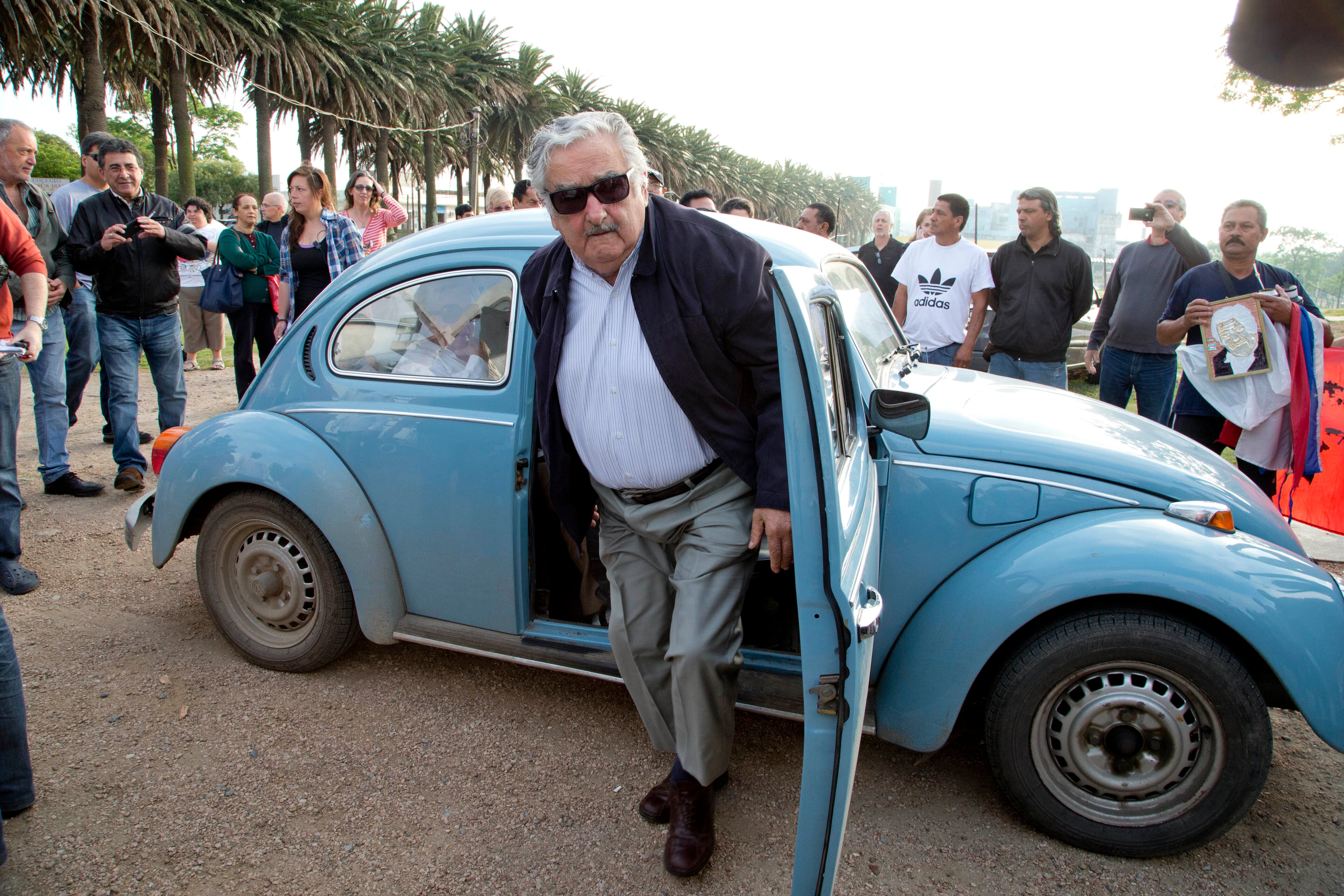
With his way of living in coherence between what he said and what he did, even from especially controversial options, he revitalized the legitimacy of politics, not only in Uruguay but also on his unexpected international impact. He more proved that it is very healthy for a president not to create a “elected monarch” and live like most of his people. He knew how to customize a republican vision from which he combined realism with simple but deep proposals, as in his condemnation of consumerism or in his defense of a more sensible use of freedom and time. With his unusual story and his inimitable style, he tried one of the most demanding maxims with which Uruguay likes to identify: “No one is more than anyone.” He knew how to have enough conviction to remain himself, in error or in success, in totally dissimilar circumstances and areas, from the long talks in his farm or in the squares, until his appearance in the United Nations or in Rio+20. Their levels of popularity have always been better than those of the approval of their management, more outside than within borders. Perhaps there is the key to his legacy: that of a politician with lights and shadows that he knew how to prioritize his tuning with the popular sectors, living as them for free option, not by religious or ideological imposition, without having to impose anything.
But the story continues and Mujica has already said that he is not going but “he is coming.” For several years, in particular after its presidency (2010-2015), never ceasing to star in national politics, Mujica was increasingly oriented to regional and international issues. He constituted one of his main concerns from his youth. But his prominence in the guerrillas, his long and terrible prison, the construction of his leadership in the national, all made his ideas about international issues a bit overshadowed and postponed. From his presidency, his figure unexpectedly acquired a viral force on the networks of the world, something that does not cease to be amazed in a person who, like him, never handled even an email box.
A “Quixote disguised as Sancho Panza”, as defined by Uruguayan anthropologist Daniel Vidart, was a very cultured man, as he can perceive in the intensity of his readings. His jailers knew it well because among the torture they chose was to prevent him from reading, which led him to the edges of madness. But it should be said that many of their main ideas came from their direct and daily commitment to nature from their “farmer” condition, which he always held with particular pride. Both dimensions allowed him to be a very qualified and singular observer, who spoke based on the great affairs of the world from his humble farm on the outskirts of Montevideo, finding extraordinary signs and metaphors about what happened globally from the attentive reading of the classics and in his warter above the tractor. From a popular speech, his extensive life made him in many ways a sage who also knew how to say, had the gift of the word. “Terrón de Earth with legs”, from there he could find more completely what he called “the wonderful mystery of life.” Thus he could understand and explain the global environmental hazards from their attentive observation of how the mares gave birth, how the birds varied their customs, of what happened in the trees and plants that surrounded their ranch.
The one who was a hard guerrilla finally found the sense of fighting the dogmatic and confrontational visions through roads he had despised before his prisons, which were four but from which he escaped twice. Contrary to the opinion of many colleagues, he always said that he had become president “not for being Tupamaro but despite being.” It was so that he sought to understand those who thought more differently, from whom he knew how to learn; He lost the fear of saying what he thought, even if that would place him as “enemy of the people” or as a transgressor of all the rules of the politically correct. All this made it “viral” in that digital world that he knew it was not his. When asked about his popularity internationally he always alluded to be a consequence of “how bad the world average was.” Perhaps that same frankness was what made it so unrepeatable and gravitant.
Mujica, even if she didn’t like it, was an example of life and resilience. Even in spite of. It is difficult to find someone who will love life more than him. He insisted that he did not believe in God, but when he spoke of nature and the beings that populated the fields of his farm, there was no doubt that there he nesting a very strong sense of transcendence. He said many times that he would like to die as one of the little “bulls” who lived the field, without a crash or ceremony. He chose the place where he wanted his ashes to bury: in a Araucaria near his ranch, next to the plot where he buried Manuela, His mythical three -legged bitch. There will surely be also accompanied by the remains of Lucia, his partner of a journey that looks a lot on an exceptional, almost homeric trip.
He knew very well that he carried a difficult life. He was the son of his history and stubbornly did not erase his footprints, even if he was weighing too many memories. I think that Uruguay will undoubtedly lose a lot with his death. But he always said that his main eagerness was that young people took the post and did not stop fighting for solidarity causes, different from his and especially without making their mistakes, but twinned by the commitment to others, with the obsession that “no one is behind.” Of course there is a future without mujica. That is why he always fought.
For more updates, visit our homepage: NewsTimesWire