
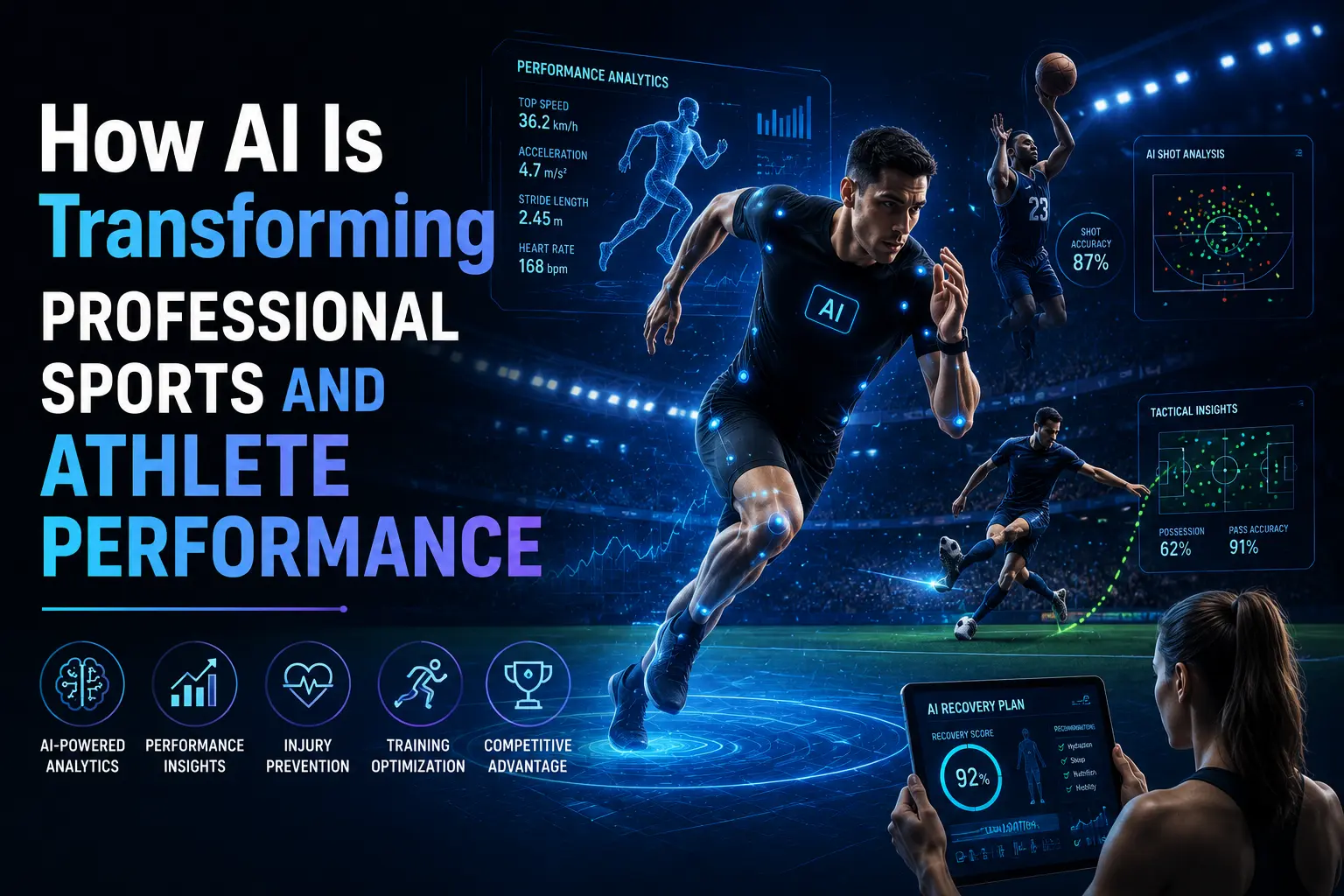
The landscape of professional athletics has undergone a fundamental shift. By 2026, artificial intelligence has moved beyond experimental status to become a core component of how teams train, strategize, and manage athlete health. This evolution is not about replacing human coaching; it is about providing an “intelligence layer” that processes complex data at a speed and scale no human can match. Organizations that leverage these tools are gaining significant advantages in performance, longevity, and competitive decision-making.
Precision Performance and Injury Mitigation
The primary impact of AI in sports centers on the physiological optimization of the individual athlete. Rather than relying on generic training protocols, modern programs use deep data integration to tailor every aspect of an athlete’s physical development.
-
Real-Time Biometric Feedback: Wearable sensors continuously transmit data—including heart rate, muscle activity, and joint load—allowing for the instant identification of fatigue or biomechanical inefficiencies during training.
-
Predictive Injury Modeling: Machine learning algorithms analyze historical injury patterns alongside current workload data to predict physical risks, often signaling potential issues before an athlete even experiences symptoms.
-
Dynamic Load Adjustment: Training intensities are no longer static. AI systems automatically adjust an athlete’s daily regimen based on their current readiness, sleep quality, and physiological recovery markers, ensuring peak performance while minimizing the risk of overtraining.
-
Computer Vision Technique Analysis: High-speed cameras and pose-estimation software dissect movement patterns in 3D space, providing athletes with immediate, objective feedback on their form and technique without requiring expensive lab environments.
The Data-Driven Coaching Lifecycle
Modern sports management now treats an athlete’s career as a data-rich narrative. Coaches are increasingly using AI to synthesize various streams of information into clear, actionable game plans.
-
Unified Data Interpretation: Platforms consolidate diverse inputs—GPS logs, wellness surveys, and performance metrics—into a single, coherent view, helping coaches understand not just what an athlete is doing, but why their body is responding in a specific way.
-
Opponent Tactical Profiling: AI systems scan thousands of hours of historical game film to identify hidden tendencies in opponent formations, delivery patterns, and defensive alignments, allowing teams to prepare for game-day scenarios with unmatched precision.
-
Adaptive Virtual Coaching: Athletes have access to AI-powered virtual assistants that provide 24/7 guidance, offering personalized drills and corrections that evolve based on the athlete’s specific improvement goals and past performance data.
-
Strategic Lineup Optimization: By simulating various game-day combinations, coaches can identify the most effective defensive or offensive lineups based on individual player chemistry and statistical compatibility against specific opponents.
Scaling Talent Identification and Management
Beyond the training pitch, AI is fundamentally changing how professional organizations discover and recruit new talent. Scouts now utilize global databases and neural networks to identify high-potential athletes in lower leagues or international markets—players who might otherwise be invisible in a standard statistical report. By surfacing context such as injury history, performance consistency under pressure, and developmental trajectories, these tools allow front offices to make recruitment decisions with a significantly higher degree of confidence.
Frequently Asked Questions
1. Is AI replacing the role of human coaches?
No, AI serves as an intelligent “copilot.” It handles the complex processing of massive datasets to provide insights, but the final tactical judgment, player motivation, and human-centered leadership remain the essential domain of the human coach.
2. Can AI really predict when an injury will happen?
While it cannot predict an injury with 100% certainty, AI identifies patterns—such as abnormal fatigue levels or biomechanical imbalances—that significantly correlate with injury risk, allowing medical staff to intervene proactively.
3. Is this technology only for the wealthiest professional teams?
The gap is narrowing rapidly. While elite teams have the most advanced setups, the democratization of wearable sensors and mobile-based AI coaching apps means that high-quality, data-driven training is becoming increasingly accessible to amateur and collegiate programs.
4. How does AI help with “fair play” in sports?
AI-assisted officiating, such as automated ball-tracking, helps officials make more accurate, objective decisions on close calls. This minimizes human error and helps ensure that the outcome of a game is decided by performance rather than officiating mistakes.
5. How do athletes feel about their data being tracked so closely?
Most professional athletes embrace the technology because it directly contributes to their longevity and performance. However, teams are increasingly focused on clear data governance and privacy frameworks to ensure that personal health information is handled securely and ethically.
The edge of performance: AI, health, and the future of sport
This video provides an expert panel discussion on how AI integrates with medical and performance science to redefine the limits of athletic ability.
