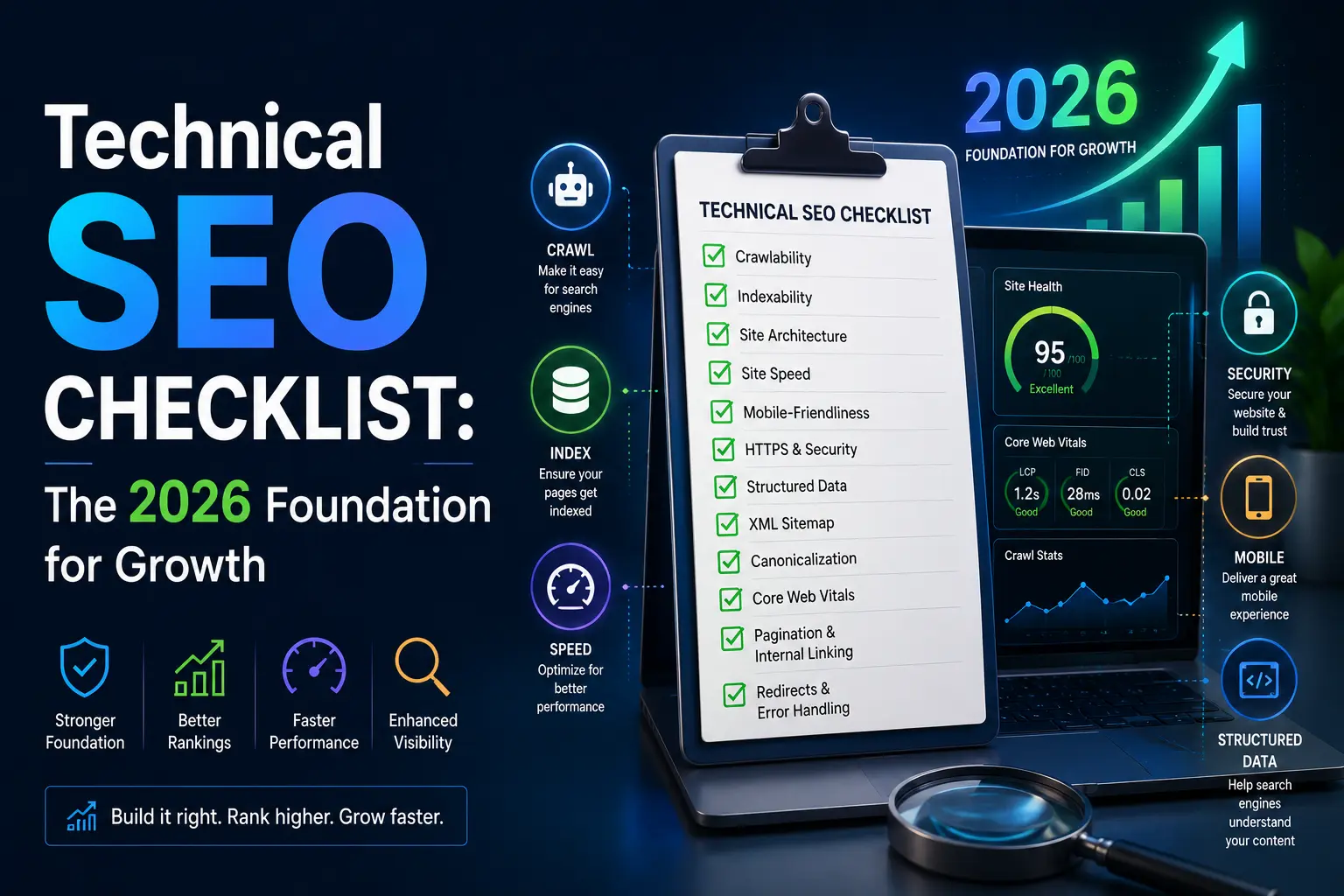
Technical SEO is the invisible architecture that allows search engines to discover, interpret, and rank your content. In 2026, building a resilient foundation means more than just fixing broken links; it requires creating a structure that serves both human readers and sophisticated AI engines. A high-performance site is one that minimizes friction, ensures accessibility, and clearly communicates its intent to every crawler.
Optimizing Crawlability and Indexing
Search engines operate with finite resources. If your site is cluttered with low-value pages, you waste your “crawl budget” on content that never reaches the index. Efficient crawling starts with clear instructions and a logical map that guides bots toward your most valuable assets.
-
Sitemap Accuracy: Ensure your XML sitemap is clean, updated, and submitted via search console, containing only indexable, canonical URLs.
-
Robots.txt Efficiency: Block non-essential directories—like administrative portals or internal search results—to prevent crawlers from wasting time on junk data.
-
Canonicalization: Use canonical tags to consolidate near-duplicate pages, ensuring search engines focus their attention on the primary version of your content.
-
JavaScript Handling: Verify that your site’s core content is accessible without requiring heavy client-side execution; ideally, prioritize server-side rendering (SSR) for key information.
Performance and User Experience Standards
Speed and stability are not just user preferences; they are core signals for search engines. In 2026, the focus has shifted toward granular performance metrics that measure how a site truly “feels” during interaction. A smooth, responsive experience signals to algorithms that your site is maintained and trustworthy.
-
Prioritize Core Web Vitals: Aim for a Largest Contentful Paint (LCP) under 2.5 seconds, a Cumulative Layout Shift (CLS) score below 0.1, and an Interaction to Next Paint (INP) score under 200 milliseconds.
-
Modernize Image Formats: Transition to next-generation formats like AVIF or WebP to reduce payload size while maintaining high visual quality.
-
Implement Lazy Loading: Use native browser lazy loading for all images and media below the fold to ensure that initial page load times remain snappy.
-
Strengthen Infrastructure: Deploy a reliable Content Delivery Network (CDN) to serve assets from servers geographically closer to your users, drastically reducing latency.
Structuring Content for Generative Search
The rise of generative AI and AI-powered overviews has fundamentally changed how search engines ingest data. To remain visible, your site must provide machine-readable context. Structured data is no longer optional; it is the language you use to tell search engines exactly what your content is and how it should be interpreted.
Focus on implementing schema markup for everything from organizational details and author credentials to FAQs and product specifications. By using clear headings, definition lists, and direct “bottom-line-up-front” summaries, you make your content “AI-extractable.” When you organize your data with precision, you increase the likelihood of being cited as the definitive source of truth in AI-generated answers, effectively bypassing the need for a traditional click.
FAQs
Why is “crawl budget” still relevant in 2026?
As sites grow, search engines don’t have the capacity to crawl every single page. A managed crawl budget ensures that Google prioritizes your newest and most impactful content rather than wasting time on outdated pages.
What is the “answer-first” method for AI SEO?
It involves placing a direct, concise answer to a user’s search query within the first 100 words of your content. This makes it easier for generative search engines to identify your site as the primary source for their summaries.
Do I need to worry about JavaScript SEO?
If your site relies heavily on modern frameworks, you must ensure that Google can render your JavaScript. If your content is hidden behind “heavy” client-side scripts, search engines may fail to index it entirely.
How do I demonstrate E-E-A-T through technical SEO?
Use schema markup to connect your content to specific author entities. Linking your content to verifiable professional profiles and using clear “About Us” and “Contact” pages signals to Google that your site is managed by real experts.
What is the most common technical error that hurts rankings?
Mismatching mobile and desktop versions, or failing to handle faceted navigation (like filters on e-commerce sites), often leads to index bloat, where search engines get lost in thousands of near-duplicate URLs.
