
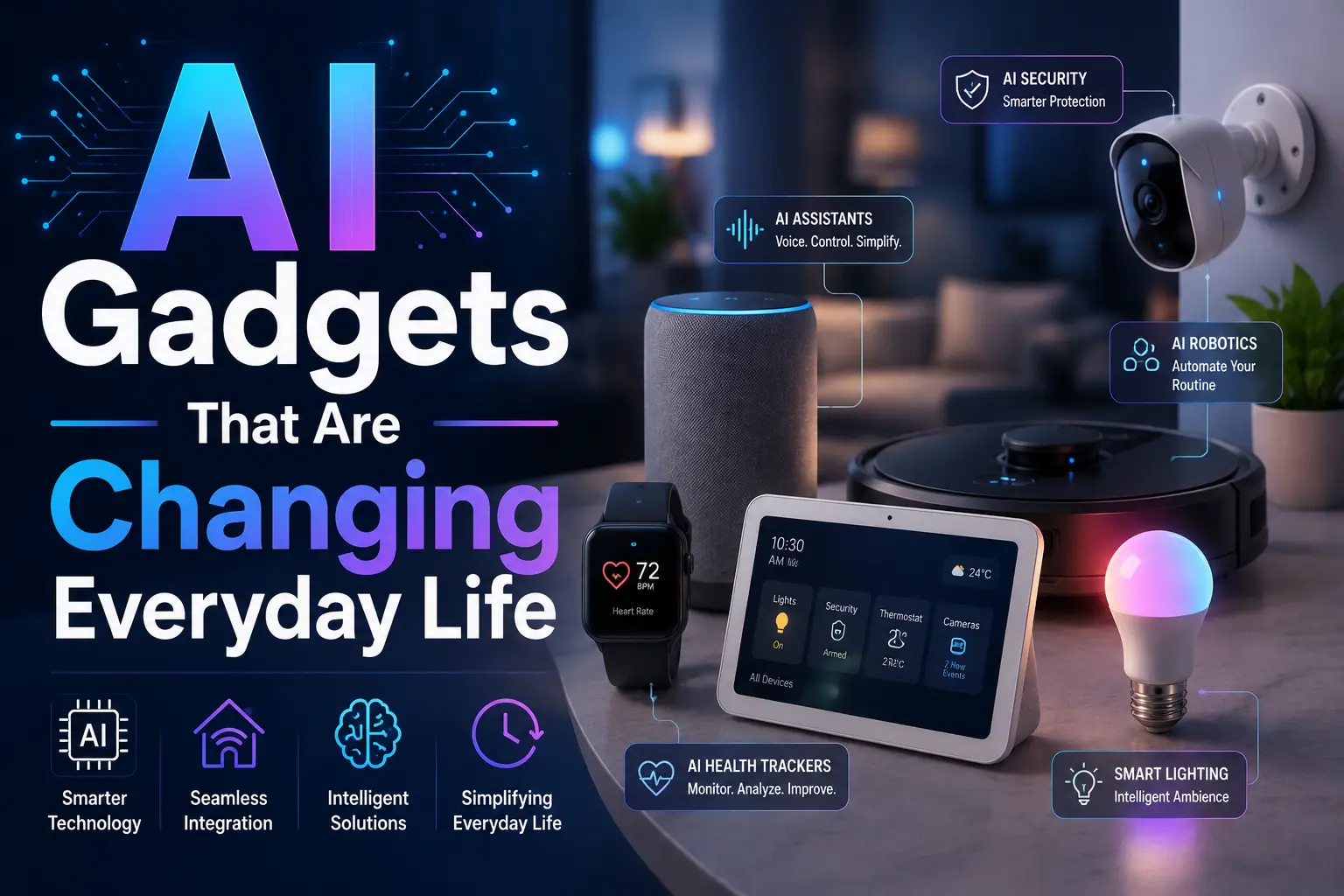
The integration of artificial intelligence into physical hardware has moved beyond experimental prototypes. By 2026, AI-driven gadgets have evolved into reliable, practical tools that solve specific daily problems without requiring constant manual oversight. These devices are designed to fade into the background of your routine, automating complex tasks, enhancing personal health monitoring, and providing seamless assistance exactly when needed.
Wearable AI: Intelligence That Disappears
Modern wearables prioritize passive monitoring and actionable insights, moving away from gadgets that simply overwhelm users with raw data. These devices focus on understanding human patterns—such as sleep quality, stress recovery, and activity levels—to offer personalized recommendations that actually improve daily well-being.
-
Smart Rings for Passive Health: Small-form-factor rings provide continuous tracking of movement and recovery without the bulk of a traditional smartwatch. They serve as an unobtrusive way to manage sleep hygiene and activity goals, surfacing insights only when they are relevant.
-
Context-Aware Smart Glasses: Next-generation eyewear now integrates AI to assist with real-time translation, landmark identification, and hands-free navigation. By maintaining a traditional aesthetic, these glasses offer high-tech utility while remaining socially acceptable for daily wear.
-
Clip-On Productivity Assistants: New wearable recording and summarization devices capture meetings or brainstorming sessions with high fidelity. They automatically distill spoken conversations into organized action items, significantly reducing the burden of manual note-taking.
How Specialized Hardware Improves Daily Routines
Beyond wearables, specialized hardware has emerged to handle specific domestic and creative tasks. These tools succeed by automating workflows that previously demanded significant human time or technical expertise.
-
AI-Powered Camera Gimbals: Solo creators can now rely on gimbals that utilize real-time subject tracking and automated stabilization. These devices act as a dedicated camera operator, ensuring perfectly framed shots for social media content without the need for a tripod or manual adjustments.
-
Smart Assistant Devices: Specialized handheld assistants have refined their task-handling capabilities, moving past simple voice queries. They can now autonomously manage complex schedules, process travel bookings, and organize daily reminders through natural, conversational interaction.
-
Home Environment Monitors: Newer AI-integrated home robots and sensors focus on practical utility, such as monitoring pets, assisting with elderly care, or optimizing smart-home settings. These devices communicate naturally and adapt to the unique layout of a home.
The Shift Toward “Experience-Driven” Tech
The defining characteristic of successful 2026-era gadgets is their focus on seamless integration. The best AI hardware does not force users to adopt new habits; instead, it fits into existing behaviors. Whether through voice-based interactions that clip directly to clothing or health monitors that provide simple recovery alerts, these tools prioritize efficiency and privacy. By reducing screen dependence and automating the “overhead” of digital management, these AI gadgets are fundamentally reshaping how we balance productivity and personal time.
Frequently Asked Questions
1. How do AI smart rings compare to traditional smartwatches?
Smart rings prioritize a lightweight, unobtrusive form factor. They are ideal for users who want passive health tracking—such as sleep and recovery metrics—without the constant distraction of a screen or notifications on their wrist.
2. Are AI-powered smart glasses actually useful for everyday people?
Yes, they have moved past novelty. Modern versions help with quick tasks like reading text aloud, translating foreign languages in real-time, or providing navigation cues, all while keeping your hands completely free.
3. Do wearable recording devices compromise privacy?
Most reputable devices prioritize data integrity by using local encryption and offline transcription. They are designed to be used in professional or personal settings where clear documentation is needed, with many offering clear visual indicators of their operational status.
4. How does an AI gimbal help solo content creators?
An AI gimbal eliminates the need for manual camera operation. It automatically tracks your movement and stabilizes the frame, allowing you to walk, talk, or demonstrate tasks while the device keeps you perfectly centered and in focus.
5. Are these AI gadgets worth the subscription costs?
Many devices utilize cloud-based processing for advanced features, which often necessitates a subscription. It is best to evaluate whether the time saved on tasks—like note-taking, health analysis, or content editing—outweighs the recurring monthly cost for your specific needs.
