
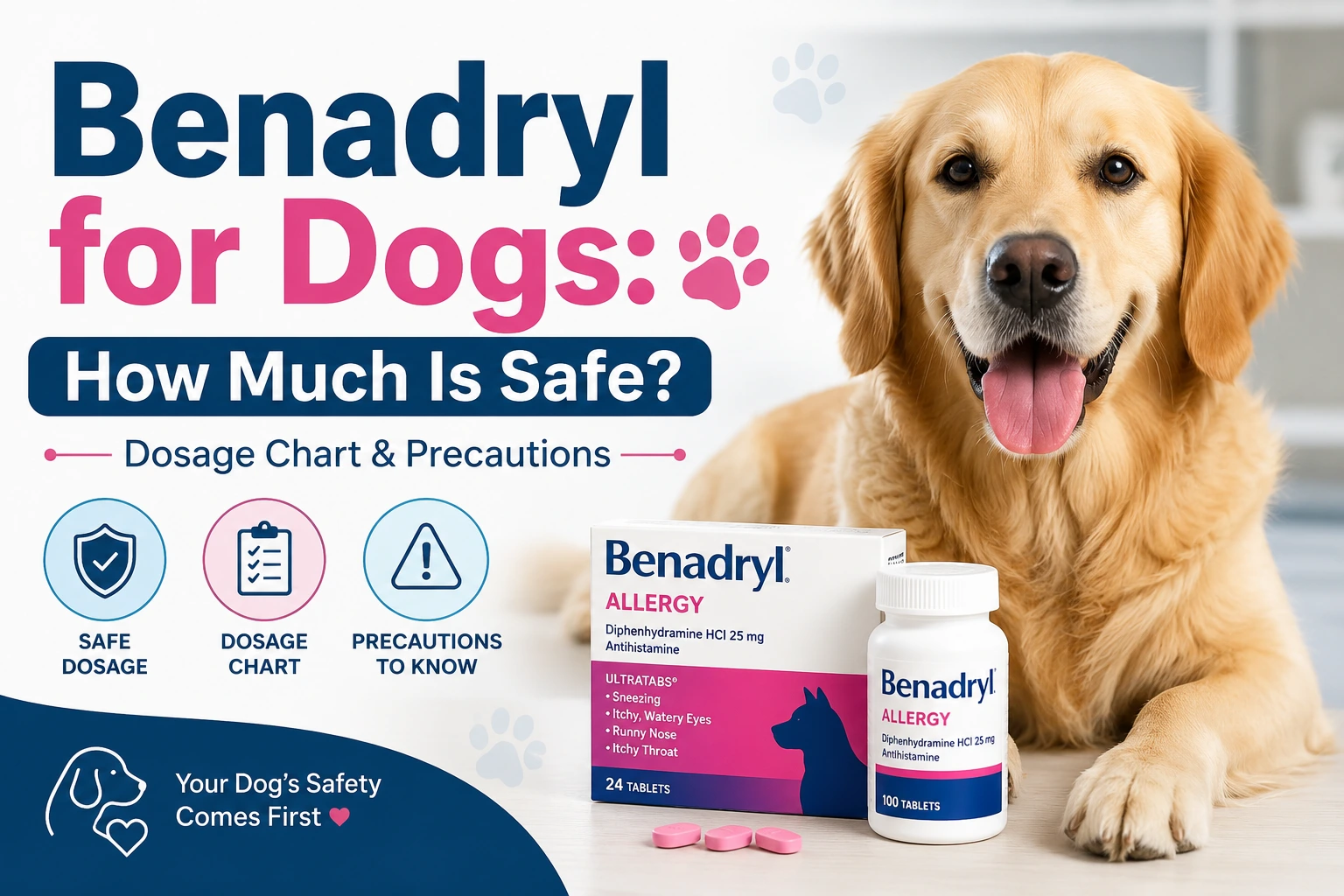
My neighbor’s golden retriever, Bruno, got into a patch of poison ivy last summer and came home looking like he’d lost a fight with a beehive. She called me in a panic asking, “Can I just give him some Benadryl?” And honestly, that’s a question I hear a lot — from friends, from people at the dog park, even from my own vet’s waiting room where someone was googling it on their phone while their dog scratched furiously beside them.
So let’s settle this properly. Yes, Benadryl for dogs is generally considered safe when dosed correctly — but “correctly” is doing a lot of work in that sentence, and it’s worth understanding before you reach for the bottle in your medicine cabinet.
Is Benadryl Safe for Dogs? The Quick Answer
Diphenhydramine — the active ingredient in Benadryl — is an antihistamine that vets have used off-label in dogs for decades. It’s not FDA-approved specifically for veterinary use, but it’s common enough that most vets will talk you through it over the phone if your dog has a mild allergic reaction after hours.
That said, “commonly used” isn’t the same as “risk-free.” Dogs with certain health conditions — glaucoma, heart disease, high blood pressure, seizure disorders, or prostate issues — can react badly to it. And here’s the part people skip past: you need the plain version. Not the one with decongestants, not the “cold and sinus” combo pack, not anything with xylitol in liquid form (xylitol is genuinely dangerous, even fatal, to dogs in small amounts). Just diphenhydramine, nothing else added.
How Much Benadryl for a Dog? The Dosage Chart
The general rule most veterinarians reference is 1 mg of diphenhydramine per pound of body weight, given two to three times a day. Here’s how that breaks down in practice:
| Dog’s Weight | Approximate Dose (1mg/lb) | Standard 25mg Tablets |
|---|---|---|
| 10 lbs | 10 mg | Less than half a tablet |
| 20 lbs | 20 mg | Under 1 tablet |
| 30 lbs | 30 mg | About 1 tablet |
| 40 lbs | 40 mg | Just under 2 tablets |
| 50 lbs | 50 mg | 2 tablets |
| 60 lbs | 60 mg | Just over 2 tablets |
| 75 lbs | 75 mg | 3 tablets |
| 90+ lbs | 90 mg | 3.5+ tablets |
I’ll be straight with you — I don’t love handing out a chart like this without a big flashing caveat, so here it is: this is a general guideline, not a prescription. Small dogs, senior dogs, and dogs on other medications need more caution, and rounding down is always safer than rounding up. If you’re not sure, call your vet or an animal poison control line before dosing. It genuinely takes five minutes and saves you the guesswork.
Can I Give My Dog Benadryl for Itching?
This is probably the number one reason people ask about Benadryl in the first place. And yes, it can help — but it depends on why your dog is itching.
If it’s a one-off reaction (a bee sting, a new plant, a bug bite), Benadryl often takes the edge off within 30 to 60 minutes. I’ve seen it work well for exactly that kind of situation. But if your dog has chronic itching — the kind where they’re chewing their paws raw every single day — Benadryl is more of a band-aid than a fix. Chronic itch usually points to something else: food allergies, environmental allergies, fleas, or even a skin infection. In those cases, your vet needs to figure out the actual cause, because antihistamines alone often aren’t strong enough to keep up.
Can I Give My Dog Benadryl for Allergies?
Same idea applies here. Seasonal allergies, mild hives after a vaccine, or swelling from an insect sting — these are the classic, appropriate uses. Vets frequently recommend giving a dose of Benadryl about 30 minutes before a vaccine appointment if your dog has had a reaction before, as a precaution.
What Benadryl won’t do is stop a severe allergic reaction — like anaphylaxis, where your dog’s face swells rapidly, they’re struggling to breathe, or their gums turn pale. That’s an emergency vet visit, not a home remedy situation. Don’t wait to see if the pill kicks in.
How Often Can I Give My Dog Benadryl for Itching?
Generally, every 8 hours is the standard interval — so up to three doses in a 24-hour period. Giving it more frequently than that raises the risk of side effects without necessarily improving the effect. If your dog needs Benadryl every day for more than a week or two just to function comfortably, that’s your cue to book a vet appointment rather than keep refilling the bottle. Long-term itching deserves a long-term answer, not a daily patch job.
Side Effects to Watch For
Most dogs tolerate Benadryl fine, but a few things show up often enough to mention:
- Drowsiness — this is actually the most common effect, and some owners use it (with vet approval) to take the edge off anxiety during car rides or thunderstorms
- Dry mouth — your dog might drink more water than usual
- Urinary retention — less common, but worth watching for
- Occasional hyperactivity — a small percentage of dogs get wired instead of sleepy, which throws people off the first time it happens
If your dog seems unusually disoriented, has trouble breathing, or their heart rate spikes after a dose, stop and call your vet immediately. It doesn’t happen often, but it’s not something to wait out.
A Quick Reality Check
I want to be upfront: this article gives you the same general framework most vets will walk you through on a phone call, but it’s not a substitute for one. Every dog is different — breed sensitivities, existing conditions, other medications, even body composition can shift how a dose lands. A chihuahua with a heart murmur and a healthy Labrador are not the same calculation, even at a similar weight.
If this is the first time you’re giving your dog Benadryl, it’s worth a quick call to your vet or an emergency animal hospital just to confirm the dose and form. Once you’ve done it once with guidance, you’ll feel a lot more confident handling it yourself next time — that’s honestly how most experienced dog owners I know ended up comfortable with it.
FAQs
1. Is Benadryl safe for dogs?
Yes, in most healthy dogs, when given in the correct dose and without added ingredients like decongestants or xylitol. Dogs with certain health conditions should avoid it unless cleared by a vet.
2. How much Benadryl for dogs is the standard dose?
The commonly used guideline is 1 mg per pound of body weight, given two to three times daily. Always confirm with your vet for your specific dog.
3. How much Benadryl for a dog that weighs 20 lbs?
Roughly 20 mg, which is a little under one standard 25 mg tablet.
4. Can I give my dog Benadryl for itching?
Yes, for occasional itching from bites, stings, or mild allergic reactions. Chronic itching usually needs a vet’s diagnosis rather than ongoing antihistamine use.
5. Can I give my dog Benadryl for allergies?
Yes, it’s commonly used for mild seasonal or environmental allergies and reactions like hives. Severe reactions need emergency care, not just Benadryl.
6. How often can I give my dog Benadryl for itching?
Typically every 8 hours, up to three times a day. Daily long-term use should be discussed with a vet.
7. Is Benadryl good for dogs with anxiety?
Some vets approve mild use for situational anxiety (thunderstorms, car rides) because of its drowsy side effect, but it’s not a primary anxiety treatment.
8. What type of Benadryl is safe for dogs?
Plain diphenhydramine only — no added decongestants, pain relievers, or xylitol-sweetened liquid formulas.
9. Can Benadryl overdose happen in dogs?
Yes, especially with liquid formulations containing xylitol or if dosing is miscalculated. Symptoms include rapid heart rate, drooling, and agitation — seek emergency care immediately.
10. Does Benadryl make dogs sleepy?
Drowsiness is the most common side effect, though a small number of dogs experience the opposite — hyperactivity.
11. Can puppies take Benadryl?
Generally not recommended without direct vet guidance, since dosing for puppies is more sensitive and risk of side effects is higher.
12. How long does Benadryl take to work in dogs?
Usually 30 to 60 minutes for noticeable effect.
13. Can I give my dog Benadryl before a vet visit or vaccine?
Some vets recommend a preemptive dose if a dog has had past vaccine reactions — but only on their advice, not as a default.
14. What if my dog’s allergic reaction seems severe?
Don’t rely on Benadryl alone. Facial swelling, difficulty breathing, or pale gums require immediate emergency veterinary care.
15. Can I give my dog Benadryl every day long-term?
It’s not ideal without vet supervision. Persistent symptoms usually mean an underlying issue needs diagnosis rather than daily antihistamine management.
