Healthcare facilities, laboratories, and residential caregivers generate vast quantities of used needles, syringes, and lancets every single day. Establishing a compliant and reliable system for sharps waste disposal is essential for protecting medical staff, sanitation workers, and the broader public from accidental needlestick injuries and bloodborne pathogens. Without strict adherence to regulatory standards, discarded medical instruments pose severe health and environmental hazards.
Understanding Regulated Medical Sharps
In medical and clinical environments, sharps refer to any device or object capable of puncturing or cutting human skin. Common examples include hypodermic needles, intravenous catheters, scalpel blades, broken glass capillary tubes, and auto-injectors. Since these items may come into contact with blood or other potentially infectious materials, they require careful handling and regulated waste management. Sharps waste disposal plays an important role in preventing accidental injuries and reducing exposure risks for healthcare workers, patients, and waste handlers.
Proper containment begins immediately after a device is used. Attempting to recap, bend, or manually break used needles can increase workplace injury risks. OSHA guidelines require appropriate work practices and engineering controls to prevent needlestick injuries. Instead, practitioners should place used sharps directly into approved containers at the point of use.
Selecting Approved Containment Solutions
Effective sharps waste disposal relies heavily on the integrity of the collection containers. Regulatory agencies mandate that these receptacles meet specific structural criteria to prevent leaks and punctures during handling and transport.
- Puncture-Resistant Construction: Containers must be fabricated from rigid, heavy-duty plastics that cannot be pierced by standard medical needles or surgical blades.
- Leak-Proof Design: Both the bottom and sides of the bin must remain completely sealed to prevent residual fluids from escaping if the container is tipped over.
- Secure Closures: Receptacles require tight-fitting, tamper-resistant lids that permanently lock once the container reaches its designated fill line.
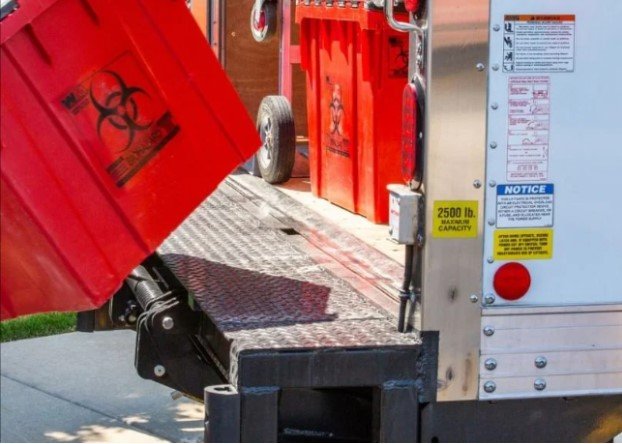
- Clear Labeling: Every bin must display the universal biohazard symbol alongside contrasting warning text, typically in bright red or yellow, to alert handlers to the hazardous contents inside.
Placing these containers within arm’s reach of medical procedures minimizes the distance a contaminated instrument must travel, significantly lowering the risk of accidental exposure.
Compliance and Regulatory Frameworks
Navigating the legal landscape of medical waste requires familiarity with overlapping federal, state, and local mandates. While OSHA oversees workplace safety and employee exposure control plans, the Environmental Protection Agency (EPA) and the Department of Transportation (DOT) govern how regulated waste is packaged, manifested, and moved across public roadways.
Facilities must maintain detailed tracking manifests that document the lifecycle of their sharps waste disposal from generation to final treatment. Failure to maintain accurate records or improper segregation of sharps into standard municipal trash can result in substantial financial penalties and operational audits. Regular staff training ensures that every team member understands fill-line limits—typically set at three-quarters full—and knows how to seal and replace full bins safely.
Treatment and Destruction Methods
Once containers are sealed and removed from clinical areas, the waste undergoes specialized treatment to neutralize biological hazards before final landfilling. The two most prevalent treatment technologies are autoclaving and incineration.
Autoclaving utilizes high-pressure, saturated steam at temperatures exceeding 250 degrees Fahrenheit to sterilize the contents. After sterilization, the plastic containers and metal needles are often shredded into unrecognizable, non-infectious fragments. Incineration, conversely, subjects the waste to extreme thermal destruction, reducing hazardous materials to sterile ash and eliminating any risk of reuse or pathogen survival. Both processes ensure that sharps waste disposal does not compromise municipal waste streams or groundwater supplies.
Conclusion
Waiting until containers overflow creates immediate safety bottlenecks in busy clinics and care centers. Facility managers should evaluate their daily patient volume and procedure types to forecast waste generation accurately. Setting up a recurring collection schedule ensures that full receptacles are swapped out proactively before they reach capacity.
Partnering with licensed medical waste transporters streamlines compliance by providing certified containers, proper DOT-compliant manifests, and documented destruction certificates. Coordinating routine biohazard pickup services allows healthcare providers to focus on patient care while maintaining a safe, compliant clinical environment. Consistent monitoring and adherence to established protocols remain the foundation of responsible medical waste management.
