
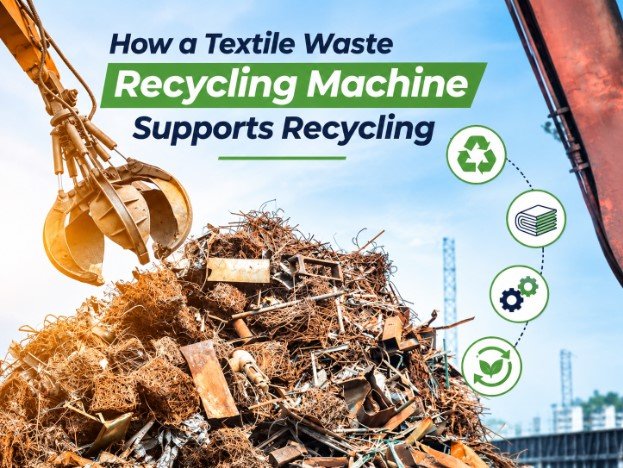
Discarded clothing, fabric offcuts and industrial textile materials present significant challenges for resource recovery facilities. Their varying compositions, fibre structures and contamination levels require specialised processing methods. A textile waste recycling machine helps prepare discarded materials for recovery, reuse or further processing. Understanding how these systems operate allows businesses to develop more effective recycling strategies while reducing unnecessary dependence on landfill disposal.
Understanding Commercial and Industrial Textile Waste
Textile waste originates from clothing manufacturers, retail businesses, commercial laundries, upholstery production and discarded consumer products. These materials may contain natural fibres, synthetic fibres or combinations of both.
Processing mixed textiles requires equipment capable of handling different material characteristics. Conventional commercial waste equipment may need specialised configurations to accommodate fabrics that stretch, tangle, or wrap around moving components.
A textile waste recycling machine can reduce bulky materials into more manageable sizes, preparing them for subsequent processing stages according to their composition and intended recovery application.
The Importance of Textile Waste Sorting
Sorting plays an important role in determining whether discarded fabrics can be recovered successfully. Different fibre compositions require different processing methods, while contaminants can affect the quality of recovered materials.
Facilities may use manual inspection, automated separation systems and specialised recycling sorting equipment to identify suitable materials.
Before introducing textiles into a textile waste recycling machine, operators should consider removing unsuitable components such as metal fasteners, zippers, and other foreign objects where necessary.
Effective material preparation can reduce equipment damage and improve the consistency of processed output.
How Industrial Shredding Supports Material Recovery
Shredding is a common preliminary stage in mechanical textile recycling. Industrial shredders break down larger fabric pieces, making them easier to transport, separate, and process.
The configuration of a textile waste recycling machine depends on the incoming material, required output size, and production capacity.
Some facilities require primary shredding for bulky materials, followed by additional size reduction to prepare fibres for particular recovery applications.
However, shredding alone does not guarantee that textiles can be converted into new clothing. Fibre quality, material composition and available downstream technologies influence the final recovery possibilities.
Integrating Equipment Into Existing Recycling Facilities
Successful recycling operations depend on coordination between multiple processing stages. Conveyors, shredders, screening systems and material handling equipment must function together efficiently.
Businesses exploring recycling solutions in Australia should assess existing infrastructure, available processing space and anticipated material volumes before introducing new machinery.
Industrial engineering companies such as Ogtec design, manufacture and integrate resource recovery equipment for commercial and industrial applications, including customised systems and existing facility upgrades.
Selecting Machinery Based on Operational Requirements
Textile processing equipment should be evaluated according to material characteristics, throughput requirements, maintenance accessibility, and energy consumption.
A textile waste recycling machine designed for lightweight fabric offcuts may have different specifications from equipment intended to process bulky industrial textiles.
Businesses should also consider dust extraction, equipment guarding and safe maintenance access. Textile dust and accumulated fibres can create occupational health and fire risks if not managed appropriately.
Reviewing machinery specifications and conducting material trials where possible can help facilities identify suitable processing arrangements.
Supporting a More Circular Textile Economy
Recovering discarded textiles can reduce landfill disposal and create opportunities for alternative material applications.
Depending on recovered fibre quality, processed textiles may be used in insulation, padding, industrial wiping materials or other manufacturing processes.
Establishing reliable collection arrangements and identifying suitable markets for recovered materials remain essential to successful recycling operations.
Conclusion
Textile recycling requires appropriate machinery, effective material separation and coordinated processing infrastructure. Integrating suitable equipment into broader waste management solutions can help commercial and industrial facilities improve resource recovery and manage discarded fabrics more responsibly. Careful planning, equipment maintenance, and material assessment are equally important. Developing dependable recovery systems supports more efficient use of resources and long-term environmental responsibility.
