The fitness app market in 2026 has moved beyond simple calorie counting and basic step tracking. Today’s top platforms leverage artificial intelligence and seamless wearable integration to function as comprehensive training ecosystems. For the sports enthusiast, the right app acts as a digital coach, optimizing everything from explosive power training and endurance pacing to recovery and nutritional fueling.
Selecting the Right Tool for Your Training
Not all fitness apps are created equal. The most effective strategy involves choosing a platform that aligns with your primary athletic discipline, whether you are a powerlifter, a long-distance runner, or an all-around hybrid athlete.
-
Strength and Power Athletes: These users benefit from apps that focus on precision logging, progressive overload, and volume tracking. The best tools offer extensive libraries with high-quality movement demonstrations to ensure proper form.
-
Endurance and Outdoor Athletes: For those who track miles or elevation gain, connectivity is the priority. Look for apps that provide accurate GPS mapping, live safety tracking, and performance analysis—such as pace splits and heart rate variability—that integrates directly with your wearable hardware.
-
Data-Driven Hybrid Athletes: If you participate in multiple disciplines, seek platforms that offer “all-in-one” ecosystems. These apps utilize AI to balance your weekly training load across different modalities, helping you avoid overtraining and ensuring you are ready for every session.
-
Personalized Coaching Enthusiasts: For those needing high levels of accountability, the newest trend is hybrid coaching apps. These connect you with a human expert who monitors your data remotely and adjusts your program weekly, providing a level of customization that fully automated systems cannot yet replicate.
Top Platforms for 2026
When evaluating which software to download, prioritize apps that excel in their specific niche rather than those that attempt to be mediocre at everything.
-
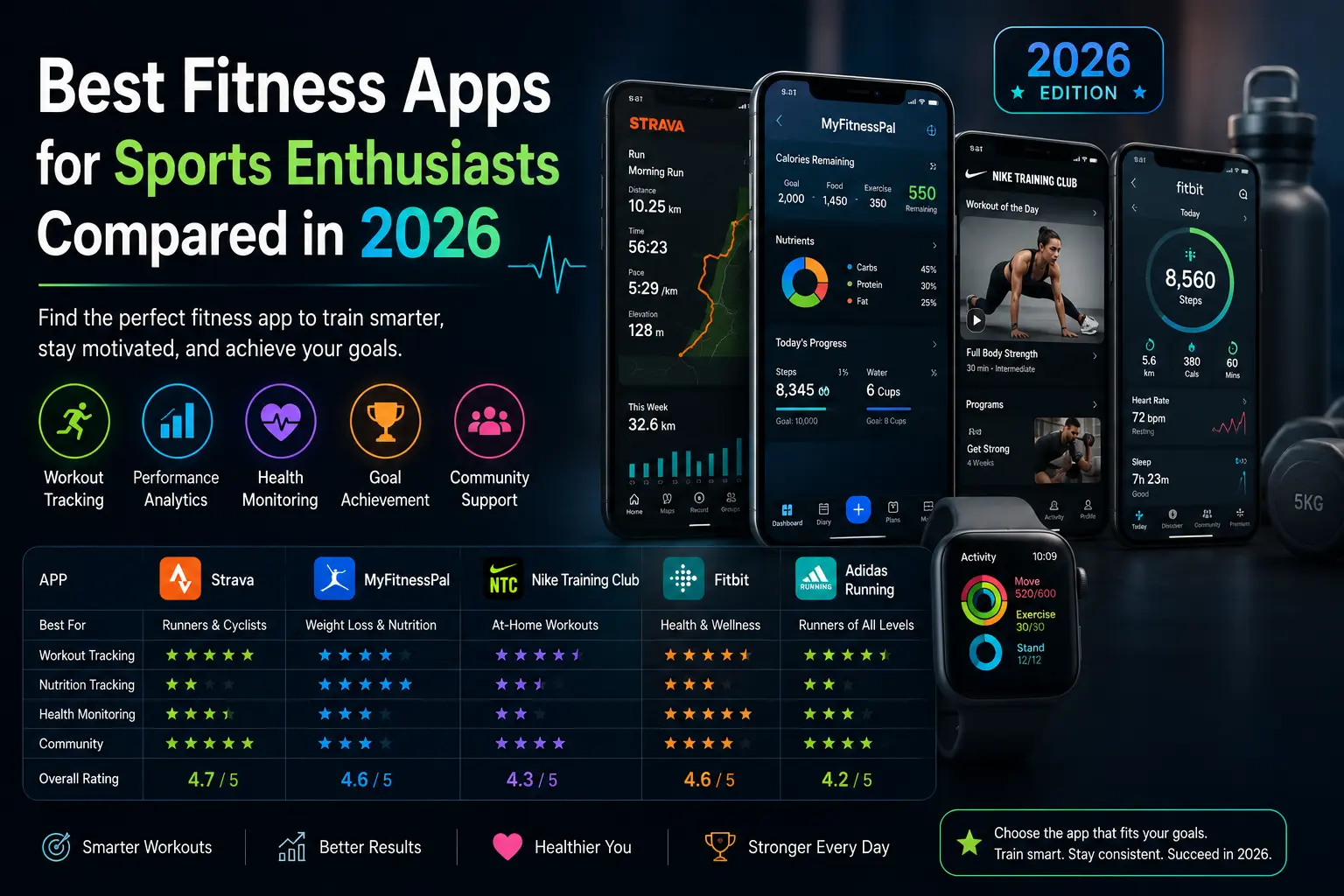
Strava: The gold standard for outdoor endurance sports. Its “Athlete Intelligence” features provide deep context into your workout quality, while its robust community functions and live beacon tracking make it a must-have for cyclists and runners.
-
Fitbod: An industry leader for strength training. It uses a sophisticated algorithm to generate custom workout plans based on your available equipment, training history, and recovery levels, ensuring you consistently apply the principle of progressive overload.
-
Nike Training Club (NTC): Exceptional for those seeking guided, expert-led sessions without a subscription fee. It offers a massive library of workouts ranging from mobility and yoga to high-intensity interval training, making it perfect for supplemental work.
-
Hevy: Designed specifically for lifters who want a fast, clutter-free logging experience. It focuses on the essentials—tracking sets, reps, and weights—while providing excellent visual analytics to show your strength progression over time.
-
Future: The premier choice for those who value accountability. It pairs you with a dedicated personal trainer who crafts your routine, reviews your wearable data, and provides direct feedback to help you hit specific performance goals.
Maximizing Your Athletic Ecosystem
To achieve the best results in 2026, don’t rely on a single app to manage your entire life. Professional athletes often utilize a modular approach, picking the best specialized tool for each domain. Use a dedicated strength tracker in the gym to log your lifts, a specialized endurance platform for your weekend runs, and a nutrition app to ensure your macronutrient intake supports your specific training demands. Integrating these data sources through your wearable device creates a complete picture of your health, allowing for precise adjustments to your performance and recovery strategies.
Frequently Asked Questions
1. Should I use one “all-in-one” app or multiple specialized ones? A modular approach is often superior. Specialized apps (e.g., one for lifting, one for running) typically provide deeper, more accurate features for their respective disciplines than “all-in-one” apps that may sacrifice depth for breadth.
2. Is an AI-powered fitness app as good as a human personal trainer?AI is excellent for generating structured, adaptive plans based on data. However, a human trainer offers irreplaceable value in the form of motivation, subjective form correction, and long-term mentorship that machines cannot yet fully replicate.
3. Do I need a wearable device to get value from these apps?While many apps can function using just your phone’s internal sensors, a wearable device significantly increases the accuracy of your metrics. For endurance athletes, heart rate and GPS data from a watch are essential for truly actionable insights.
4. How do I know if a fitness app is worth the monthly subscription? Consider the “utility per dollar.” If the app saves you from hiring a coach, replaces multiple single-use tools, or provides data that prevents injury, the subscription cost is often well-justified compared to the potential long-term benefits to your health.
5. Are free fitness apps still effective? Yes. Free apps like Nike Training Club offer professional-grade programming that is highly effective for most athletes. The difference between free and premium versions usually lies in advanced analytics, custom programming, and social features, which become more important as you move toward elite levels of performance.
