
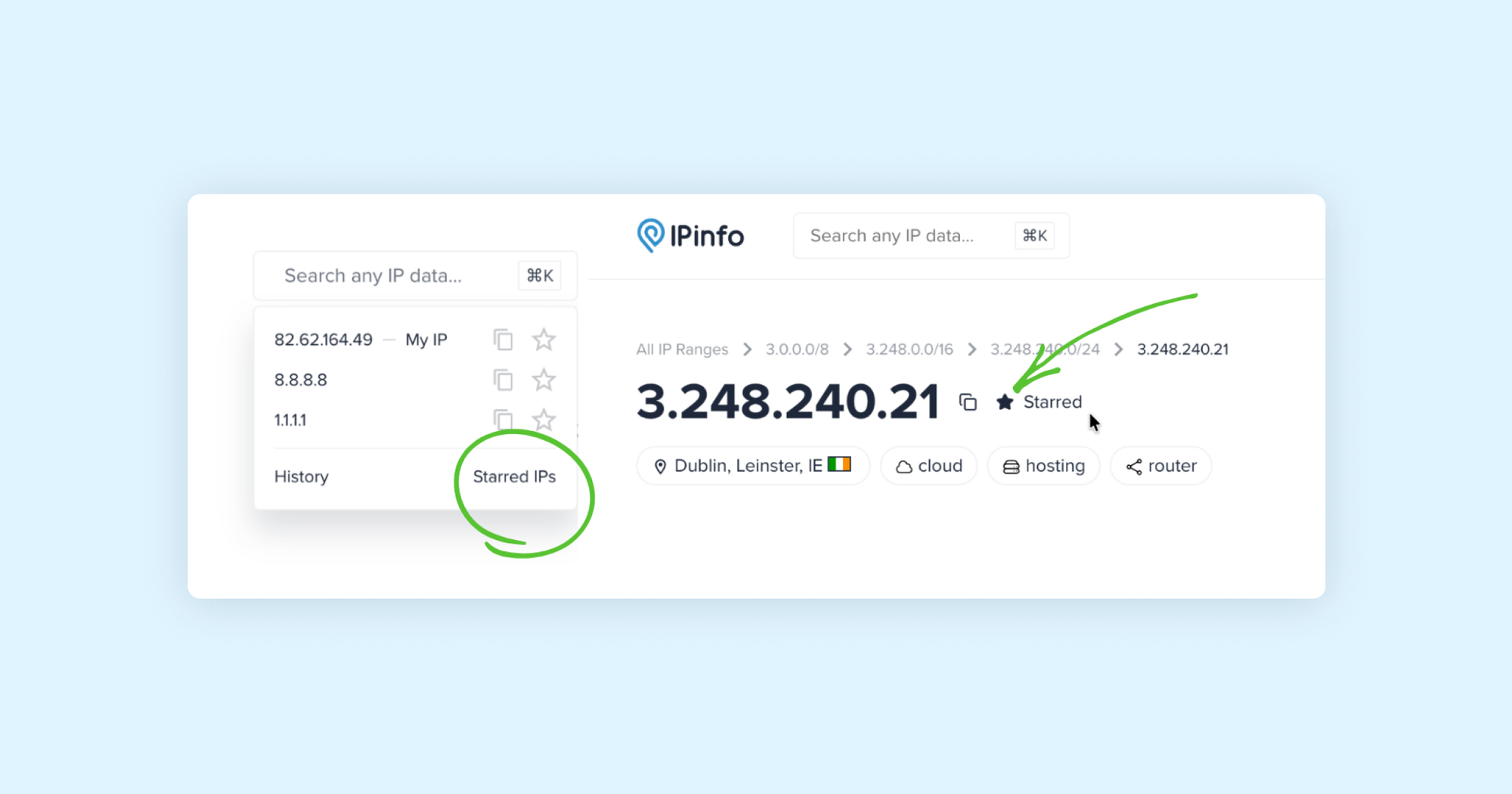
An IP address may look like a simple string of numbers, but it can reveal useful information about how a device or network connects to the internet. That is where IPinfo becomes valuable. It is an IP intelligence platform that helps users, developers, businesses, and security teams understand internet addresses through data such as geographic location, network ownership, autonomous system information, and privacy indicators.
Whether you are troubleshooting a website, analyzing suspicious traffic, developing an application, or researching an unfamiliar IP address, having reliable network intelligence can make the process much easier. But what exactly does this service provide, and when should you use it?
What Is IPinfo?
IPinfo is an internet infrastructure and IP data platform that provides information associated with IPv4 and IPv6 addresses. Its services are commonly used to identify characteristics of an IP, including its approximate location, organization, network, ASN, and certain privacy-related attributes.
Instead of manually interpreting technical network information, users can access it in a more structured format. Developers can also integrate IP intelligence into applications through APIs, allowing websites and software to process address information automatically.
The important distinction is that an IP lookup generally provides network-level intelligence rather than personally identifying information. An address can often indicate where a connection is registered or routed, but that does not necessarily identify the individual using it.
What Information Can an IP Lookup Provide?
The amount of information available depends on the IP address and the particular service or dataset being used. Common data points can include:
- IP version and address
- Country and region
- City or approximate geographic area
- Internet service provider or organization
- Autonomous System Number (ASN)
- Network or prefix information
- Hosting and carrier indicators
- VPN, proxy, Tor, or other privacy-related signals
- Company or domain information in applicable datasets
This combination makes IP intelligence useful for both everyday investigation and more advanced technical workflows.
How IP Geolocation Works
One of the most familiar uses of IP intelligence is geolocation. A lookup can estimate the country, region, or city associated with an internet address.
However, geolocation should not be interpreted like GPS.
For example, a user may connect through a mobile carrier, corporate network, VPN, cloud provider, or proxy. The database might therefore associate the IP with a different city from the user’s actual physical location.
This is why responsible applications usually describe IP location as approximate rather than exact.
Understanding ASN and Network Ownership
If geographic information tells you where an IP may be associated, ASN information helps explain which network it belongs to.
An Autonomous System Number (ASN) identifies a network or collection of IP prefixes managed under a common routing policy. Internet service providers, cloud companies, universities, large enterprises, and other organizations can operate autonomous systems.
This information is particularly useful during network investigations because two IP addresses in the same geographic area can belong to completely different networks.
IPinfo for Developers
Developers can integrate IP intelligence into websites, applications, dashboards, and internal systems.
For example, an application could use an IP data API to determine a visitor’s approximate country and then adapt certain non-sensitive functionality accordingly. A security system could also use network information as one signal when assessing unusual traffic.
Typical development use cases include:
- Location-aware experiences
Applications can use country or region information to customize content. - Security analysis
Network and privacy indicators can contribute to suspicious-traffic investigations. - Analytics
Teams can understand broad geographic and network patterns among visitors. - Fraud prevention
IP intelligence can serve as one signal alongside account, device, and behavioral data. - Network research
Engineers can investigate address ownership, routing, and infrastructure relationships.
The key is to treat IP information as one piece of evidence, not an absolute verdict.
IPinfo vs. a Basic IP Lookup
Not every IP lookup tool provides the same depth of information. A basic website may simply display an approximate location, while a specialized IP intelligence platform can provide significantly richer network and privacy information.
| Capability | Basic IP Lookup | IP Intelligence Platform |
|---|---|---|
| IP address identification | Usually | Yes |
| Country information | Usually | Yes |
| Approximate city | Sometimes | Commonly available |
| ISP/organization | Sometimes | Yes |
| ASN information | Limited | Detailed |
| Network intelligence | Limited | Stronger |
| Privacy indicators | Rare | Available in relevant datasets |
| API integration | Sometimes | Designed for developers |
| Automated applications | Limited | Strong use case |
The right option depends on the problem. Someone checking their own connection may need only a simple lookup. A developer building a security or analytics system may need structured data and API access.
A Real-World Use Case for Network Investigation
Imagine an online store suddenly receives hundreds of account-creation attempts within a short period. The requests appear to originate from different addresses, but several are associated with the same hosting provider or network infrastructure.
An IP intelligence service can help the security team identify patterns in those addresses. They might discover that many requests share network characteristics or privacy signals associated with hosting, proxies, or automated infrastructure.
That does not automatically prove malicious behavior. Instead, the information gives the team another useful layer for investigation before deciding whether additional controls are appropriate.
Using IP Data Responsibly
IP information can be useful, but it has limitations. A common mistake is assuming that an IP address provides a person’s exact physical address or identity.
It generally does not.
Dynamic addresses can change over time. Mobile networks can route traffic through centralized infrastructure. VPNs can make the visible address belong to a different location. Corporate networks can place many users behind a shared public address.
For these reasons, IP intelligence should be combined with other reliable signals when making important decisions.
Privacy also matters. If an application collects or processes IP addresses, developers should consider applicable privacy requirements, retention policies, and the purpose for which the data is being used.
Why Accuracy and Context Matter
IP databases are continually updated because internet infrastructure changes. Organizations acquire and release address ranges, providers modify routing, hosting companies expand into new regions, and users move between networks.
I have found that the most useful approach to IP research is not simply asking, “Where is this IP?” but also asking, “What network is it associated with, how trustworthy is the underlying signal, and what does that information mean in context?”
That extra layer of interpretation can prevent surprisingly costly assumptions.
Common Uses Beyond Geolocation
Although location lookup gets most of the attention, IP intelligence can support many other activities.
Security teams may investigate suspicious addresses. Developers can enrich application logs. Analysts can categorize traffic by network type. Businesses can better understand where requests originate at a broad geographic level.
Researchers can also use ASN and network information to study how internet infrastructure is organized.
This makes the technology useful well beyond simply displaying a country flag next to an IP address.
IPinfo API and Automated Workflows
For developers, API access can turn occasional lookups into an automated workflow. Instead of manually entering individual addresses, an application can submit an IP and process the returned fields programmatically.
This is particularly useful for systems that handle large numbers of requests. A logging platform, for instance, could enrich incoming records with network information and allow analysts to filter or group traffic more efficiently.
Before implementation, developers should review the service’s current API documentation, available fields, authentication requirements, rate limits, and pricing because these details can change.
What Makes IP Intelligence Valuable?
The real value is not the IP address itself. It is the context surrounding that address.
A number such as 8.8.8.8 means very little to most people on its own. Once network ownership, ASN, location estimates, and other relevant attributes are attached to it, the address becomes much easier to interpret.
That context can help turn raw connection logs into information that people can actually use.
Also Read: 172.16.0.250.8090: IP Address and Port Explained
Conclusion
IPinfo provides a practical way to explore and work with IP address intelligence. Its usefulness extends from simple network research to application development, analytics, security investigations, and infrastructure analysis.
The most important thing to remember is that IP data is informative but not infallible. Geographic results are estimates, network ownership can change, and an IP address should not automatically be treated as proof of an individual’s identity or location.
Used thoughtfully, however, IP intelligence can transform an otherwise confusing string of numbers into meaningful network context.
FAQs
What is IPinfo used for?
It is used to obtain information about IP addresses, including approximate location, network ownership, ASN details, and relevant privacy or infrastructure indicators.
Can IPinfo show someone’s exact location?
No. IP-based geolocation is generally approximate. It should not be treated as an exact GPS location or a guaranteed physical address.
Does an IP address identify a person?
Usually, an IP address identifies a network connection or publicly visible address, not a specific individual. Shared networks, VPNs, proxies, and dynamic addresses make direct identification unreliable.
Is IPinfo useful for developers?
Yes. Developers can use IP intelligence through APIs and other tools to enrich applications, analytics systems, security workflows, and network-related services.
Can IP information detect VPNs or proxies?
Certain IP intelligence datasets can provide indicators associated with VPNs, proxies, Tor, hosting providers, or other privacy-related infrastructure. These indicators should be interpreted alongside other evidence.
Is IP geolocation always accurate?
No. Accuracy varies by network, provider, database quality, and IP type. Mobile, corporate, cloud, and privacy-focused connections can be especially difficult to locate precisely.
What is an ASN?
An ASN (Autonomous System Number) identifies an independently managed network or group of networks participating in internet routing. It can help determine which organization or provider controls a particular network range.

One thought on “IPinfo: IP Address Lookup, Data, and Network Insights”